" height="24px" id="WCm44spAV" width="24px"/><path d="M 3.892 7.742 C 1.674 7.742 0 6.014 0 3.882 C 0 1.738 1.589 0 3.892 0 C 5.107 0 5.951 0.374 6.623 1.173 L 5.566 2.09 C 5.118 1.621 4.564 1.386 3.892 1.386 C 2.452 1.386 1.547 2.517 1.547 3.882 C 1.547 5.246 2.452 6.356 3.924 6.356 C 4.649 6.356 5.193 6.111 5.63 5.63 L 6.718 6.558 C 6.153 7.24 5.193 7.742 3.892 7.742 Z" fill="rgb(255, 255, 255)" height="7.741500000000002px" id="XEPpGD7l5" transform="translate(4 8.25)" width="6.717999999999989px"/><path d="M 2.74 7.922 C 1.215 7.922 0 6.632 0 5.032 C 0 3.433 1.215 2.122 2.74 2.122 C 3.7 2.122 4.201 2.516 4.5 3.113 L 4.5 2.239 L 5.928 2.239 L 5.928 7.784 L 4.531 7.784 L 4.531 6.877 C 4.233 7.507 3.731 7.922 2.74 7.922 Z M 1.439 5.023 C 1.439 5.865 2.057 6.622 2.975 6.622 C 3.924 6.622 4.531 5.897 4.531 5.033 C 4.531 4.169 3.924 3.423 2.975 3.423 C 2.057 3.423 1.439 4.159 1.439 5.022 Z M 6.784 7.784 L 6.784 0 L 8.224 0 L 8.224 7.784 L 6.784 7.784 Z" fill="rgb(255, 255, 255)" height="7.9224997406005855px" id="lGDJupIUR" transform="translate(10.5 8)" width="8.223500194549558px"/></g></svg>)
" width="18px"><path d="M 2 8 C 0.895 8 0 7.105 0 6 L 0 2 C 0 0.895 0.895 0 2 0 L 6 0 C 7.105 0 8 0.895 8 2 L 8 6 C 8 7.105 7.105 8 6 8 Z" fill="transparent" height="8px" id="ZrCrI93dV" stroke-dasharray="" stroke-linecap="round" stroke-linejoin="round" stroke-width="2" stroke="rgb(0, 0, 0)" width="8px"/><path d="M 0 0 L 0 4 C 0 5.105 0.895 6 2 6 L 6 6" fill="transparent" height="6px" id="emltWYAiE" stroke-dasharray="" stroke-linecap="round" stroke-linejoin="round" stroke-width="2" stroke="rgb(0, 0, 0)" transform="translate(4 8)" width="6px"/><path d="M 2 8 C 0.895 8 0 7.105 0 6 L 0 2 C 0 0.895 0.895 0 2 0 L 6 0 C 7.105 0 8 0.895 8 2 L 8 6 C 8 7.105 7.105 8 6 8 Z" fill="transparent" height="8px" id="WpBecYDfi" stroke-dasharray="" stroke-linecap="round" stroke-linejoin="round" stroke-width="2" stroke="rgb(0, 0, 0)" transform="translate(10 10)" width="8px"/></g></svg>)

By

Cédric van Ravesteijn
5 Best Government Scheduling Software
After setting up and testing the top-rated platforms, here's the best government scheduling software for public agencies:
Cal.com Best Overall
Qmatic
QLess
WaitWell
Microsoft Bookings
We've built more booking flows than we care to admit, and tested a long list of scheduling software along the way.
Government scheduling software lets residents book a slot with the right department themselves, then keeps staff calendars conflict-free without anyone picking up a phone.
We tested these platforms the way an agency actually would, from a blank account to a live booking page with routing rules and a branded domain. This guide is for city, county, and state teams who need residents booking themselves without handing over control of their data.
We graded each government scheduling software on:
Security and data control
Routing and workflow depth
And whether the pricing is published or hidden behind a sales call
The five best options are ranked below, starting with our favorite pick that lets residents book themselves on a page carrying your agency's branding instead of a vendor's.
What is government scheduling software?
Government scheduling software is a booking system built for how public agencies serve people. It publishes real staff availability, lets residents reserve a slot themselves, confirms and reminds them automatically, and gives staff a controlled view of the day ahead. It replaces the phone tree, the shared inbox, and the paper sign-in sheet.
The category splits into two groups, and knowing which one you need saves a lot of money. Queue management platforms like Qmatic and QLess optimize the physical lobby with virtual lines, kiosks, tickets, and digital signage. Scheduling platforms like Cal.com and Microsoft Bookings optimize the calendar with availability rules, routing, reminders, and integrations. A busy DMV (department of motor vehicles) usually needs both. A permitting office, records counter, benefits caseload, or public health clinic almost always needs only the second, and buying a queue system for that job means paying for hardware you'll never plug in.
What separates all of this from a personal calendar link is coordination and constraint. Capacity is a shared resource, whether that's a clerk, a hearing room, or an inspector. The rules are strict, because some services need identity checks and some caseworkers are licensed only for certain jurisdictions. And the audience is literally everyone, so the booking flow has to work for a resident on an old phone, in a second language, with a screen reader, at 11pm.
What to look for in government scheduling software
The hard part isn't picking software, it's knowing which features actually matter to an agency versus which ones just fill out a vendor's pricing page. These five are the ones that decided our rankings.
Security posture and data control. Ask for the certifications in writing: SOC 2 Type II, ISO 27001, encryption in transit and at rest, single sign-on through your existing identity provider, and role-based access. Ask where the data physically lives. In our testing this is the single most common place a scheduling project stalls, because the tool gets picked before IT ever sees it.
Routing and eligibility rules. Public services aren't interchangeable. A resident booking a septic inspection shouldn't land on a business licensing clerk. Look for routing forms, attribute-based assignment, round-robin distribution across a counter team, and sub-team structures that mirror your org chart. Weak routing is exactly why so many agencies end up publishing twenty separate booking links.
Accessibility and language access. Public-facing booking pages carry obligations that commercial tools often skip. Ask for the vendor's accessibility conformance report, then test the real booking flow with a keyboard and a screen reader yourself, because the report and the reality don't always match. Confirm multi-language support, and keep a phone and walk-in path open for residents on the wrong side of the digital divide.
Calendar and system integration. Staff already live in Outlook or Google Calendar. If the scheduler can't write to those calendars in real time and read conflicts back, double-booking returns within a month. We'd also push hard on whether there's a real API and webhooks, so bookings flow into your permitting or case management system instead of getting retyped.
Total cost and procurement path. Published per-user pricing is easy to budget and easy to defend. Quote-only pricing means a sales cycle and a number you can't benchmark. Watch for the extras that never make the headline: SMS fees, kiosk hardware, installation, annual support, and per-seat charges for frontline staff who only need read access.
Branding and public trust. Residents should see your agency, not a vendor logo. Full white-label control and custom domains matter more here than in any commercial vertical, because a booking page that looks like a third-party ad is a page residents abandon or report as a phishing attempt.
The 5 best government scheduling software options
1. Cal.com: best government scheduling software overall
Free plan? | Starting price | Standout feature | Best use case |
|---|---|---|---|
Yes (free forever) | $16/user/month | Routing, white-label branding, and SSO with US or EU hosting | Agencies needing secure, routable, branded citizen booking |

Cal.com is an API-first scheduling and booking platform, and it takes the top spot because it's the only tool we tested that cleared the security review, the workflow review, and the budget review without a single sales call.
Instead of shipping one fixed booking workflow, it hands you the building blocks: availability rules, routing logic, team structures, calendar sync, webhooks, and a full public API. That flexibility is why it fits a single permit counter and a multi-department agency equally well.
Why it ranks first: Most government scheduling projects die on one of two things, and Cal.com is unusual in surviving both. On security, it carries SOC 2 Type II, ISO 27001, GDPR, CCPA, and HIPAA with a signed BAA, supports SAML SSO and SCIM provisioning, and lets you choose US or EU hosting for data residency. On flexibility, its routing forms and attribute-based assignment handled every eligibility scenario we threw at them, from ZIP-code jurisdiction to service type to licensed-staff matching. Then it publishes its prices, which after weeks of chasing quotes from the rest of this list felt genuinely refreshing.
Key features:
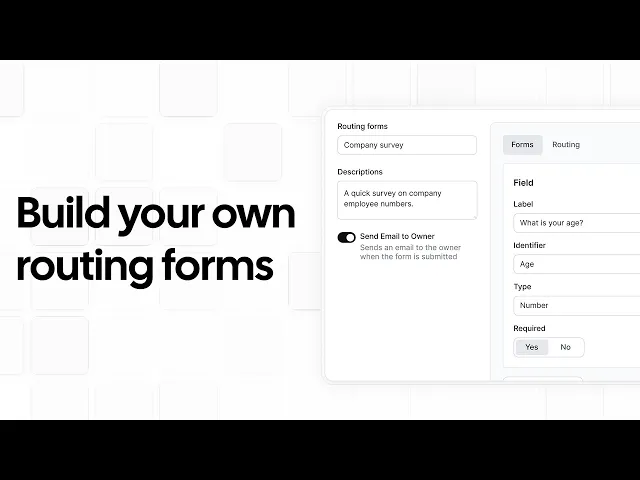
Routing forms and attribute-based assignment: no-code intake that sends residents to the right office, service, or licensed staff member based on their answers, ZIP code, jurisdiction, or any custom attribute you define.
Organizations with unlimited sub-teams: mirror departments, facilities, and districts under one parent org, with role-based permissions and data isolation between units.
Round-robin and collective scheduling: spread appointments evenly across a counter team, or require several staff on a single hearing, panel, or interview.
Full white-label on your own domain: strip Cal.com branding entirely so residents book on a page that looks and reads like an official government service, not a third-party tool.
SAML SSO, SCIM provisioning, and role-based access: provision and deprovision staff automatically through your existing identity provider and control exactly who can view or edit booking data.
HIPAA with a signed BAA, plus US or EU hosting: the BAA is included at the Organizations tier rather than sold separately, and you pick the region your data sits in, which covers public health, behavioral health, and benefits programs.
API-first infrastructure: a comprehensive public API, webhooks, and embeddable React Atoms let you build booking into your resident portal and push records straight into permitting, case management, or CRM systems.
Two-way calendar sync: real-time conflict detection across Google, Outlook, Apple, and Zoho, so staff keep working in the calendar they already use and double-booking stops.
Automated reminders and workflows: email and SMS confirmations, reminders, and follow-ups that cut no-shows and reclaim slots without any manual outreach from staff.
Supported self-hosting on Enterprise: agencies with sovereignty or air-gap requirements can run Cal.com inside their own environment under a commercial Enterprise license with full engineering support.
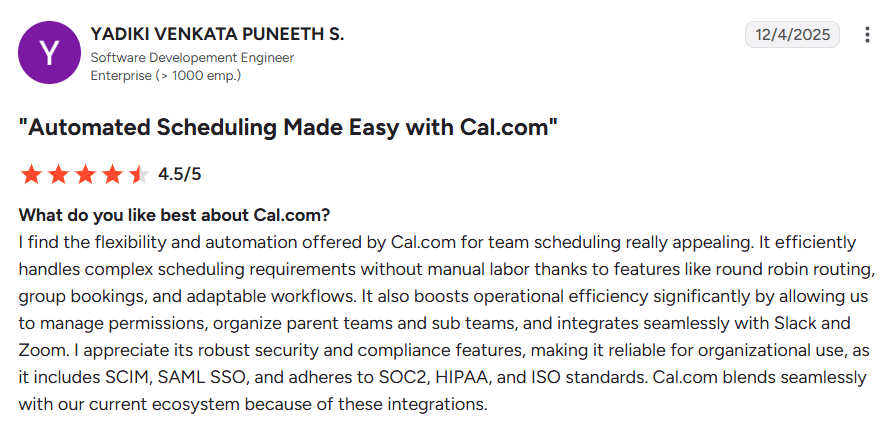
Yadiki Venkata review of Cal.com
Pricing: Cal.com has a free-forever plan with unlimited event types, calendar sync, and workflow automation. Teams is $16/user/month for round-robin and team scheduling. Organizations is $37/user/month and adds SAML SSO, SCIM, HIPAA with a BAA, sub-teams, and white-label. Enterprise is custom and covers a dedicated database, higher SLAs, and supported self-hosting.
Best for: State, county, and municipal agencies that need secure, routable, branded appointment scheduling across multiple departments, plus any public sector team whose IT or legal review demands SSO, data residency, or a supported self-hosted deployment. A two-person records office can run it free.
Verdict: For the job most agencies actually hire scheduling software to do, publishing real availability, routing residents correctly, keeping data where policy says it belongs, and doing it all under your own brand, Cal.com is the strongest and most flexible pick on this list. It's also the only one you can fully evaluate before anyone signs anything, which in public sector procurement is worth more than it sounds.
2. Qmatic: best for high-volume counter service and lobby queuing
Free plan? | Starting price | Standout feature | Best use case |
|---|---|---|---|
No | Not publicly available | Kiosk, signage, and virtual queue stack for the physical lobby | High-traffic walk-in offices like city halls and service centers |
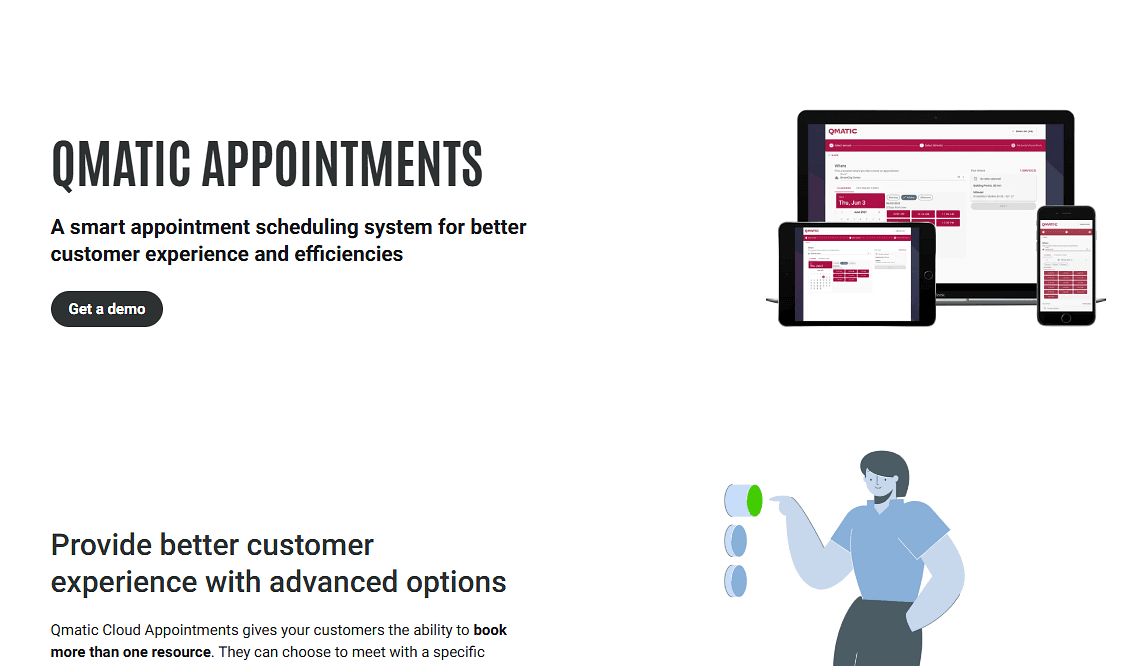
Qmatic has been managing public sector lobbies for decades, and that experience shows the moment you look at a crowded waiting room. It combines online appointment booking with physical and virtual queuing, self-service kiosks, digital signage, ticket printing, and genuinely good analytics on wait times and throughput. Credit where it's due: for a city hall or social services center where the defining metric is how long someone stands in line, nothing else we tested handles the in-person flow this thoroughly.
Core features:
Unified appointment and queue management: booked visits and walk-ins in one flow, with remote check-in and mobile tickets.
Self-service kiosks and digital signage: on-site check-in hardware with voice announcements and accessibility features.
Business intelligence dashboards: booked versus walk-in volume, no-show rates, actual versus estimated wait times, and staff benchmarking.
Multi-channel notifications: SMS and email confirmations, reminders, and real-time queue updates.
Enterprise integrations: connectors for Microsoft Teams, Outlook, Power BI, Dynamics 365, Salesforce, and Webex.
Pricing: Qmatic doesn't publish pricing and sells through demos and quotes. Third-party analysts place typical entry deployments in the several-hundred to low-thousand dollars per month range depending on locations and modules.
Pros:
Deep, mature capability for physical lobby flow
Strong wait-time and service-level analytics that hold up in oversight reporting
Long track record across city halls, DMV offices, and social services centers
Broad enterprise integration list for large agency environments
Cons:
No public pricing, which stretches procurement and makes budget benchmarking difficult
Hardware and installation dependencies add cost and lead time
User reviews consistently flag installation complexity and support responsiveness
Less suited to agencies whose scheduling is remote, appointment-only, or embedded elsewhere
Best for: Large, walk-in-heavy public offices where cutting physical lobby congestion is the main objective and there's budget for kiosks, signage, and a full deployment project.
Comparison verdict vs Cal.com: Qmatic is built around the lobby, and it's excellent at that. But most agencies we talk to are trying to stop residents from needing the lobby in the first place, and for that job Cal.com gives you deeper routing logic, real-time calendar sync, an open API, published pricing, and a live booking page today rather than after a hardware purchase order. Agencies running heavy walk-in volume often keep Qmatic at the counter and use Cal.com for everything booked in advance.
3. QLess: best for virtual queuing at DMVs and licensing offices
Free plan? | Starting price | Standout feature | Best use case |
|---|---|---|---|
No | Not publicly available | Predictive wait-time forecasting for virtual lines | DMV and licensing offices with heavy unscheduled walk-in traffic |

QLess essentially invented the virtual queue for public services, and virtual queuing is still what it does best. Residents join a line from their phone, see a machine-learning wait-time forecast, wait wherever they want, and get pinged when their turn approaches. The company reports deployments across 300 or more cities and 200 or more colleges, with real depth in DMV and licensing environments. Appointment booking exists and works, but in our testing it clearly plays second fiddle to the queuing engine.
Core features:
Virtual queuing with predictive wait times: residents join remotely by mobile, web, or kiosk and track their position live.
Appointment booking with queue handoff: scheduled visits drop into the live queue automatically as their time approaches.
Automated resident communications: SMS and app notifications for position updates, delays, and readiness.
Bottleneck alerting: instant flags for service backlogs so supervisors can move staff.
Cross-department analytics: staff productivity, service usage, and visitor trends across one or many departments.
Pricing: QLess doesn't publish pricing or standard tiers. Every deployment is quoted, so cost comparison requires reaching out to their sales team first.
Pros:
Strong brand recognition and a deep reference base in government
Wait-time forecasting is genuinely useful at high-variance service counters
Handles walk-ins and appointments in a single visitor flow
Purpose-built for the DMV problem, which is the hardest version of this problem
Cons:
No published pricing, adding procurement friction and blocking easy benchmarking
Independent reviews cite configurability limits plus concerns about system stability and support
No built-in payments, staff scheduling, or AI-driven routing
Appointment scheduling is thinner than a dedicated platform, especially on calendar sync and conditional routing
Best for: High-traffic walk-in agencies, especially motor vehicle and licensing offices, where the core metric is time spent standing in line.
Comparison verdict vs Cal.com: QLess is a fine answer to a line out the door. It's a harder sell once your questions get practical: what does it cost before we talk to sales, will it write to our Outlook calendars in real time, can we push bookings into the permitting system, can we brand it as ours. Cal.com answers all four out of the box, with routing depth QLess doesn't attempt, and for most agencies outside the DMV those answers decide the purchase.
4. WaitWell: best for multi-location offices that want transparent pricing
Free plan? | Starting price | Standout feature | Best use case |
|---|---|---|---|
No | $29/location/month | Per-location pricing with unlimited staff accounts | Counties and cities running several modest service locations |
WaitWell is the newer challenger in government queue management, and its real differentiator is that it publishes what it charges. Pricing is per location with no per-user fee, which changes the math considerably for offices with large frontline teams. It reports 1,786 locations served and names government customers including a statewide DMV deployment. In a category built almost entirely on quotes, being able to price a deployment on the website is a legitimate advantage, and it's why it earns this spot.
Core features:
Per-location pricing with unlimited staff: no per-seat charge, so adding frontline clerks costs nothing extra.
Unified queue and appointment flow: walk-ins and booked visits sequenced fairly in one line, with appointments on every plan.
Digital forms with e-signature: collect intake details and signatures before the resident reaches the counter.
Waillo AI insights and routing: conversational analytics for supervisors plus plain-language intake that routes visitors automatically.
Calendar and CRM integrations: Outlook, Google Calendar, Microsoft Teams, Zoom, Google Meet, and Salesforce.
Pricing: WaitWell makes its pricing public, which is rare here. However, it has no free plan. Paid plans start at $29/location/month for one location, one queue, and up to 100 visits.
Pros:
Transparent, low-entry pricing a small municipal office can approve without a formal RFP
No per-user fees, which is materially cheaper than seat-based queue tools for big counter teams
SOC 2 Type 2 certified with accessibility and multi-language support aimed at public sector needs
Appointment scheduling included on all tiers rather than sold as an add-on
Cons:
Smaller vendor with a shorter public sector track record than Qmatic or QLess
Visit caps on lower tiers push high-volume single sites into custom pricing quickly
SSO and API access are gated to Enterprise, so security-driven buyers can't start small
Advanced admin settings, permissions, and complex rules get rigid faster than the easy setup suggests
Best for: Counties and municipalities running several modest service locations that want queue management plus basic appointment booking without an enterprise contract.
Comparison verdict vs Cal.com: WaitWell deserves real credit for pricing in the open, and its per-location model beats seat-based queue tools for large frontline teams. The catch is ceiling: SSO and API access sit behind Enterprise, so the moment your IT team asks for single sign-on you're back in a quote conversation. Cal.com includes SSO, SCIM, HIPAA, white-label, and a full API on a published Organizations tier, and adds a supported self-hosted path on Enterprise if policy demands it. For agencies whose needs will grow into IT review, that's more room to move.
5. Microsoft Bookings: best for agencies already standardized on Microsoft 365 Government
Free plan? | Starting price | Standout feature | Best use case |
|---|---|---|---|
Included with Microsoft 365 | Bundled with Microsoft 365 Government licensing | Runs inside GCC with inherited government compliance | Agencies fully standardized on Microsoft 365 Government |
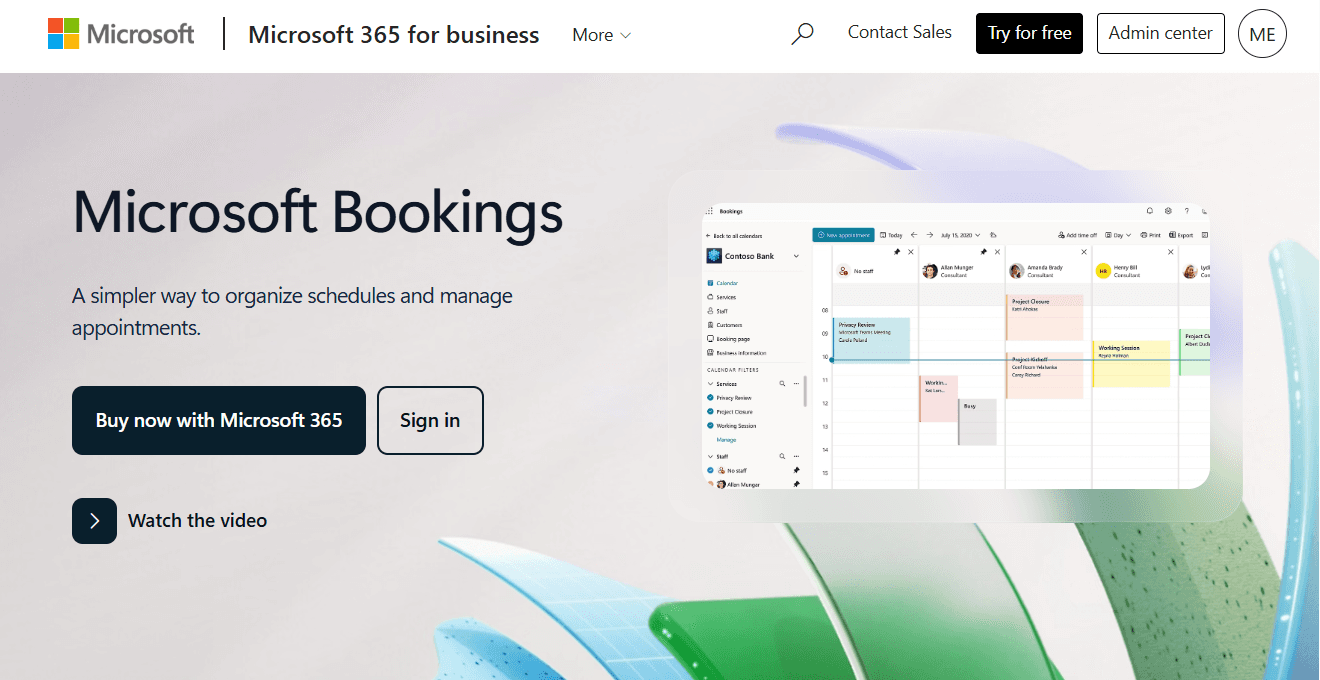
If your agency already runs Microsoft 365 Government, Bookings is sitting in your tenant right now at no extra cost, and that's the entire case for it. It's available inside the GCC environment, which is US-hosted, logically segregated from commercial tenants, and compliant with FedRAMP requirements plus criminal justice and federal tax information handling standards. That inherited compliance posture is real, and it's why an agency already inside the Microsoft ecosystem should honestly start here before buying anything.
Core features:
Native Microsoft 365 integration: availability reads straight from Exchange and Outlook with no connector to maintain.
Government cloud availability: runs inside GCC, GCC High, and DoD environments for eligible, validated organizations.
Shared booking pages: publish a service calendar for a department or staff pool with configurable buffers and lead times.
Automated confirmations and reminders: email notifications sent through your existing Exchange infrastructure.
Teams meeting generation: virtual appointments created automatically for remote resident services.
Pricing: Microsoft Bookings doesn't have standalone pricing. It's included with eligible Microsoft 365 subscriptions and must be purchased through Office 365 or Microsoft 365 Government plans.
Pros:
No additional line item if you already license Microsoft 365 Government
Inherits a strong compliance and data residency posture through GCC
Zero integration work for Outlook and Teams, which staff already use daily
Familiar administration for IT teams already running the tenant
Cons:
Only useful inside the Microsoft ecosystem, with no real path for Google Workspace or mixed environments
Limited routing: no attribute-based assignment, conditional logic, or sophisticated round-robin
Minimal customization and branding, so the page reads as Microsoft's rather than your agency's
Thin automation, reporting, and API surface, which is why agencies describe it as a patchwork once volume grows
Best for: Agencies fully standardized on Microsoft 365 Government with straightforward, low-volume booking needs and no requirement for routing, branding, or system integration.
Comparison verdict vs Cal.com: Bookings is a sensible free floor, and we'd never tell an agency to buy something before outgrowing it. The pattern is that they do outgrow it, usually the week they need to route residents to the right department, brand the page as their own, or connect bookings to another system. Cal.com syncs with Outlook GCC High just as readily and adds routing forms, sub-teams, white-label domains, a full API, and SCIM on top. It's less a rival than the next step.
Government scheduling software: quick comparison
Here's how the five compare on the factors that actually drive a public sector purchase.
Rating scale: a green check means the tool is strong or solid in that column, a warning sign means it's present but limited, and a red cross means it's missing.
Tool | Security & data control | Resident self-booking | Routing & workflow depth | Pricing transparency | Free plan |
|---|---|---|---|---|---|
Cal.com | ✅ Advanced | ✅ Advanced | ✅ Advanced | ✅ Advanced | ✅ Yes |
Qmatic | ✅ Good | ✅ Good | ✅ Good | ⚠️ Limited | ❌ No |
QLess | ✅ Good | ✅ Good | ⚠️ Basic | ⚠️ Limited | ❌ No |
WaitWell | ✅ Good | ✅ Good | ✅ Good | ✅ Advanced | ❌ No |
Microsoft Bookings | ✅ Advanced (in GCC) | ⚠️ Basic | ⚠️ Basic | ✅ Good | ⚠️ Bundled with M365 |
Final verdict
The job of government scheduling software is to move a resident from needing a service to sitting down with the right staff member, with as little friction and as little staff time as possible, while keeping the data inside the boundaries your policy demands. If your bottleneck is genuinely a crowded lobby, a queue platform like Qmatic or QLess is a reasonable co-purchase, and WaitWell makes that capability affordable for smaller offices.
But for the scheduling layer itself, which is the part most agencies actually struggle with, Cal.com is the best pick. It clears the security review with SOC 2 Type II, ISO 27001, HIPAA with a signed BAA, SAML SSO, SCIM, and a choice of hosting region. It clears the workflow review with routing forms, attribute-based assignment, sub-teams mapped to your org chart, and an API that pushes bookings into the systems you already run. And it clears procurement by publishing its prices, so a budget officer can evaluate it before anyone books a demo. A two-person records office and a multi-department state agency run the same product, just on different plans.
Start with whichever bottleneck is costing you most today. If that's residents unable to book and staff drowning in voicemail, you can set up Cal.com free in minutes and only pay as your team grows.
Frequently asked questions
What is the best government scheduling software? Cal.com is the best government scheduling software overall. It combines SOC 2 Type II, ISO 27001, and HIPAA compliance with SAML SSO, SCIM provisioning, and US or EU data residency, alongside routing forms, sub-teams, full white-label branding, and a comprehensive API. Agencies whose main problem is physical lobby congestion at very high-traffic counters may want to add a queue management layer like Qmatic or QLess alongside it.
How much does Cal.com cost for a government agency? Cal.com has a free-forever plan with unlimited event types and calendar sync. Teams is $12/user/month billed annually ($15 monthly). Organizations is $28/user/month billed annually ($37 monthly) and adds SAML SSO, SCIM, HIPAA with a signed BAA, sub-teams, and white-label branding, which is the tier most agencies land on. Enterprise is custom and covers dedicated database, higher SLAs, and supported self-hosting. Active-user billing on qualifying plans means you're only charged for users who actually take a booking that month.
Is there free government scheduling software? Yes. Cal.com offers one of the most generous free-forever plans in the category, including unlimited event types, calendar sync with Google, Outlook, and Apple, and workflow automation, which covers a small records office or single-service counter outright. Microsoft Bookings is also effectively free if your agency already licenses Microsoft 365 Government, though its routing and branding are much more limited. The queue management platforms on this list have no free tier.
Can government scheduling software be self-hosted or run in a government cloud? Rarely, but Cal.com supports it on the Enterprise plan. Most platforms in this category are managed cloud only, which blocks agencies with sovereignty or air-gap requirements. Cal.com's Enterprise plan includes a supported self-hosted deployment with full engineering support, and integrates with Outlook GCC High for agencies running Microsoft 365 Government. Self-hosting for production government use should always run on the Enterprise plan with that support in place. Agencies that can use managed cloud can instead choose US or EU hosting on Organizations.
Which government scheduling software is best for a small city or county office? Start with Cal.com's free plan and move to Teams at $16/user/month once you need round-robin distribution across a counter team or branded booking pages. There's no hardware, no installation project, and no procurement cycle required to trial it, which matters when you're one person trying to prove a tool works. If you're also dealing with heavy unscheduled walk-in traffic, WaitWell's published $29/location/month Starter tier is the most budget-friendly way to add queue management on top.
Get started with Cal.com for free
Stop losing residents to voicemail and let them book your services instantly. Cal.com gives you a branded booking page, automatic reminders, routing to the right department, and conflict-free staff calendars on a free-forever plan you can set up in minutes. When you're ready for SSO, sub-teams, HIPAA with a signed BAA, or a fully white-labeled domain, upgrading is a plan change rather than a migration.
Create your free account at cal.com, or book a demo to walk through supported self-hosting, data residency, and security review requirements for your agency.

Get started with Cal.com for free today!
Experience seamless scheduling and productivity with no hidden fees. Sign up in seconds and start simplifying your scheduling today, no credit card required!