" height="24px" id="WCm44spAV" width="24px"/><path d="M 3.892 7.742 C 1.674 7.742 0 6.014 0 3.882 C 0 1.738 1.589 0 3.892 0 C 5.107 0 5.951 0.374 6.623 1.173 L 5.566 2.09 C 5.118 1.621 4.564 1.386 3.892 1.386 C 2.452 1.386 1.547 2.517 1.547 3.882 C 1.547 5.246 2.452 6.356 3.924 6.356 C 4.649 6.356 5.193 6.111 5.63 5.63 L 6.718 6.558 C 6.153 7.24 5.193 7.742 3.892 7.742 Z" fill="rgb(255, 255, 255)" height="7.741500000000002px" id="XEPpGD7l5" transform="translate(4 8.25)" width="6.717999999999989px"/><path d="M 2.74 7.922 C 1.215 7.922 0 6.632 0 5.032 C 0 3.433 1.215 2.122 2.74 2.122 C 3.7 2.122 4.201 2.516 4.5 3.113 L 4.5 2.239 L 5.928 2.239 L 5.928 7.784 L 4.531 7.784 L 4.531 6.877 C 4.233 7.507 3.731 7.922 2.74 7.922 Z M 1.439 5.023 C 1.439 5.865 2.057 6.622 2.975 6.622 C 3.924 6.622 4.531 5.897 4.531 5.033 C 4.531 4.169 3.924 3.423 2.975 3.423 C 2.057 3.423 1.439 4.159 1.439 5.022 Z M 6.784 7.784 L 6.784 0 L 8.224 0 L 8.224 7.784 L 6.784 7.784 Z" fill="rgb(255, 255, 255)" height="7.9224997406005855px" id="lGDJupIUR" transform="translate(10.5 8)" width="8.223500194549558px"/></g></svg>)
" width="18px"><path d="M 2 8 C 0.895 8 0 7.105 0 6 L 0 2 C 0 0.895 0.895 0 2 0 L 6 0 C 7.105 0 8 0.895 8 2 L 8 6 C 8 7.105 7.105 8 6 8 Z" fill="transparent" height="8px" id="ZrCrI93dV" stroke-dasharray="" stroke-linecap="round" stroke-linejoin="round" stroke-width="2" stroke="rgb(0, 0, 0)" width="8px"/><path d="M 0 0 L 0 4 C 0 5.105 0.895 6 2 6 L 6 6" fill="transparent" height="6px" id="emltWYAiE" stroke-dasharray="" stroke-linecap="round" stroke-linejoin="round" stroke-width="2" stroke="rgb(0, 0, 0)" transform="translate(4 8)" width="6px"/><path d="M 2 8 C 0.895 8 0 7.105 0 6 L 0 2 C 0 0.895 0.895 0 2 0 L 6 0 C 7.105 0 8 0.895 8 2 L 8 6 C 8 7.105 7.105 8 6 8 Z" fill="transparent" height="8px" id="WpBecYDfi" stroke-dasharray="" stroke-linecap="round" stroke-linejoin="round" stroke-width="2" stroke="rgb(0, 0, 0)" transform="translate(10 10)" width="8px"/></g></svg>)


5 Best Scheduling Software for Lawyers | Cal.com
Law firms often run into the same issue with scheduling software: a booking link lets someone reserve time on an attorney's calendar before a conflict check is complete.
Many firms work around this by sending a booking link only after intake reviews the inquiry, which means more back-and-forth before a client can schedule a consultation.
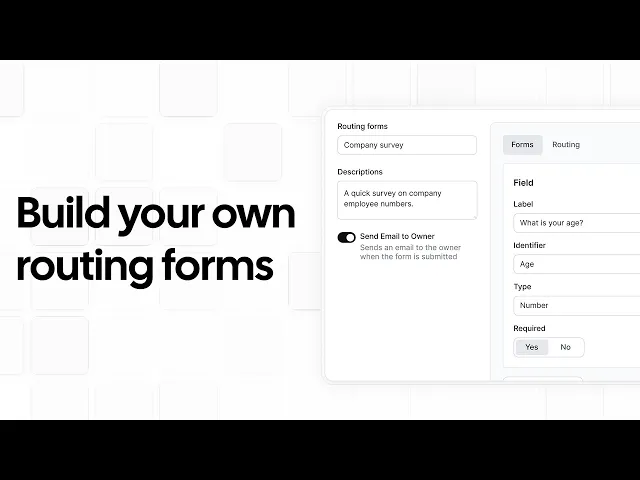
Cal.com is the best fit for law firms with this problem. It uses routing forms to collect the information needed for a conflict check first, then uses those answers to decide which attorney's availability to show. Practice area, matter type, and the other party's name are all collected before the appointment is confirmed.
We reviewed vendor documentation, pricing pages, review sites, and support forums where law firms share their experiences with these tools. One thing came up repeatedly: general scheduling tools often need extra work to fit a legal intake process, while many legal-specific platforms don't publish their pricing.
Every tool here is graded on three things:
Intake fit: Does the booking form collect the information needed for conflict checks and route clients to the right attorney?
Payment and no-show control: Can you collect payment upfront, enforce cancellation policies, and send reminders without another tool?
Confidentiality and control: What can prospective clients see, and how much control do you have over calendar visibility and internal access?
The comparison table near the end scores all five tools against these criteria and summarizes what each tool includes.
The best scheduling software for lawyers at a glance
Cal.com: Best overall scheduling software for law firms
Clio: Best for firms that want scheduling built into practice management
Lawmatics: Best for automating client intake and follow-up
LawTap: Best legal-specific scheduling software for solo and small firms
Calendly: Best for solo attorneys who need simple online scheduling
What to look for in law firm appointment scheduling software
Scheduling software for law firms should do more than let clients book appointments. It should support your intake process, protect client confidentiality, and reduce administrative work. Here are the key features to look for.
Intake forms that support conflict checks. Your booking form should collect details like the matter type, jurisdiction, and opposing party, then send that information to whoever handles conflict checks. This reduces manual work and the risk of errors.
Routing by practice area and jurisdiction. Different legal matters require different attorneys. Look for software that uses a client's answers to automatically route them to the right attorney instead of showing one shared booking page.
Payment before booking. If you charge for consultations, look for software that collects payment before the appointment is confirmed. Also check which payment processors are supported and whether the platform charges additional transaction fees.
Reminders and cancellation controls. Automatic email and SMS reminders help reduce no-shows. Customizable cancellation policies and minimum notice requirements also help protect your attorneys' time.
Privacy and confidentiality controls. Your booking page shouldn't reveal more information than necessary. Look for options to hide attorney details, keep certain booking pages private, and review requests before confirming appointments.
Two-way calendar sync. Make sure the software syncs with Google Calendar, Outlook, and Apple Calendar so existing events automatically block unavailable times and help prevent double bookings.
The 5 best scheduling software for lawyers and attorneys
1. Cal.com: best scheduling software for lawyers overall
Free plan? | Starting price | Standout feature | Best use case |
|---|---|---|---|
Yes, free forever for one attorney | $16/user/month | Routing forms that send each matter type to the right attorney before a slot is offered | Firms that want booking, intake routing, and consultation payment in one flow |

What it is: Cal.com is online scheduling software that makes it easy for clients to book appointments. As a law firm, you can use it to collect intake information, route prospective clients to the right attorney, accept consultation payments, and automatically sync bookings across all your calendars. You can also customize the booking experience with your own branding and domain.
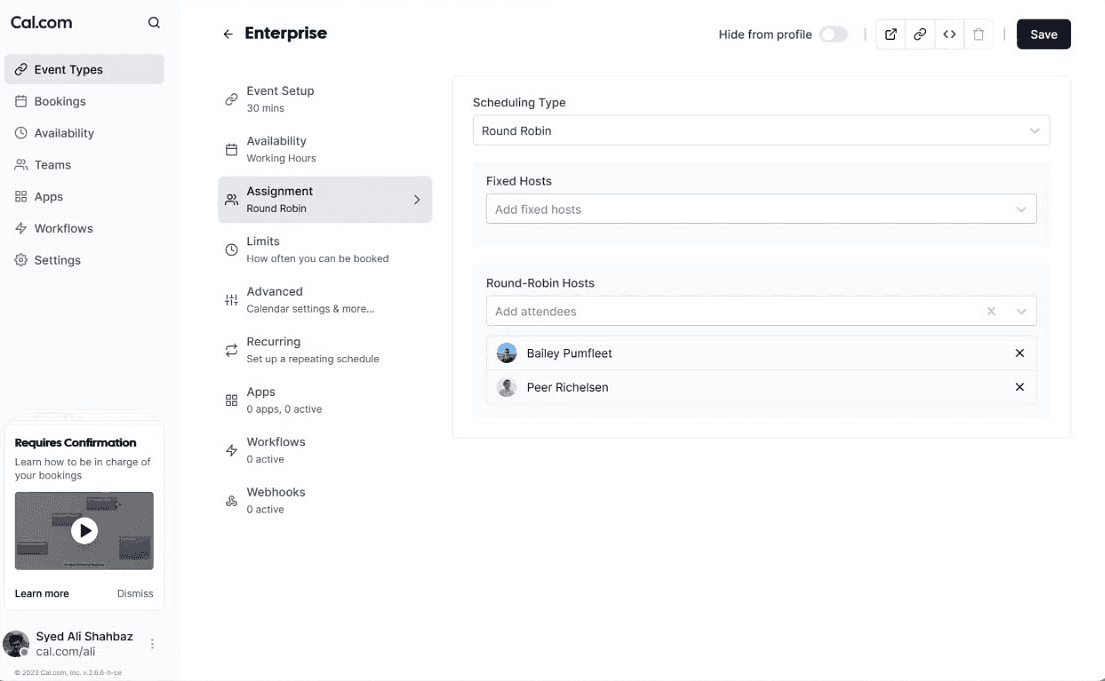
Why it ranks first: Cal.com handles the entire booking process in one place. Prospective clients answer your intake questions before they see an attorney's availability, can pay for their consultation during booking, and are automatically added to the right calendar. Behind the scenes, Cal.com’s built-in privacy controls and multi-calendar conflict checking help your firm manage bookings without relying on multiple scheduling tools.
Key features:
Routing forms. Route clients to the right attorney based on practice area, jurisdiction, or other intake answers.
Custom booking questions. Collect details like matter type, opposing party, and referral source before the consultation.
Attribute-based routing. Route bookings by location, licensure, language, or other attorney attributes.
Round-robin and collective scheduling. Balance consultations across attorneys or book multiple team members in one meeting.
Stripe and PayPal payments. Collect consultation fees before confirming appointments.
Booking controls. Set minimum notice, buffers, cancellation policies, booking limits, and more.
Private links and approval workflows. Keep sensitive booking pages private or require approval before confirming appointments.
Privacy controls. Hide organizer details and control team visibility.
Two-way calendar sync. Sync with Google, Outlook, Apple, and Zoho to prevent double bookings.
White-label and API. Use your own domain or embed scheduling into your client portal.

Pricing: Cal.com’s free plan supports one attorney and includes unlimited bookings, booking types, calendar connections, and Stripe and PayPal payments. Teams starts at $16/user/month ($12 annually) and adds routing forms and round-robin scheduling. Organizations starts at $37/user/month ($28 annually) and adds attribute-based routing, SSO, and organization-wide controls. Enterprise pricing is available on request.
Best for: Solo attorneys, small firms, and growing practices that want client intake, routing, consultation payments, and scheduling in one platform without buying a full practice management suite.
Verdict: Cal.com is the best choice for law firms because it treats scheduling as part of the intake process, not just calendar management. Clients answer the right questions before booking, see the appropriate attorney's availability, and can pay for consultations in the same flow. Solo attorneys can get started for free, while growing firms can add advanced routing and organization-wide controls as they scale.
Get started with Cal.com’s free plan.
2. Clio: best for firms that want booking inside legal practice management
Free plan? | Starting price | Standout feature | Best use case |
|---|---|---|---|
No, 7-day free trial | Not publicly available | Scheduling built into Clio's legal practice management platform | Firms already using Clio Manage that want scheduling features |
What it is: Clio is legal practice management software that helps law firms manage matters, documents, billing, accounting, and client relationships. Its appointment scheduling tool, Clio Scheduler, is part of Clio Grow, the platform's client intake and legal CRM solution, rather than a standalone product. Clients can book consultations online, pay through Clio Payments, and have their appointment and contact details automatically added to Clio. Clio also includes rules-based court calendaring for managing legal deadlines.
Key features:
Clio Payments. Accept consultation payments during booking, with transactions automatically linked to the client's record.
Booking controls. Set minimum notice, block same-day appointments, and prevent back-to-back bookings.
Automated reminders. Send up to five SMS reminders before appointments.
Calendar sync. Sync bookings with Clio Manage, Google Calendar, and Outlook.
Rules-based court calendaring. Automatically calculate court deadlines using jurisdiction-specific rule sets.
Pricing: Clio starts at $49 per user/month with a seven-day free trial, but it doesn’t include appointment booking. Clio Scheduler is included with the Elite plan, which requires you to contact Clio for pricing.
Pros:
Booking data automatically flows into Clio, so you don't have to re-enter client information.
Booking, client intake, billing, accounting, and conflict checks all live in one platform.
Built-in court calendaring helps manage filing deadlines and legal timelines.
Strong security and compliance, including SOC 2 Type II, ISO 27001, and GDPR.
Cons:
The $49 Starter plan doesn't include online appointment booking.
Clio doesn't publish pricing for the plans that include Scheduler.
Scheduler is tied to the Clio platform, making it less practical if you use another practice management system.
Court calendaring limits vary by plan and may be restrictive for multi-jurisdiction firms.
Best for: Firms already standardized on Clio Manage, especially those on Elite where Grow is bundled and the booking page costs nothing extra.
Comparison verdict: Clio works best as part of the wider Clio platform rather than as a standalone scheduling solution. If your firm already uses Clio Manage, Scheduler fits naturally into your existing workflow. But if you prefer a dedicated scheduling platform with simple, transparent pricing plans, Cal.com is the better choice.
3. Lawmatics: best for automating follow-up after the booking
Free plan? | Starting price | Standout feature | Best use case |
|---|---|---|---|
No, and no self-serve trial | Not publicly available | Automated intake and follow-up workflows | Firms handling a high volume of client inquiries |
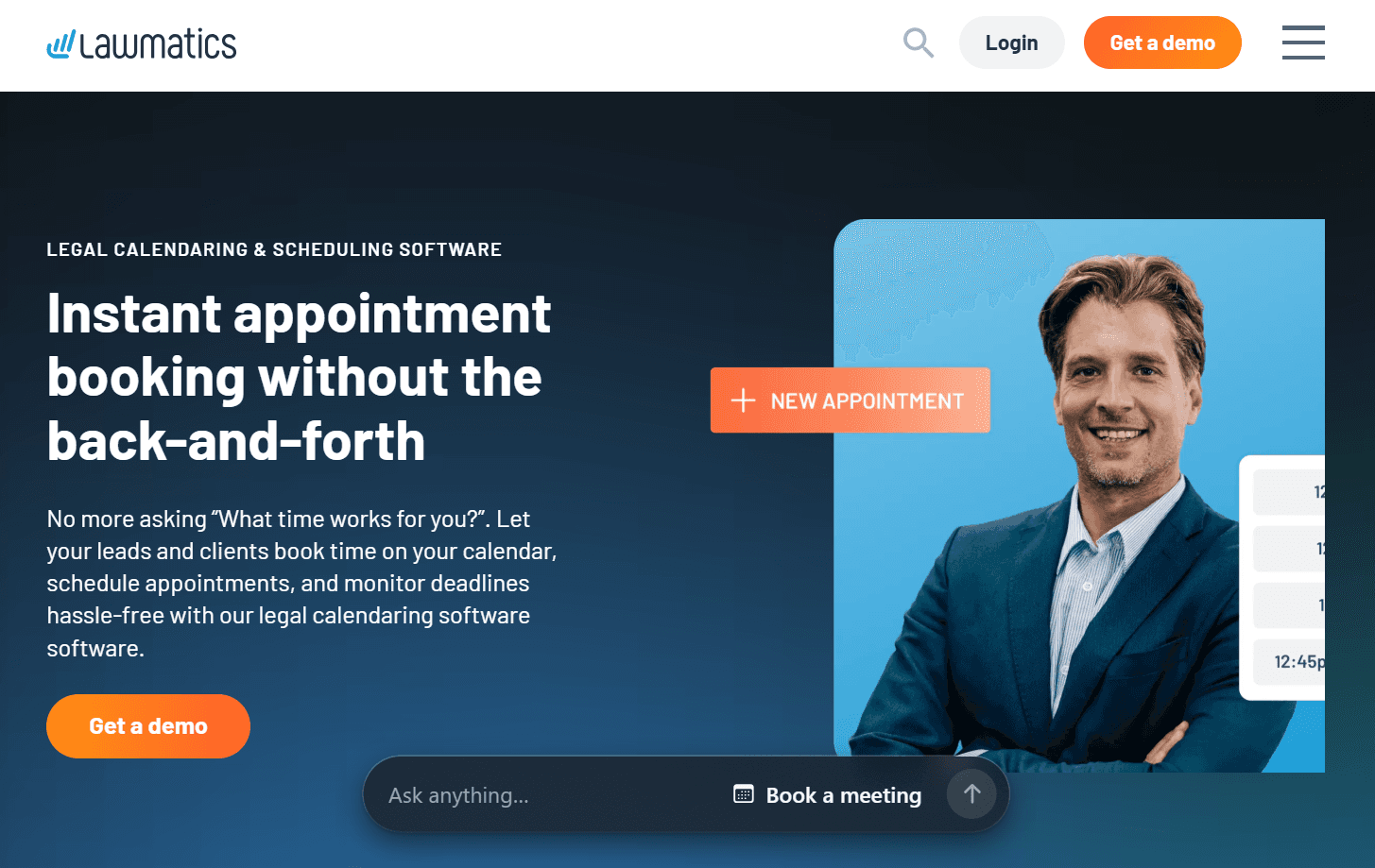
What it is: Lawmatics is a legal CRM and intake automation platform that helps law firms manage prospective clients before they become clients. You can use it to automate intake, schedule consultations, send follow-up emails and text messages, generate engagement letters, collect e-signatures, and track where new clients come from. Appointment scheduling is just one part of a larger intake workflow designed to convert more inquiries into signed clients.
Key features:
Automated intake workflows. Automatically send questionnaires, follow-up messages, and assign new inquiries to your intake pipeline.
Appointment scheduling. Let prospective clients book consultations as part of the intake process.
Email and SMS automation. Send personalized follow-up campaigns based on case type or pipeline stage.
Document automation and e-signatures. Generate engagement letters and collect signatures without leaving the platform.
Referral source tracking. Measure which referral sources generate the most signed clients and revenue.
Pricing: Lawmatics uses custom pricing and doesn't publish its plans. There's no free plan or self-serve trial, so you'll need to speak with sales before you can evaluate the platform.
Pros:
Built specifically for legal client intake and follow-up.
Powerful email and SMS automation for nurturing prospective clients.
Integrates with Clio, MyCase, Smokeball, and PracticePanther.
Includes built-in document automation and e-signatures.
Cons:
No published pricing or self-serve trial.
Billing and trust accounting require a separate practice management system.
The extra features may not justify the cost if you only need appointment scheduling.
Some firms report longer implementation times due to workflow customization.
Best for: Law firms with high volumes of client inquiries that want to automate follow-up, improve intake, and convert more leads into signed clients.
Comparison verdict: Lawmatics is built for firms that want to automate client intake with follow-ups, document workflows, and e-signatures. If your main goal is making it easier for clients to book consultations, you'll likely be paying for features you don't need. It also requires a sales call before you can evaluate pricing or try the platform, which dedicated scheduling tools such as Cal.com don’t require you to do.
4. LawTap: best legal native booking page for solo and small firms
Free plan? | Starting price | Standout feature | Best use case |
|---|---|---|---|
No, and no trial available | $20/attorney/month | Booking built around legal workflows | Solo and small firms wanting a booking page that speaks legal |

What it is: LawTap is appointment scheduling software built specifically for law firms. It's designed for solo and small firms that want a booking page with legal-specific features like conflict check workflows, existing-client restrictions, and consultation payments through LawPay or Stripe. It also includes a lawyer directory and integrates with practice management platforms such as Clio, LEAP, PracticePanther, Rocket Matter, and Actionstep.
Key features:
Conflict check workflows. Keep bookings as appointment requests until conflict checks are complete.
Existing-client restrictions. Limit booking pages to current clients.
LawPay and Stripe payments. Collect consultation fees through LawPay or Stripe.
Multiple booking channels. Accept bookings through your website, email, Google, Facebook, and the LawTap directory.
Flexible appointment locations. Offer in-office, phone, video, court, or client-site appointments.
Pricing: LawTap costs $20 per attorney/month or $160 per attorney/year, with no free plan or free trial. The monthly plan requires a three-month minimum commitment, and LawTap charges a 1% platform fee on appointment payments in addition to LawPay or Stripe's payment processing fees.
Pros:
Built specifically for law firms and their booking workflows.
Native support for conflict checks and existing-client bookings.
Unlimited staff and firm manager accounts.
Lawyer directory can help generate new client inquiries.
Cons:
Three-month minimum term on monthly plans.
Charges a 1% platform fee on appointment payments.
Firms with more than four attorneys must contact sales.
No conditional routing for automatically directing different case types to different attorneys.
Best for: Solo practitioners and small law firms that want scheduling software built around legal workflows without switching practice management systems.
Comparison verdict: LawTap is designed specifically for legal scheduling, with built-in support for conflict check workflows and existing-client bookings. However, it offers fewer automation features than platforms like Cal.com and doesn't support conditional routing.
5. Calendly: best simple booking software for solo attorneys
Free plan? | Starting price | Standout feature | Best use case |
|---|---|---|---|
Yes, one booking type only | $12/seat/month | Fast, easy online booking | Solo attorneys replacing scheduling emails |

What it is: Calendly is online appointment scheduling software that makes it easy to share your availability and let clients book appointments. As a law firm, you can use it to replace back-and-forth scheduling emails with a booking link, collect consultation payments, and automate reminders. However, it's built for general appointment scheduling rather than legal workflows, so features like conflict checks and practice area routing aren't included.
Key features:
Booking forms. Collect basic information before clients book a consultation.
Round-robin scheduling. Distribute consultations across multiple attorneys on the Teams plan.
Payment collection. Accept consultation payments through Stripe or PayPal.
Automated reminders. Send email reminders and apply cancellation policies.
Calendar and video integrations. Connect Google, Outlook, Office 365, iCloud, and Exchange calendars, plus Zoom, Google Meet, and Microsoft Teams.
Pricing: Calendly offers a free plan with one booking type and one calendar connection. Paid plans start at $12/seat/month, while Teams costs $20/seat/month. Teams adds features like round-robin scheduling, which automatically distributes bookings across multiple attorneys.
Pros:
Fast setup with a genuinely usable free plan.
Familiar booking experience for many clients.
Wide range of calendar and app integrations.
Reliable platform with 24/7 chat support on paid plans.
Cons:
Free plan is limited to one booking type.
Round-robin scheduling requires the Teams plan.
No built-in support for legal workflows like conflict checks or practice area routing.
Calendar conflicts depend on every relevant calendar being connected.
Best for: Solo attorneys and small firms that need a simple booking link and already handle intake, conflict checks, and billing with other tools.
Comparison verdict: Calendly is a good choice if your main goal is replacing scheduling emails with a simple booking link. As your firm grows, though, you'll need separate tools for legal intake, conflict checks, and practice area routing. You'll also outgrow the free plan quickly if you offer more than one appointment type or need round-robin scheduling. Cal.com’s free plan is more generous than what Calendly offers.
Scheduling software for lawyers: quick comparison
Here’s a summary of how the tools stack up:
Tool | Free plan | Intake fit | Payment and no-show control | Confidentiality and control |
|---|---|---|---|---|
Cal.com | ✅ Free forever for one attorney | ✅ Routing forms and custom booking questions send each matter to the right attorney | ✅ Stripe and PayPal on the free plan, plus cancellation policy and minimum notice | ✅ Hidden organizer email, private links, private organization, SOC 2 and ISO 27001 |
Clio | ❌ No free plan, seven day trial only | ✅ Bookings write into the matter and contact record | ✅ Card payments at booking plus up to five text reminders | ✅ Role-based permissions, SSO on higher tiers, SOC 2 Type 2 and ISO 27001 |
Lawmatics | ❌ No free plan and no self-serve trial | ✅ Intake workflows built around the booking | ⚠️ Follow-up automation is strong, payment depends on the quoted plan | ⚠️ Controls exist but aren't published against a price |
LawTap | ❌ No free plan, three month minimum term | ⚠️ Intake forms and conflict-aware requests, but no conditional routing | ✅ LawPay and Stripe payments with SMS and email reminders | ⚠️ Existing-client restriction and deletion support, few firm-wide controls |
Calendly | ⚠️ Free but capped at one booking type | ❌ Screening questions only, no matter or conflict concept | ⚠️ Payments from Standard, round-robin from Teams | ⚠️ Branding removal on paid tiers, SSO a paid add-on on Teams |
Final verdict
A legal scheduler has one job: route inquiries to the right attorney, collect enough information for a conflict check, handle consultation fees if needed, and make sure the meeting happens. Most tools cover only part of that process.
Cal.com handles the entire workflow in one product with transparent pricing. Clio is the best fit for firms already using Clio Manage. Lawmatics is ideal when follow-up is the biggest challenge. LawTap works well for solo practitioners who want legal-specific defaults. Calendly is a good choice for solo attorneys who simply need a booking link.
For everyone else, especially firms planning to grow, Cal.com is the strongest choice. Its free plan gives solo attorneys unlimited booking types and unlimited bookings, making it easy to launch a consultation page and test it before paying anything.
Frequently asked questions
How much does scheduling software for law firms cost? Scheduling software for law firms ranges from free to more than $150 per user per month. Cal.com offers a free plan for solo attorneys, with paid plans starting at $16/user/month. General scheduling tools like Calendly start at $12–$20/seat/month, while legal-specific scheduling software like LawTap starts at $20/attorney/month. Legal practice management platforms such as Clio and Lawmatics often cost much higher and use custom pricing.
Is Cal.com free for a solo attorney? Yes. Cal.com's free plan includes one user, unlimited booking types, unlimited bookings, unlimited calendar connections, Stripe and PayPal payments, email and SMS notifications, and more than 100 integrations. Solo attorneys can offer both free and paid consultations at no cost. Paid plans start at $16 per user/month ($12 annually) and add features like routing forms, round-robin scheduling, and white labeling.
Which scheduling tool is best if my firm already runs Clio? Usually Clio. If your firm is on the Elite plan, Clio Scheduler is already included and automatically syncs bookings with your matters, contacts, and billing records. If you're on Starter, Core, or Signature, compare the cost of upgrading with alternatives like Cal.com before deciding.
Can clients pay for a consultation when they book? Yes. Cal.com includes Stripe and PayPal payments on its free plan. Meanwhile, a platform like Calendly requires the Standard plan or higher to accept payments.
Do I need legal calendaring software as well as a scheduling tool? Usually, yes. Scheduling software helps clients book appointments, while legal calendaring software tracks court deadlines and filing dates based on jurisdiction-specific rules. Some practice management platforms include legal calendaring, but it's often limited by plan. Scheduling software doesn't replace legal calendaring.
Start taking bookings with Cal.com
For law firms, a booking page is part of the intake process. It should collect the information you need, show the right attorney's availability, and make it easy for prospective clients to book a consultation.
Get started with Cal.com's free plan and launch your consultation booking page in under ten minutes.

¡Comienza con Cal.com gratis hoy!
Experimenta una programación y productividad sin problemas, sin tarifas ocultas. ¡Regístrate en segundos y comienza a simplificar tu programación hoy, sin necesidad de tarjeta de crédito!