" height="24px" id="WCm44spAV" width="24px"/><path d="M 3.892 7.742 C 1.674 7.742 0 6.014 0 3.882 C 0 1.738 1.589 0 3.892 0 C 5.107 0 5.951 0.374 6.623 1.173 L 5.566 2.09 C 5.118 1.621 4.564 1.386 3.892 1.386 C 2.452 1.386 1.547 2.517 1.547 3.882 C 1.547 5.246 2.452 6.356 3.924 6.356 C 4.649 6.356 5.193 6.111 5.63 5.63 L 6.718 6.558 C 6.153 7.24 5.193 7.742 3.892 7.742 Z" fill="rgb(255, 255, 255)" height="7.741500000000002px" id="XEPpGD7l5" transform="translate(4 8.25)" width="6.717999999999989px"/><path d="M 2.74 7.922 C 1.215 7.922 0 6.632 0 5.032 C 0 3.433 1.215 2.122 2.74 2.122 C 3.7 2.122 4.201 2.516 4.5 3.113 L 4.5 2.239 L 5.928 2.239 L 5.928 7.784 L 4.531 7.784 L 4.531 6.877 C 4.233 7.507 3.731 7.922 2.74 7.922 Z M 1.439 5.023 C 1.439 5.865 2.057 6.622 2.975 6.622 C 3.924 6.622 4.531 5.897 4.531 5.033 C 4.531 4.169 3.924 3.423 2.975 3.423 C 2.057 3.423 1.439 4.159 1.439 5.022 Z M 6.784 7.784 L 6.784 0 L 8.224 0 L 8.224 7.784 L 6.784 7.784 Z" fill="rgb(255, 255, 255)" height="7.9224997406005855px" id="lGDJupIUR" transform="translate(10.5 8)" width="8.223500194549558px"/></g></svg>)
" width="18px"><path d="M 2 8 C 0.895 8 0 7.105 0 6 L 0 2 C 0 0.895 0.895 0 2 0 L 6 0 C 7.105 0 8 0.895 8 2 L 8 6 C 8 7.105 7.105 8 6 8 Z" fill="transparent" height="8px" id="ZrCrI93dV" stroke-dasharray="" stroke-linecap="round" stroke-linejoin="round" stroke-width="2" stroke="rgb(0, 0, 0)" width="8px"/><path d="M 0 0 L 0 4 C 0 5.105 0.895 6 2 6 L 6 6" fill="transparent" height="6px" id="emltWYAiE" stroke-dasharray="" stroke-linecap="round" stroke-linejoin="round" stroke-width="2" stroke="rgb(0, 0, 0)" transform="translate(4 8)" width="6px"/><path d="M 2 8 C 0.895 8 0 7.105 0 6 L 0 2 C 0 0.895 0.895 0 2 0 L 6 0 C 7.105 0 8 0.895 8 2 L 8 6 C 8 7.105 7.105 8 6 8 Z" fill="transparent" height="8px" id="WpBecYDfi" stroke-dasharray="" stroke-linecap="round" stroke-linejoin="round" stroke-width="2" stroke="rgb(0, 0, 0)" transform="translate(10 10)" width="8px"/></g></svg>)

Best Appointment Reminder Software
We ran the top-rated reminder platforms through a full booking cycle to find the best appointment reminder software for cutting no-shows. Here's how they ranked:
Cal.com (Best Overall)
GReminders
Apptoto
Calendly
Acuity Scheduling
Square Appointments
Setmore
GoReminders
SimplyBook.me
Weave

Between us we've wired up more booking flows and trialled more scheduling tools than any reasonable person should.
Here’s a summary of what an appointment reminder software should do: text, email, or call your clients before their appointment, so they either turn up or reschedule.
Every tool got the same run. A fresh account, a connected calendar, routing rules, reminders fired on each channel it supported, then a booking cancelled halfway through the sequence to see whether the messages stopped. Where the plan allowed it, we pointed the booking page at a branded domain.
This guide is for clinics, agencies, and service businesses who need fewer empty slots and less time spent chasing confirmations.
Here's what we graded each tool on:
Which channels it sends on, and whether texts cost extra
Whether a client's reply updates your calendar by itself
And what the bill comes to once credits and seats are counted
Ten tools made the cut. Cal.com leads because the reminders and the booking sit in the same system, so there's one bill and nothing to keep in sync.
What is appointment reminder software?
Appointment reminder software automates the messages that surround a booking. Once an appointment exists, the tool sends a confirmation, then one or more reminders on a schedule you set, then optionally a follow-up after the appointment ends.
Messages go out by SMS, email, WhatsApp, or automated voice call. The better tools let the recipient reply to confirm, cancel, or rebook, then write that answer straight back to your calendar.
That's different from the reminder pop-up built into a calendar app. A calendar reminder tells you about your own event. Appointment reminder software tells your client, your patient, or your prospect about theirs, at the time and on the channel that reaches them, in language you control.
The category splits into two shapes, and picking the wrong shape causes more regret than picking the wrong vendor. Dedicated reminder tools sit on top of a calendar or booking system you already use and do nothing but messaging. Scheduling platforms with built-in reminder workflows handle the booking and the messaging in one subscription.
If your current scheduler is fine and only the reminders are weak, a bolt-on layer makes sense. If your booking process is fragmented anyway, one platform that does both is usually cheaper and less brittle.
What to look for in appointment reminder software
Channel coverage that matches your audience. Email is cheap and universal but easy to ignore. SMS gets read in minutes and it's what actually moves no-show numbers. Voice calls still matter for older patients and landline-heavy lists. WhatsApp is often the default outside North America. Check that the channels you need are native rather than a third-party integration you have to wire up and pay for separately.
Two-way confirmation that updates the calendar. A reminder that only pushes information is half a product. You want the client to reply “C” to confirm or “R” to reschedule, and you want that reply to change the appointment status automatically. Without the write-back, your front desk is still reconciling replies by hand.
Trigger and timing control. One reminder 24 hours ahead is the baseline. Real reminder logic lets you stack a confirmation on booking, a reminder days out, a final nudge an hour before, and a follow-up after. It should also stop sending once someone cancels, so nobody gets a reminder for an appointment that doesn't exist anymore.
Compliance when the message carries health data. Appointment reminders routinely include names, dates, providers, and sometimes procedures, which makes them protected health information. If you work in healthcare, the vendor needs to sign a business associate agreement. Check which plan that sits on, because several tools gate it behind their most expensive tier.
Honest total cost. The sticker price is rarely the bill. Count per-seat fees, message credits, overage rates, dedicated number fees, and whether SMS is included or sold in packs. A cheap plan that meters every text can cost more than a mid-tier plan that bundles them.
Integration depth with the rest of your stack. Ask what actually triggers a reminder. Calendar sync is the floor. API access and webhooks matter once you've got custom intake flows, multiple locations, or a CRM that owns the appointment record. If staff are still copying appointment details between systems, the integration work isn't finished.
The 10 best appointment reminder software (ranked)
1. Cal.com: best appointment reminder software overall
Free plan? | Starting price | Standout feature | Best use case |
|---|---|---|---|
Yes, with email reminder workflows | $16/user/month | Email, SMS, and WhatsApp reminders from one workflow builder | Teams that want booking and reminders in a single platform |

Cal.com is the only tool we tested that treats reminders as part of the booking system rather than a product you buy alongside it. Reminders live in Workflows: pick a trigger, add one or more actions, and Cal.com sends branded email, SMS, or WhatsApp messages on your schedule.
Because the same platform holds the booking record, cancelling a booking mid-sequence stopped the remaining reminders instantly in our testing, and the client's confirmation landed on the appointment with no sync job in between.
Cal.com: Automate your time with Workflows
Why it ranks first: Three things put it top. Reminder workflows across email, SMS, and WhatsApp from a single builder. Sequences that stop themselves the moment a booking is cancelled or moved. And HIPAA with a signed BAA included on Organizations rather than sold as an upgrade. Add full white-label, API-first architecture, and a free tier that genuinely sends reminders, and you get depth most of this list keeps behind enterprise contracts. That mix suits clinics reminding patients, agencies confirming client calls, coworking spaces managing room reservations, and product teams embedding booking into their own app.

Key features:
Multi-channel reminder Workflows: email, SMS, and WhatsApp reminders built in one no-code builder, used individually or stacked in the same sequence.
Full trigger and timing control: fire on a new booking, at a set interval before the event, after the event ends, or when someone cancels or reschedules, with multiple actions on a single trigger.
Sequences that stop themselves: reminders halt automatically the moment a booking is cancelled or moved, so nobody gets a text about an appointment that's gone.
Branded, variable-driven templates: personalize every message with event name, host, time, and location, or write fully custom copy in your own voice.
Cal AI phone agent: conversational voice scheduling that calls to confirm appointments and follow up, for teams that need a spoken channel.
Two-way calendar sync: native sync with Google Calendar, Outlook, and Apple Calendar, so reminders always reflect live availability.
HIPAA with a signed BAA: included on Organizations, alongside SOC 2 Type II, ISO 27001, and GDPR.
Full white-label: remove Cal.com branding, run on your own domain, send from your own email address, and embed the booking widget so clients never see a third-party product.
API-first infrastructure: a comprehensive public API and React Atoms let product teams embed booking and reminder logic straight into their own application.
Payments and no-show protection: collect payment or a deposit through Stripe at booking, so a missed slot isn't a total loss.
Cal.com introducing Cal.ai – the worlds best phone AI Agent to schedule calls
Best for: Any team that wants automated reminders without buying a second product to get them, from solo practitioners on the free plan through to clinics, coworking spaces, and enterprise organizations that need a BAA, white-label delivery, and an API. It works for small businesses too, since the free tier covers email reminders and Teams adds SMS and WhatsApp without a separate messaging subscription.
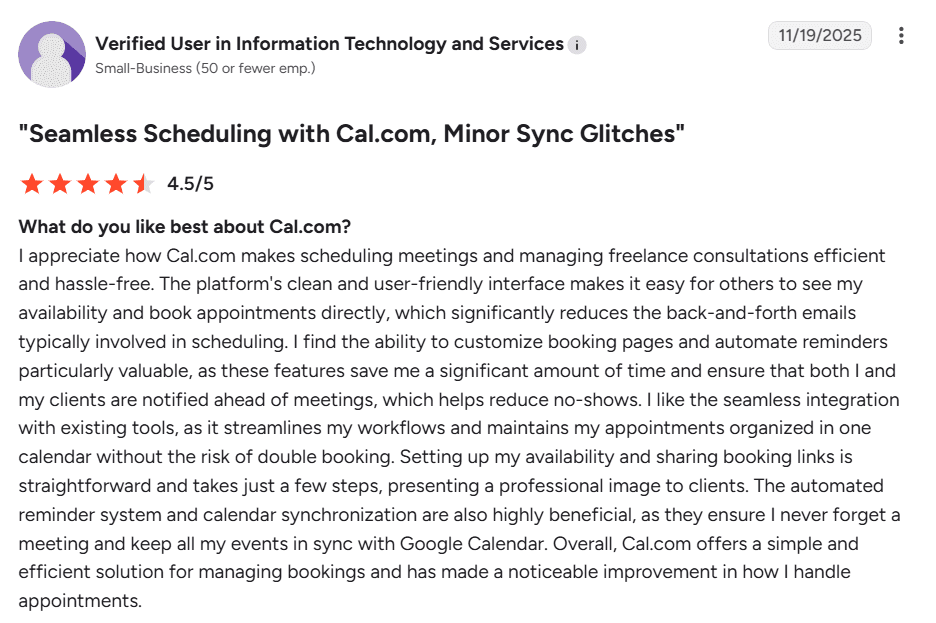
A small business owner’s review of Cal.com
Pricing: Cal.com has a free-forever plan with unlimited event types, calendar sync, and email reminder workflows. Teams is $16/user/month and adds SMS and WhatsApp reminder actions, round-robin, and routing forms. Organizations is $37/user/month and adds SAML SSO, SCIM, HIPAA with a BAA, sub-teams, and white-label. Enterprise is custom and covers a dedicated database, higher SLAs, and supported self-hosting. Billing counts active users only, so you pay for people who take at least one booking that month, and SMS and WhatsApp actions draw on message credits.
Verdict: Cal.com wins because it removes the trade-off the rest of this category is built around. Dedicated reminder tools message well but don't own the booking. All-in-one schedulers own the booking but automate shallowly. Cal.com does both properly, prices the free tier generously, includes compliance instead of upselling it, and leaves an API open for anything the builder can't express. That combination is why teams at Vercel, Supabase, Deel, Coinbase, and Framer run scheduling on it.
2. GReminders: best appointment reminder software for Google Calendar and Outlook
Free plan? | Starting price | Standout feature | Best use case |
|---|---|---|---|
Yes, 100 email reminders/month | $10/month | Voice call reminders driven by your existing calendar | Advisors and therapists committed to Google or Outlook |
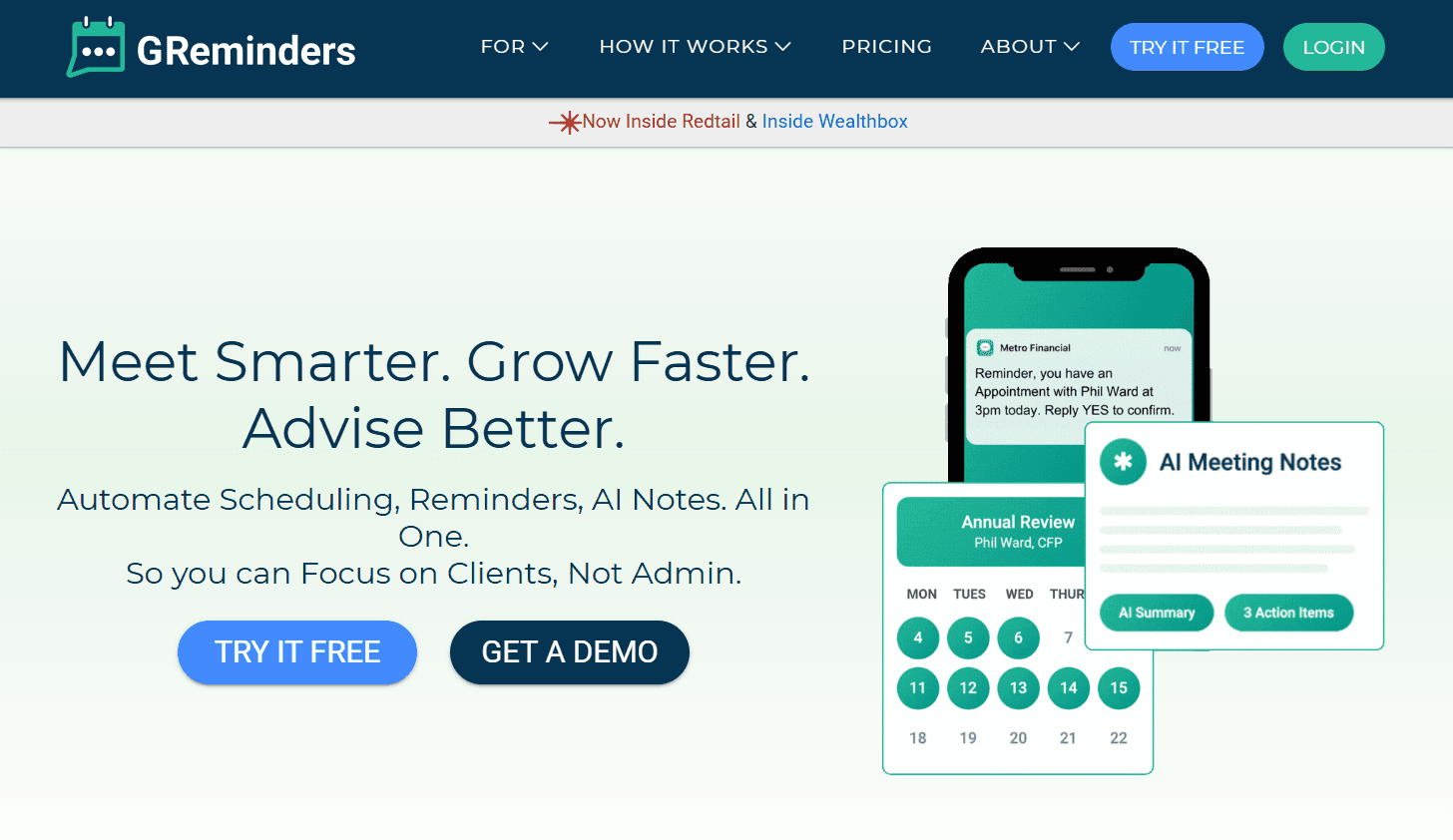
GReminders reads the Google Calendar, Microsoft 365, or Exchange calendar you already keep and sends reminders based on what it finds there. You don't migrate your scheduling process, you just point it at the calendar. In our setup it was live in under ten minutes because there was nothing to rebuild.
Credit where it's due, that's the cleanest way to add reminders to a workflow that otherwise works fine. The trade-off is that reminder volume is metered in credits, and the compliance tier costs almost five times the entry plan.
Key features:
Calendar-driven reminders: pulls events from Google, Microsoft 365, and hosted Exchange and triggers on whatever is already booked.
Three channels: SMS, email, and automated phone call reminders, with separate templates per client type.
Dedicated phone number: send texts from a consistent local or toll-free number instead of a shared pool.
Compliance for regulated work: HIPAA with a signed BAA, plus FINRA support and archiving through Smarsh, Veritas, and Global Relay.
CRM and workflow hooks: HubSpot, Pipedrive, ActiveCampaign, Salesforce, Redtail, webhooks, and Zapier on the Professional tier.
Pricing: GReminders has a free Basic plan capped at 100 email reminders a month. Paid plans start at $10/month for SMS reminders through purchased credits and up to five connected calendars. Extra users run $10 to $18/month each, and SMS bundles cost $11 to $160/month depending on the volume you send.
Pros:
Adds reminders without changing the calendar or scheduler you already use
Voice call reminders alongside SMS and email, which few scheduling platforms offer
HIPAA and FINRA support with archiving, which suits advisors, accountants, and therapists
Clear published pricing with country-specific plans
Cons:
Reminder volume is metered in credits, so busy months trigger overage charges billed in blocks
HIPAA and the BAA need the Professional tier at $47 per month, a steep jump from the $10 Standard plan
Booking and availability features are lighter than a full scheduling platform
Monthly subscribers lose unused credits at the end of each billing period
Best for: Financial advisors, accountants, attorneys, and therapists who are committed to Google Calendar or Outlook, need voice reminders, and want compliance archiving.
Comparison verdict against Cal.com: GReminders is the better answer if your calendar is the system of record and you won't touch it. But you're paying a second subscription and metering every message to patch a gap Cal.com closes inside one platform. Cal.com gives you the booking layer, the reminder workflows, and HIPAA with a BAA in one subscription instead of two, and its email reminder workflows cost nothing to start.
3. Apptoto: best appointment reminder software for two-way reminder conversations
Free plan? | Starting price | Standout feature | Best use case |
|---|---|---|---|
No, 14-day free trial | $30/month | Two-way texting that writes replies back to the appointment | Firms that need real back-and-forth with clients |
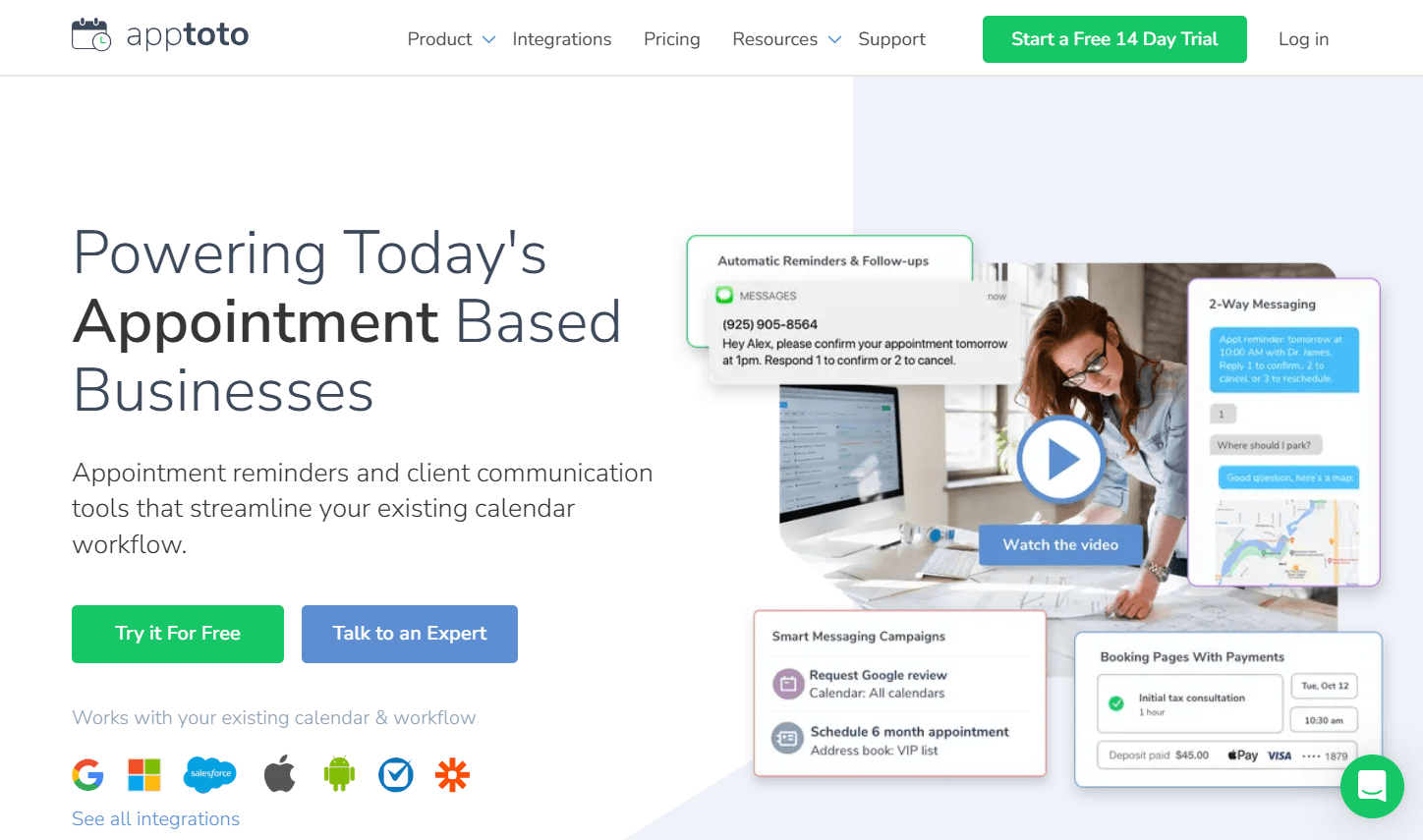
Apptoto is built around conversation rather than broadcast, and it's the best two-way messaging engine we tested. Replies land in a shared inbox and update the appointment, so a client texting back a question doesn't fall into a gap between systems.
It connects to your calendar and address book, extracts contacts, and runs personalized SMS, email, and voice sequences. Multilingual support and message translation are better here than anywhere else on this list. Where it trails Cal.com is that the booking layer is secondary and the compliance gate is unusual.
Key features:
Text, email, and voice sequences: personalized reminder cadences with per-contact channel preferences.
Two-way business texting: clients reply to confirm, cancel, or ask a question, and the calendar updates automatically.
Campaigns and recall: target past clients to refill the calendar, plus review requests after appointments.
Broad calendar and CRM support: Google, Outlook, Microsoft 365, iCloud, Salesforce, Clio, and a documented REST API.
AI-powered message translation: send reminders in the recipient's language without maintaining parallel templates.
Pricing: Apptoto has no free plan, just a 14-day trial with no credit card. Paid plans start at $30/month for text, email, and voice sequences with unlimited booking pages, plus $10/month for each additional user. Overages run $0.12 per message credit, though manual messages and replies are free in the US and Canada.
Pros:
Best two-way messaging on this list, with replies that update the appointment record
Voice, text, and email in one product, with per-contact channel preference
Manual messages and replies don't burn credits in North America
30-day money back guarantee and a well-documented REST API
Cons:
HIPAA with a BAA needs a plan covering 16 or more calendars, which prices out small practices
The sliding scale makes budgeting harder than a flat published tier
Overage charges apply per message once the plan allowance runs out
Booking pages exist but aren't the product's centre of gravity
Best for: Law firms, auto shops, tax practices, and multi-provider clinics that need genuine back-and-forth messaging around appointments and already have a calendar they intend to keep.
Comparison verdict against Cal.com: Apptoto is the stronger pure messaging engine, and if conversational follow-up is the whole job it deserves a look. But a small practice that needs a BAA has to buy a 16-calendar plan to get one, while Cal.com includes HIPAA with a BAA on Organizations at $37 per user/month and hands you the scheduling platform in the same subscription. For most teams that's a better shape of spend.
4. Calendly: best appointment reminder software for ease of use
Free plan? | Starting price | Standout feature | Best use case |
|---|---|---|---|
Yes, but with no reminder automation | $10/seat/month | Template-driven reminder Workflows | Consultants and sales teams who want fast setup |
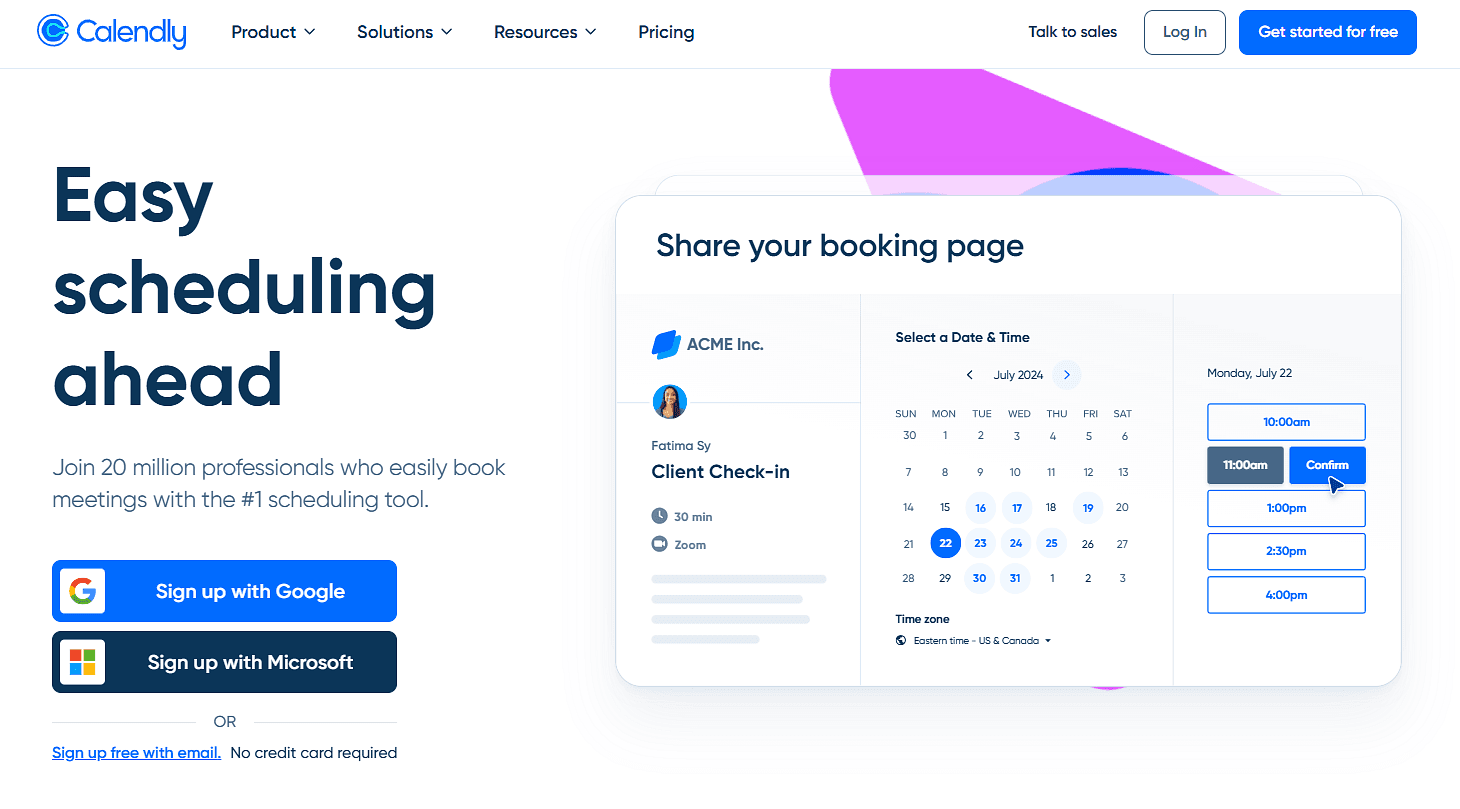
Nobody onboards faster than Calendly. We had reminder Workflows running on a live event type within minutes of connecting a calendar, and the invitee experience is the most polished here: every message carries clean reschedule and cancel links, and sequences stop by themselves when someone changes plans.
The honest limitation for this specific job is what happens at volume. Text reminders draw on an SMS credit pool you can't top up, and the compliance path runs through Enterprise.
Key features:
Workflows: template-driven confirmation, reminder, and follow-up sequences attached to event types.
Email and SMS reminders: both on paid plans, with reschedule and cancellation links included.
Automatic stop conditions: messages halt when an invitee reschedules or cancels.
Wide integration gallery: Salesforce on Teams and above, plus HubSpot, Zoom, Stripe, and PayPal.
Round-robin and team routing: distribute bookings across a team on the Teams plan.
Pricing: Calendly's free plan covers one event type with no reminder automation at all. Paid plans start at $10/seat/month for unlimited event types and reminder Workflows on email and SMS. Pricing is per seat, and SMS credits are capped per seat with no option to buy more, so text reminders stop once you hit the limit.
Pros:
Fastest setup in the category, with reminder templates that work out of the box
Clean invitee experience with reschedule and cancel links in every message
Large integration ecosystem and strong name recognition with clients
Automatic stop conditions prevent reminders for cancelled bookings
Cons:
SMS credits cap at 250 per seat/month and can't be bought in addition, so text reminders simply stop
HIPAA compliance requires Enterprise, which starts near $15,000 a year
The free plan has no reminder automation whatsoever
Per-seat pricing compounds quickly, and inactive seats keep billing
Best for: Consultants, recruiters, and sales teams that want polished self-booking with reminders attached and don't send high SMS volume.
Comparison verdict against Cal.com: Calendly is easier to switch on, and for a solo consultant sending a handful of texts a month that might be enough. The problem is the ceiling. When SMS credits run out mid-month there's no way to buy more, and healthcare teams have to jump to a five-figure Enterprise contract for a BAA. Cal.com puts HIPAA with a BAA on a $37 per user/month plan rather than a five-figure contract, and bills only for users who actually take bookings.
5. Acuity Scheduling: best appointment reminder software for intake forms and packages
Free plan? | Starting price | Standout feature | Best use case |
|---|---|---|---|
No, seven-day trial | $20/month | Intake forms and packages attached to every booking | Coaches and wellness providers selling session bundles |
Acuity attaches context to every appointment, and that's what makes its reminders useful. Intake forms, packages, memberships, and gift certificates all sit alongside the reminder engine, so a client books, fills in a form, pays, and gets reminded inside one flow.
In our testing it was the best of the all-in-one schedulers at handling a service business where every appointment needs paperwork behind it. The catch for reminder buyers specifically is that text reminders and HIPAA each require a tier upgrade.
Key features:
Intake forms: collect client details, consent, and terms before the appointment happens.
Customizable email and SMS reminders: control the copy and timing of confirmations, reminders, and follow-ups.
Packages and memberships: sell bundled sessions, subscriptions, and gift certificates alongside bookings.
Payments at booking: Stripe, Square, and PayPal, with deposits to reduce the cost of a no-show.
Multi-calendar management: up to 36 staff calendars or locations on the Premium tier.
Pricing: Acuity has no free plan, just a seven-day trial. Paid plans start at $20/month ($16 annually) for one calendar with email reminders, intake forms, and payments. Text reminders need the $34 Standard tier, and pricing scales by calendar count rather than per user, so extra staff each need their own calendar.
Pros:
Flat pricing by calendar count rather than per seat, which suits small multi-staff teams
Intake forms and client history give every reminder useful context
Strong package, membership, and gift certificate tooling for service businesses
Deep website embedding and branding control
Cons:
SMS reminders are missing from the Starter plan, so text reminders start at $34 per month
HIPAA and a BAA need the top Premium tier no matter how small the practice is
No free plan at all, unlike most tools on this list
B2B routing and team scheduling depth trail dedicated business platforms
Best for: Coaches, therapists, photographers, and wellness providers who sell packages, need intake forms, and want reminders in the same product.
Comparison verdict against Cal.com: Acuity is excellent at the client-management side of a service business, and if packages and gift certificates drive your revenue it earns its place. For reminders alone, though, you're on the $34 Standard tier before a single text goes out. Cal.com sends email reminders on the free plan, and its $16 per user/month Teams tier adds SMS and WhatsApp alongside routing, white-label booking on your own domain, and API access Acuity doesn't offer.
6. Square Appointments: best appointment reminder software for in-person service businesses
Free plan? | Starting price | Standout feature | Best use case |
|---|---|---|---|
Yes, for one solo location | $49/location/month | Card on file with automatic no-show fees | Salons, spas, and studios billing at a counter |
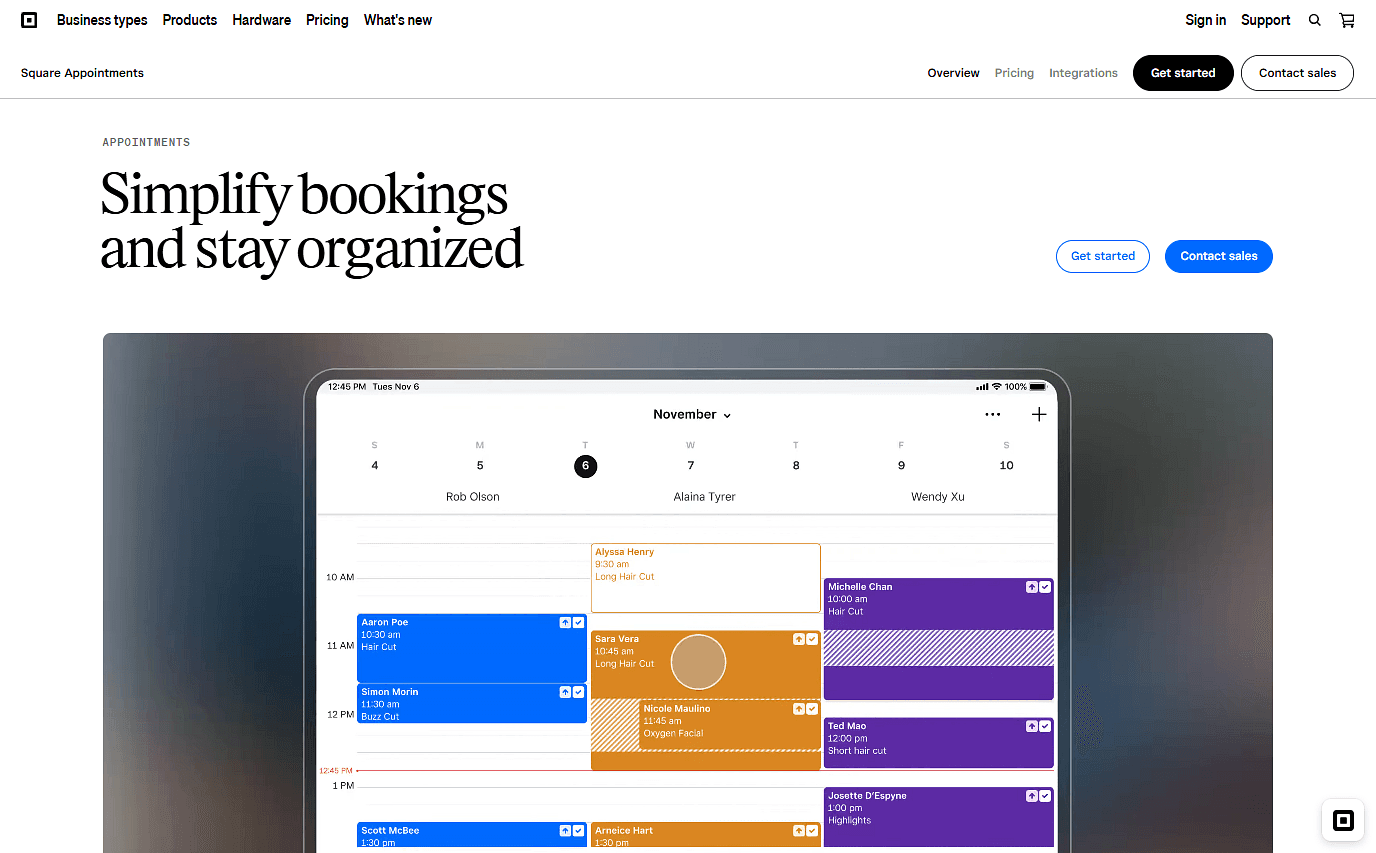
For a business where the appointment ends at a register, Square is the most complete answer here. Booking, reminders, checkout, and client history sit in one system, and text and email reminders are included from the free plan rather than sold as an upgrade.
Its real edge on no-shows isn't the reminder, it's what backs it up. On Plus and above, Square holds a card on file and charges a disclosed cancellation fee automatically, which is the strongest deterrent we tested. If you already run payments through Square, the integration is the whole argument. If you don't, the ecosystem lock-in is a genuine cost.
Key features:
No-show protection: on Plus and above, require a card on file and charge disclosed cancellation or no-show fees automatically.
Automated SMS and email reminders: included on all plans, configurable by service or location.
Square Assistant: automated messaging that answers clients to confirm, cancel, or reschedule around the clock.
Integrated POS and payments: checkout, inventory, and client history connected to the booking record.
Google Calendar sync: block personal events to prevent double bookings.
Pricing: Square Free has no monthly fee and already includes online booking with automated text and email reminders, charging only 2.6 percent plus 15 cents per in-person payment. Paid plans start at $49/month per location, adding multi-staff booking, waitlists, and the cancellation policy that lets you charge no-show fees. Both paid tiers are billed per location.
Pros:
Text and email reminders included even on the free plan
No-show protection with card on file is the strongest deterrent on this list, from Plus upward
One system for booking, reminders, checkout, and inventory
Genuinely free for a solo location, paying only processing fees
Cons:
Paid plans are priced per location, which gets expensive fast for multi-site businesses
Payment processing is locked to Square, so you can't bring your own processor
No-show fees, waitlists, and multi-staff booking all require the $49 Plus tier
Not designed for B2B meeting scheduling, routing, or remote teams
Best for: Salons, barbershops, spas, tattoo studios, and any in-person service business already committed to Square for payments.
Comparison verdict against Cal.com: For a single-chair salon taking card payments at the counter, Square is hard to beat and the free tier is honest. The trouble starts at scale: $49 per location per month, processing locked to one vendor, and no meaningful B2B scheduling. Cal.com bills per active user rather than per location, works with Stripe, and adds routing, white-label booking, and an API as the business grows past one storefront.
7. Setmore: best free appointment reminder software for small teams
Free plan? | Starting price | Standout feature | Best use case |
|---|---|---|---|
Yes, 4 users and 200 appointments/month | $5/user/month | Cheapest paid SMS reminders in this roundup | Solo providers and small teams on a tight budget |

Setmore's free plan is the most generous of the dedicated booking tools we tested: four users, 200 appointments a month, email reminders, payments through Stripe or Square, and a branded booking page, with no time limit attached. It's a working product rather than a disguised trial.
Two things are worth knowing before you commit to the free tier. Calendar sync is one-way, so Setmore reads your calendar without blocking time back, which means double bookings stay possible. And SMS reminders sit behind Pro at $5 per user/month, which is still the lowest paid entry price on this list.
Key features:
Free plan with email reminders: up to four users and 200 appointments a month at no cost, with no expiry.
SMS reminders on Pro: configurable lead times from one hour to 30 days out, plus a second reminder per booking.
Branded booking page: a shareable page plus a QR code generator, with branding removal on Pro.
Two-way calendar sync: Google and Microsoft 365 sync on Pro, which closes the double-booking gap.
Live Receptionist add-on: a US-based human answering service that books appointments, at $99 per month.
Pricing: Setmore's free plan covers up to four users, 200 appointments a month, and one email reminder per booking. Pro starts at $12/user/month ($5 annually) and adds SMS reminders, a second reminder per booking, two-way calendar sync, and API access. Every staff calendar counts as a billable user, and Live Receptionist is a $99/month add-on.
Pros:
Free plan is genuinely usable rather than a disguised trial
Lowest paid entry price on this list at $5 per user/month annually
SMS reminders run on fair use, so there are no surprise per-message bills
A BAA is available on Pro rather than a top tier
Cons:
The free plan has no SMS reminders and only one-way calendar sync, so double bookings stay possible
SMS is fair-use and can be throttled if usage looks excessive, which makes high volume unreliable
Every staff calendar counts as a billable seat even without login access
Automation stops at simple reminders, with no multi-step branching sequences
Best for: Barbers, tutors, trainers, and independent practitioners on a tight budget who need booking plus reminders and can live with basic automation.
Comparison verdict against Cal.com: Setmore wins on raw price and deserves credit for a free plan that isn't a trap. But the free tier caps at 200 appointments with one-way sync, SMS can be throttled, and there's no real workflow engine. Cal.com's free plan carries unlimited event types, two-way calendar sync, and email reminder workflows with no appointment cap, then scales into multi-step SMS and WhatsApp sequences and an API when you need them.
8. GoReminders: best appointment reminder software for predictable per-appointment pricing
Free plan? | Starting price | Standout feature | Best use case |
|---|---|---|---|
No, free trial only | $9/month | Billed by appointment volume, not by user | Small shops with several staff and steady volume |
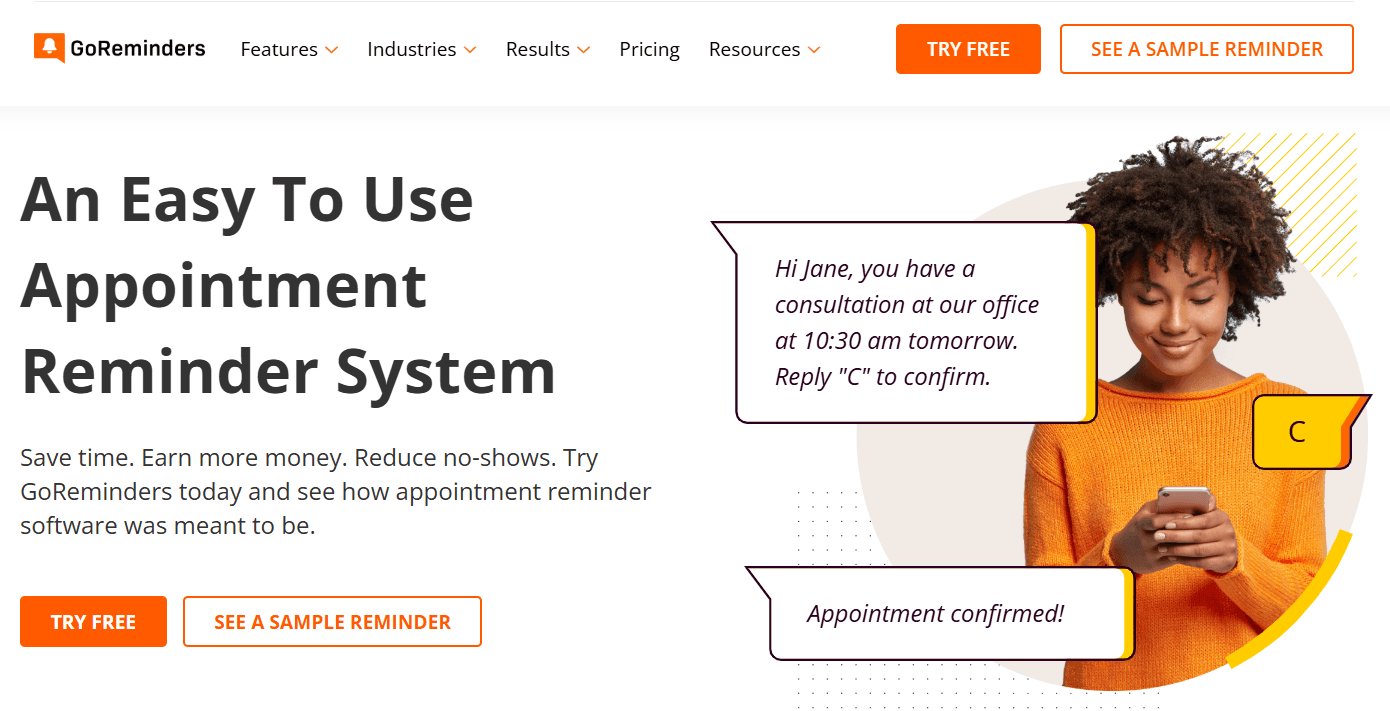
GoReminders prices by appointment volume rather than per user, which is the whole reason to pick it. Adding staff costs nothing, so a five-person shop pays the same as a solo operator at the same booking volume, and the monthly bill stays predictable.
Everything else is deliberately simple: reminders, a light calendar, and a client list. For a small business that wants reminders working in ten minutes and never wants to think about it again, that's a fair trade. It isn't the tool for complex sequences.
Key features:
Per-appointment pricing: plans scale with monthly booking volume, with unlimited users on most tiers.
SMS and email reminders: customizable templates with configurable send timing per appointment.
Reply-to-confirm: clients reply C to confirm or R to reschedule, and the calendar status updates.
Recurring appointments: set repeating bookings with reminders attached to each instance.
Calendar sync: Google Calendar, Outlook, and iCal, plus Zapier connections.
Pricing: GoReminders has no free plan but offers a 14-day free trial. Solo plans start at $9/month with unlimited appointments on one calendar and a single reminder per booking, while Team plans are priced by monthly appointment volume rather than per user, so extra staff cost nothing.
Pros:
Per-appointment pricing keeps costs predictable and doesn't penalize adding staff
Very fast setup with almost no configuration required
Unlimited users on most plans, unusual at this price
Standard reminders carry no separate per-message fee
Cons:
Appointment caps on lower plans get restrictive quickly for busy businesses
Lower tiers allow only one reminder per appointment, which weakens multi-touch cadences
API access and advanced features are reserved for higher tiers
No voice reminders and no branching automation logic
Best for: Salons, pet groomers, repair shops, and tutors who want a predictable reminder bill and have straightforward appointment flows.
Comparison verdict against Cal.com: The per-appointment model is genuinely clever for businesses with steady volume and lots of staff, and simplicity has real value. The limit is that one reminder per appointment on the entry plan is exactly the cadence that underperforms, and there's nothing to grow into. Cal.com lets you stack a booking confirmation, a day-ahead reminder, an hour-ahead nudge, and a post-appointment follow-up on one trigger, then keeps working as the business gets more complicated.
9. SimplyBook.me: best appointment reminder software for multi-provider and multilingual businesses
Free plan? | Starting price | Standout feature | Best use case |
|---|---|---|---|
Yes, 50 bookings/month | $13.90/month | Multilingual booking site with modular features | Multi-provider clinics and international service teams |
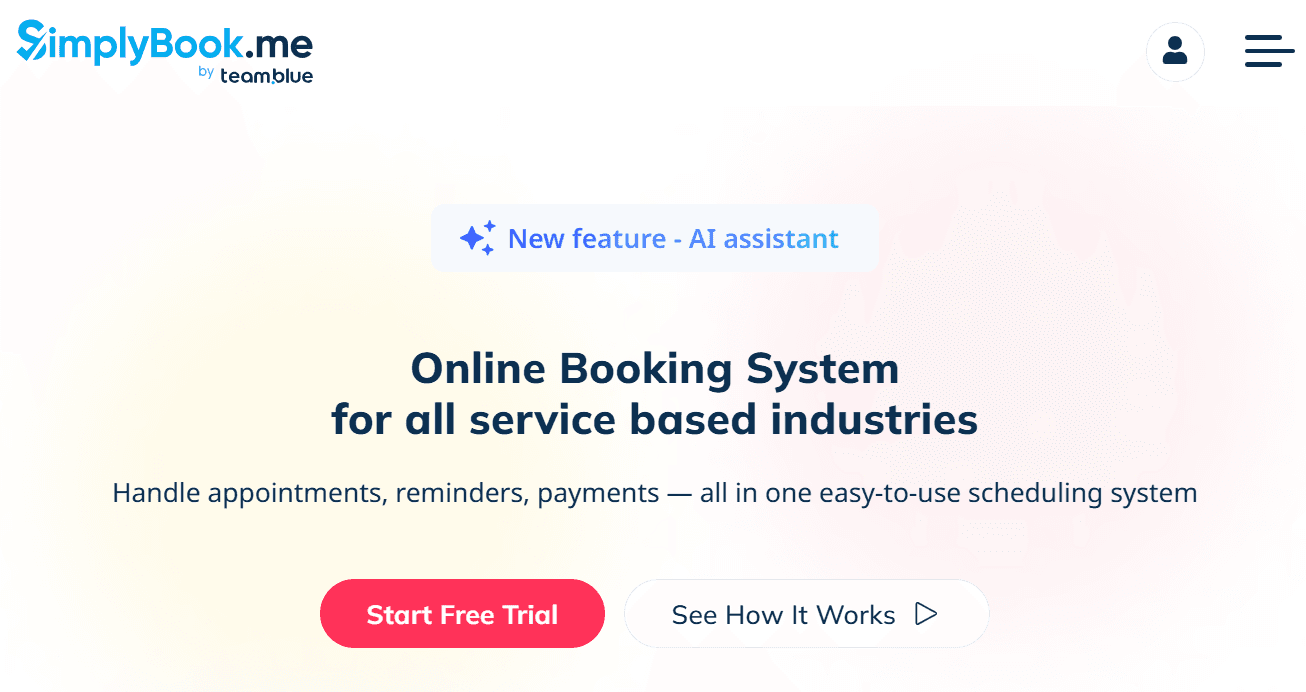
SimplyBook.me handles several providers, several locations, and several languages better than anything else on this list. The client-facing booking site comes with industry templates and full translation, so a clinic group running in two languages can serve both from one account.
It's assembled from modules it calls custom features, which you switch on as needed. That's what makes it adaptable, and it's also the catch: reminders, HIPAA, and calendar sync each consume a feature slot or credits, so the real bill is harder to predict than the headline price suggests.
Key features:
Multi-provider and multi-location: manage many staff calendars and sites from one account, with 15 providers on Standard.
Multilingual booking website and widget: a full client-facing booking site with industry templates and translation.
Email and SMS notifications: confirmations, reminders, cancellations, and change alerts, with SMS drawn from purchased credit packs.
WhatsApp notifications: available as a credit-based custom feature for markets where WhatsApp is the default.
Deposits and cancellation fees: collect payment up front to reduce the cost of a no-show.
Pricing: SimplyBook.me's free plan covers 50 bookings a month, one provider, and email reminders. Paid plans start at $13.90/month for 100 bookings, five providers, and three custom features. There are no per-user charges, but every plan caps bookings, and SMS and WhatsApp credits cost $8 per 100 on top of the subscription.
Pros:
Strong multilingual support and industry-specific booking templates
Modular custom features let you enable only what you need
Free plan available for very low booking volumes
Solid multi-provider and multi-location handling
Cons:
Every plan caps monthly bookings, and exceeding the cap means buying booking packs
SMS reminders need separately purchased credits on top of the subscription
Calendar sync, intake forms, and HIPAA each consume a limited custom feature slot
The custom feature system has a real learning curve and makes total cost hard to forecast
Best for: Multi-provider clinics, studios, and international service businesses that need heavy customization and booking in several languages.
Comparison verdict against Cal.com: SimplyBook.me is the more configurable client-facing booking site, and for a multilingual salon group that counts. But when reminders cost credits, calendar sync costs a feature slot, and bookings are capped at every tier, the model works against a business that's growing. Cal.com has no booking cap on any plan, includes email reminder workflows free, and treats WhatsApp, SMS, and email as native workflow actions rather than modules you buy in.
10. Weave: best appointment reminder software for healthcare practices
Free plan? | Starting price | Standout feature | Best use case |
|---|---|---|---|
No | $199/month | Deep practice management system integrations | Dental, optometry, and veterinary practices |
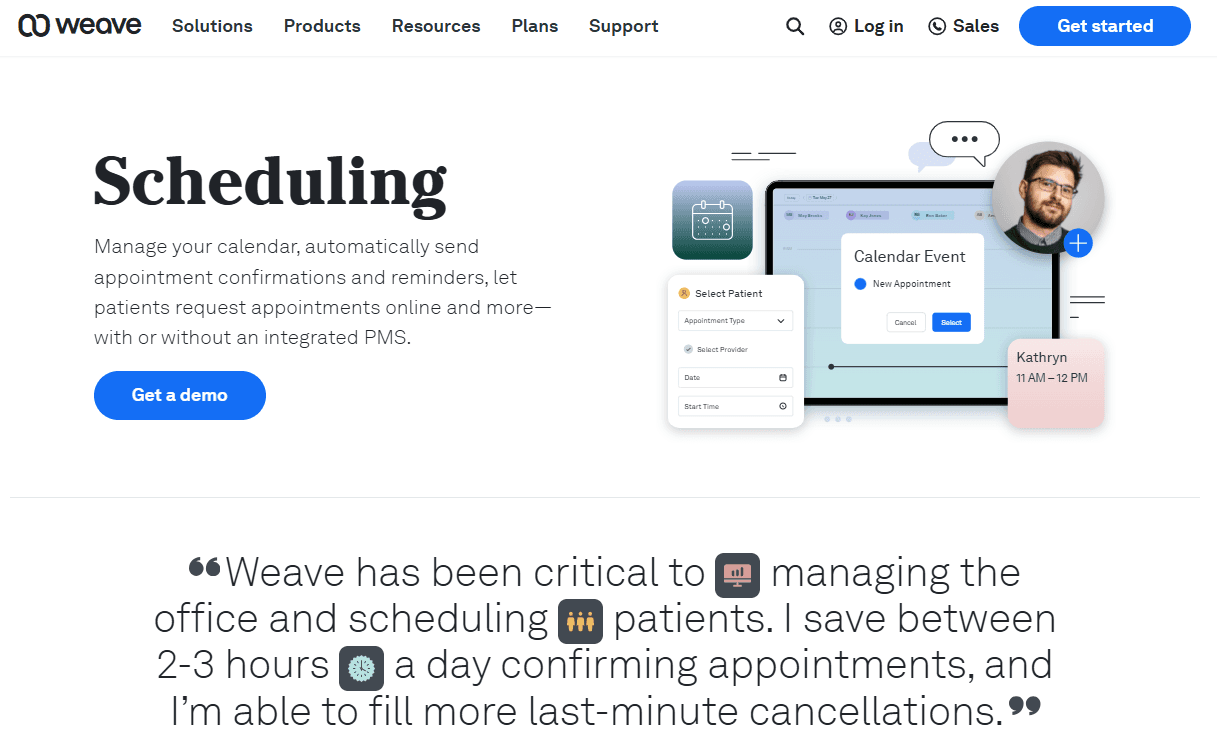
Weave is built for healthcare practices specifically, and its integrations with practice management systems are the deepest here. Reminders pull straight from Open Dental, Dentrix, Eaglesoft, or Athenahealth, so the schedule your front desk already runs is the schedule that drives the messages, and confirmations write back into it.
Around that sits a VoIP phone system, two-way patient texting, digital forms, payments, and reputation tools in one bundle. It's the most expensive option on this list by a wide margin, starting from $199 a month with per-tier figures gated behind a demo.
Key features:
Practice management integrations: deep connections to common dental, optometry, veterinary, and medical systems.
Automated patient reminders: text and email reminders patients confirm by replying, with status written back to the practice management system.
Unified inbox with Call Pop: patient details surface when the phone rings, alongside prior text history.
Schedule fill tools: recall campaigns, save-the-date messages, and quick-fill lists for cancellations.
Payments and forms: text-to-pay billing reminders and digital intake forms sent before the visit.
Pricing: Weave has no free plan or trial and starts from $199/month, with per-tier figures unpublished, so you’ll have to reach out to the Weave team for a custom quote.
Pros:
Deepest practice management integrations of any tool on this list
Replaces phone system, texting platform, reminder tool, and review software in one bill
Two-way patient texting with a genuinely unified front-desk inbox
Purpose-built for healthcare compliance from the ground up
Cons:
Only the $199 starting point is public, so per-tier comparison needs a sales call
The entry price is the highest in this roundup by a large margin
Only relevant to healthcare and veterinary practices, with no fit outside them
Reviewers report call quality issues and uneven mobile feature parity
Best for: Dental, optometry, veterinary, and small medical practices that want to replace a phone system and several point tools with one healthcare-specific platform.
Comparison verdict against Cal.com: If you're a dental practice replacing an aging phone system at the same time, Weave's bundle can pencil out. For everyone else, and for practices that only need reminders, it's a lot of spend and an opaque quote for a job Cal.com does at $37 per user/month with HIPAA and a BAA included, white-label booking on your own domain, and an API for connecting whatever system holds the schedule.
Appointment reminder software: quick comparison table
Here’s a summary of how the appointment reminder software stack up:
Tool | Free plan | Reminder channels | Replies update the calendar | Cost predictability |
|---|---|---|---|---|
Cal.com | ✅ Yes, with email reminders | ✅ Email, SMS, WhatsApp, AI voice | ✅ Yes, via booking links | ✅ Flat per active user |
GReminders | ⚠️ 100 email reminders | ✅ Email, SMS, voice | ✅ Yes, clients reply by text | ⚠️ Credits plus overages |
Apptoto | ❌ 14-day trial only | ✅ Email, SMS, voice | ✅ Yes, two-way messaging | ⚠️ Sliding scale plus overages |
Calendly | ⚠️ No reminders included | ⚠️ Email and SMS, capped credits | ⚠️ Reschedule links only | ✅ Flat per seat |
Acuity Scheduling | ❌ 7-day trial only | ⚠️ SMS from Standard up | ⚠️ Reschedule links only | ✅ Flat by calendar count |
Square Appointments | ✅ Yes, with reminders | ✅ Email and SMS on all plans | ✅ Yes, via Square Assistant | ⚠️ Per location plus processing |
Setmore | ✅ Yes, email only | ⚠️ SMS on Pro, fair use | ⚠️ Booking page links only | ✅ Flat per user |
GoReminders | ❌ Trial only | ⚠️ Email and SMS | ✅ Yes, reply C or R | ✅ Flat by appointment volume |
SimplyBook.me | ⚠️ 50 bookings | ⚠️ SMS and WhatsApp on credits | ⚠️ Booking page links only | ❌ Caps, credits, feature slots |
Weave | ❌ No | ✅ Email, SMS, voice | ✅ Yes, writes back to your PMS | ❌ Quote only, no public tiers |
Final verdict
The job here is narrow and measurable. Get the right message to the right person on a channel they'll actually read, let them respond without calling you, and keep your calendar honest about what happens next.
Every tool on this list does some version of that. The differences come down to how much you pay to get there, and how much of your stack you have to bolt together yourself.
Dedicated reminder platforms like GReminders and Apptoto message beautifully but don't own the booking, so you carry two subscriptions and a sync between them. All-in-one schedulers like Square, Setmore, and Acuity own the booking but gate text reminders and compliance behind upgrades. Weave solves it properly for dental and optometry practices and prices accordingly.
Cal.com puts the booking record and the reminder engine in the same system. Email reminder workflows are on the free plan, SMS and WhatsApp open at $16 per user/month, HIPAA with a BAA is included at $37 rather than sold separately, and the API is there for anything the visual builder can't express.
If you want reminders that stop when a booking changes, sequences that stack rather than fire once, and a bill that only counts users who actually took a booking, start on the Cal.com free plan. It costs nothing, it sends real reminders, and it scales into SMS, WhatsApp, compliance, and white-label delivery when you're ready.
Frequently asked questions
What is the best appointment reminder software? Cal.com is the best appointment reminder software overall because it handles booking and reminders in one platform instead of making you buy two products. Its Workflows engine sends email, SMS, and WhatsApp reminders on triggers you define, stops automatically when a booking is cancelled or rescheduled, and writes every change back to the same calendar record. It also includes HIPAA with a signed BAA on the Organizations plan and an API for custom reminder logic, which most competitors either gate behind enterprise contracts or don't offer at all.
Is there free appointment reminder software? Yes. Cal.com's free plan includes unlimited event types, two-way calendar sync, and email reminder workflows with no cap on appointments. Setmore's free plan covers up to four users, 200 appointments a month, and email reminders. Square Appointments is free for a single solo operator and includes both text and email reminders, though you pay processing fees on every transaction. GReminders offers a free tier limited to 100 email reminders a month. Free plans generally cover email, and SMS almost always needs a paid tier or purchased credits.
How much does Cal.com cost? Cal.com is free for individuals, with unlimited event types, calendar sync, and email reminder workflows. Teams is $16 per user/month and unlocks SMS and WhatsApp reminder actions, round-robin, and team workflows. Organizations is $37 per user/month, adding HIPAA with a BAA, SSO, a custom email domain, and org-wide controls. Enterprise pricing is custom and covers self-hosting with full engineering support. Cal.com also bills by active user, so you're charged only for people who take at least one booking that month.
What is the best appointment reminder software for small business? For most small businesses, Cal.com's free plan plus the $16 Teams tier is the best value, since it covers email, SMS, and WhatsApp reminders without a separate messaging subscription. Setmore is the cheapest paid option at $5 per user/month annually if you only need basic text reminders. Square Appointments is the strongest pick if you take in-person card payments, because reminders and no-show protection are included free for solo operators. GoReminders suits shops that want a flat, appointment-based bill and lots of staff on one plan.
Does SMS appointment reminder software reduce no-shows more than email? In practice yes, which is why most tools that charge for anything charge for text. SMS gets read within minutes and doesn't compete with a crowded inbox, so it's the channel that moves attendance numbers most. The strongest results come from combining channels: an email confirmation at booking, an SMS reminder a day ahead, and a final text an hour before, all stopping automatically if the client cancels. Cal.com lets you stack email, SMS, and WhatsApp actions on a single trigger, so you can run that whole cadence from one workflow.
Get started with Cal.com for free
You don't need a second subscription to stop losing slots to no-shows. Create a free Cal.com account, connect your calendar, and build your first reminder workflow in a few minutes.
When you're ready for SMS and WhatsApp reminders, team routing, HIPAA with a BAA, or white-label booking on your own domain, the paid plans are there, and you only pay for users who actually take bookings.
Start free at cal.com, or book a demo to see how Cal.com Workflows would fit your appointment flow.

Commencez avec Cal.com gratuitement dès aujourd'hui !
Découvrez une planification et une productivité sans faille sans frais cachés. Inscrivez-vous en quelques secondes et commencez à simplifier votre planification dès aujourd'hui, sans carte de crédit requise !