" height="18.016311920580208px" id="GKXyVanMq" stroke-dasharray="0" stroke-linecap="butt" stroke-linejoin="miter" stroke-miterlimit="10" stroke-width="0.5" stroke="rgb(0, 0, 0)" transform="translate(3 3)" width="18px"/></svg>)
"/><stop offset="1" stop-color="rgb(227, 224, 244)"/></linearGradient><linearGradient id="CBS1bzkxF-2031533640-linear-gradient" x1="0.49751243781094523" x2="0.5024875621890548" y1="0" y2="1"><stop offset="0" stop-color="rgb(255, 255, 255)"/><stop offset="1" stop-color="rgb(227, 224, 244)"/></linearGradient><linearGradient id="Jd7AK81w9-2031533640-linear-gradient" x1="0.49751243781094523" x2="0.5024875621890548" y1="0" y2="1"><stop offset="0" stop-color="rgb(255, 255, 255)"/><stop offset="1" stop-color="rgb(227, 224, 244)"/></linearGradient></defs><g d="M 0 16 L 0 0 L 16 0 L 16 16 Z M 9.167 5.167 C 9.167 4.891 8.943 4.667 8.667 4.667 C 8.391 4.667 8.167 4.891 8.167 5.167 C 8.167 6.784 7.809 7.834 7.155 8.488 C 6.501 9.143 5.451 9.5 3.833 9.5 C 3.557 9.5 3.333 9.724 3.333 10 C 3.333 10.276 3.557 10.5 3.833 10.5 C 5.451 10.5 6.501 10.857 7.155 11.512 C 7.809 12.166 8.167 13.216 8.167 14.833 C 8.167 15.109 8.391 15.333 8.667 15.333 C 8.943 15.333 9.167 15.109 9.167 14.833 C 9.167 13.216 9.524 12.166 10.178 11.512 C 10.832 10.857 11.883 10.5 13.5 10.5 C 13.776 10.5 14 10.276 14 10 C 14 9.724 13.776 9.5 13.5 9.5 C 11.883 9.5 10.832 9.143 10.178 8.488 C 9.524 7.834 9.167 6.784 9.167 5.167 Z M 4 3.667 C 4 3.483 3.851 3.333 3.667 3.333 C 3.483 3.333 3.333 3.483 3.333 3.667 C 3.333 4.32 3.189 4.715 2.952 4.952 C 2.715 5.189 2.32 5.333 1.667 5.333 C 1.483 5.333 1.333 5.483 1.333 5.667 C 1.333 5.851 1.483 6 1.667 6 C 2.32 6 2.715 6.145 2.952 6.382 C 3.189 6.618 3.333 7.013 3.333 7.667 C 3.333 7.851 3.483 8 3.667 8 C 3.851 8 4 7.851 4 7.667 C 4 7.013 4.145 6.618 4.382 6.382 C 4.618 6.145 5.013 6 5.667 6 C 5.851 6 6 5.851 6 5.667 C 6 5.483 5.851 5.333 5.667 5.333 C 5.013 5.333 4.618 5.189 4.382 4.952 C 4.145 4.715 4 4.32 4 3.667 Z M 7.333 1 C 7.333 0.816 7.184 0.667 7 0.667 C 6.816 0.667 6.667 0.816 6.667 1 C 6.667 1.422 6.573 1.65 6.445 1.778 C 6.317 1.906 6.089 2 5.667 2 C 5.483 2 5.333 2.149 5.333 2.333 C 5.333 2.517 5.483 2.667 5.667 2.667 C 6.089 2.667 6.317 2.761 6.445 2.889 C 6.573 3.016 6.667 3.244 6.667 3.667 C 6.667 3.851 6.816 4 7 4 C 7.184 4 7.333 3.851 7.333 3.667 C 7.333 3.244 7.427 3.016 7.555 2.889 C 7.683 2.761 7.911 2.667 8.333 2.667 C 8.517 2.667 8.667 2.517 8.667 2.333 C 8.667 2.149 8.517 2 8.333 2 C 7.911 2 7.683 1.906 7.555 1.778 C 7.427 1.65 7.333 1.422 7.333 1 Z" fill="transparent" height="16px" id="aoZYv33vR" width="16px"><path d="M 0 16 L 0 0 L 16 0 L 16 16 Z" fill="transparent" height="16px" id="Z2uGmhW9f" width="16px"/><g d="M 7.833 4.5 C 7.833 4.224 7.609 4 7.333 4 C 7.057 4 6.833 4.224 6.833 4.5 C 6.833 6.117 6.476 7.168 5.822 7.822 C 5.168 8.476 4.117 8.833 2.5 8.833 C 2.224 8.833 2 9.057 2 9.333 C 2 9.61 2.224 9.833 2.5 9.833 C 4.117 9.833 5.168 10.191 5.822 10.845 C 6.476 11.499 6.833 12.549 6.833 14.167 C 6.833 14.443 7.057 14.667 7.333 14.667 C 7.609 14.667 7.833 14.443 7.833 14.167 C 7.833 12.549 8.191 11.499 8.845 10.845 C 9.499 10.191 10.549 9.833 12.167 9.833 C 12.443 9.833 12.667 9.61 12.667 9.333 C 12.667 9.057 12.443 8.833 12.167 8.833 C 10.549 8.833 9.499 8.476 8.845 7.822 C 8.191 7.168 7.833 6.117 7.833 4.5 Z M 2.667 3 C 2.667 2.816 2.517 2.667 2.333 2.667 C 2.149 2.667 2 2.816 2 3 C 2 3.654 1.855 4.048 1.618 4.285 C 1.382 4.522 0.987 4.667 0.333 4.667 C 0.149 4.667 0 4.816 0 5 C 0 5.184 0.149 5.333 0.333 5.333 C 0.987 5.333 1.382 5.478 1.618 5.715 C 1.855 5.952 2 6.346 2 7 C 2 7.184 2.149 7.333 2.333 7.333 C 2.517 7.333 2.667 7.184 2.667 7 C 2.667 6.346 2.811 5.952 3.048 5.715 C 3.285 5.478 3.68 5.333 4.333 5.333 C 4.517 5.333 4.667 5.184 4.667 5 C 4.667 4.816 4.517 4.667 4.333 4.667 C 3.68 4.667 3.285 4.522 3.048 4.285 C 2.811 4.048 2.667 3.654 2.667 3 Z M 6 0.333 C 6 0.149 5.851 0 5.667 0 C 5.483 0 5.333 0.149 5.333 0.333 C 5.333 0.756 5.239 0.984 5.112 1.112 C 4.984 1.239 4.756 1.333 4.333 1.333 C 4.149 1.333 4 1.483 4 1.667 C 4 1.851 4.149 2 4.333 2 C 4.756 2 4.984 2.094 5.112 2.222 C 5.239 2.35 5.333 2.578 5.333 3 C 5.333 3.184 5.483 3.333 5.667 3.333 C 5.851 3.333 6 3.184 6 3 C 6 2.578 6.094 2.35 6.222 2.222 C 6.35 2.094 6.578 2 7 2 C 7.184 2 7.333 1.851 7.333 1.667 C 7.333 1.483 7.184 1.333 7 1.333 C 6.578 1.333 6.35 1.239 6.222 1.112 C 6.094 0.984 6 0.756 6 0.333 Z" fill="transparent" height="14.66671286102295px" id="ae6ccdFme" transform="translate(1.333 0.667)" width="12.66663px"><path d="M 5.833 0.5 C 5.833 0.224 5.609 0 5.333 0 C 5.057 0 4.833 0.224 4.833 0.5 C 4.833 2.117 4.476 3.168 3.822 3.822 C 3.168 4.476 2.117 4.833 0.5 4.833 C 0.224 4.833 0 5.057 0 5.333 C 0 5.61 0.224 5.833 0.5 5.833 C 2.117 5.833 3.168 6.191 3.822 6.845 C 4.476 7.499 4.833 8.549 4.833 10.167 C 4.833 10.443 5.057 10.667 5.333 10.667 C 5.609 10.667 5.833 10.443 5.833 10.167 C 5.833 8.549 6.191 7.499 6.845 6.845 C 7.499 6.191 8.549 5.833 10.167 5.833 C 10.443 5.833 10.667 5.61 10.667 5.333 C 10.667 5.057 10.443 4.833 10.167 4.833 C 8.549 4.833 7.499 4.476 6.845 3.822 C 6.191 3.168 5.833 2.117 5.833 0.5 Z" fill="url(%23t2lXByE48-2031533640-linear-gradient)" height="10.66671px" id="t2lXByE48" transform="translate(2 4)" width="10.66663px"/><path d="M 2.667 0.333 C 2.667 0.149 2.517 0 2.333 0 C 2.149 0 2 0.149 2 0.333 C 2 0.987 1.855 1.382 1.618 1.618 C 1.382 1.855 0.987 2 0.333 2 C 0.149 2 0 2.149 0 2.333 C 0 2.517 0.149 2.667 0.333 2.667 C 0.987 2.667 1.382 2.811 1.618 3.048 C 1.855 3.285 2 3.68 2 4.333 C 2 4.517 2.149 4.667 2.333 4.667 C 2.517 4.667 2.667 4.517 2.667 4.333 C 2.667 3.68 2.811 3.285 3.048 3.048 C 3.285 2.811 3.68 2.667 4.333 2.667 C 4.517 2.667 4.667 2.517 4.667 2.333 C 4.667 2.149 4.517 2 4.333 2 C 3.68 2 3.285 1.855 3.048 1.618 C 2.811 1.382 2.667 0.987 2.667 0.333 Z" fill="url(%23CBS1bzkxF-2031533640-linear-gradient)" height="4.66667px" id="CBS1bzkxF" transform="translate(0 2.667)" width="4.66667px"/><path d="M 2 0.333 C 2 0.149 1.851 0 1.667 0 C 1.483 0 1.333 0.149 1.333 0.333 C 1.333 0.756 1.239 0.984 1.112 1.112 C 0.984 1.239 0.756 1.333 0.333 1.333 C 0.149 1.333 0 1.483 0 1.667 C 0 1.851 0.149 2 0.333 2 C 0.756 2 0.984 2.094 1.112 2.222 C 1.239 2.35 1.333 2.578 1.333 3 C 1.333 3.184 1.483 3.333 1.667 3.333 C 1.851 3.333 2 3.184 2 3 C 2 2.578 2.094 2.35 2.222 2.222 C 2.35 2.094 2.578 2 3 2 C 3.184 2 3.333 1.851 3.333 1.667 C 3.333 1.483 3.184 1.333 3 1.333 C 2.578 1.333 2.35 1.239 2.222 1.112 C 2.094 0.984 2 0.756 2 0.333 Z" fill="url(%23Jd7AK81w9-2031533640-linear-gradient)" height="3.333333px" id="Jd7AK81w9" transform="translate(4 0)" width="3.3333399999999997px"/></g></g></svg>)
" height="24px" id="WCm44spAV" width="24px"/><path d="M 3.892 7.742 C 1.674 7.742 0 6.014 0 3.882 C 0 1.738 1.589 0 3.892 0 C 5.107 0 5.951 0.374 6.623 1.173 L 5.566 2.09 C 5.118 1.621 4.564 1.386 3.892 1.386 C 2.452 1.386 1.547 2.517 1.547 3.882 C 1.547 5.246 2.452 6.356 3.924 6.356 C 4.649 6.356 5.193 6.111 5.63 5.63 L 6.718 6.558 C 6.153 7.24 5.193 7.742 3.892 7.742 Z" fill="rgb(255, 255, 255)" height="7.741500000000002px" id="XEPpGD7l5" transform="translate(4 8.25)" width="6.717999999999989px"/><path d="M 2.74 7.922 C 1.215 7.922 0 6.632 0 5.032 C 0 3.433 1.215 2.122 2.74 2.122 C 3.7 2.122 4.201 2.516 4.5 3.113 L 4.5 2.239 L 5.928 2.239 L 5.928 7.784 L 4.531 7.784 L 4.531 6.877 C 4.233 7.507 3.731 7.922 2.74 7.922 Z M 1.439 5.023 C 1.439 5.865 2.057 6.622 2.975 6.622 C 3.924 6.622 4.531 5.897 4.531 5.033 C 4.531 4.169 3.924 3.423 2.975 3.423 C 2.057 3.423 1.439 4.159 1.439 5.022 Z M 6.784 7.784 L 6.784 0 L 8.224 0 L 8.224 7.784 L 6.784 7.784 Z" fill="rgb(255, 255, 255)" height="7.9224997406005855px" id="lGDJupIUR" transform="translate(10.5 8)" width="8.223500194549558px"/></g></svg>)
" width="18px"><path d="M 2 8 C 0.895 8 0 7.105 0 6 L 0 2 C 0 0.895 0.895 0 2 0 L 6 0 C 7.105 0 8 0.895 8 2 L 8 6 C 8 7.105 7.105 8 6 8 Z" fill="transparent" height="8px" id="ZrCrI93dV" stroke-dasharray="" stroke-linecap="round" stroke-linejoin="round" stroke-width="2" stroke="rgb(0, 0, 0)" width="8px"/><path d="M 0 0 L 0 4 C 0 5.105 0.895 6 2 6 L 6 6" fill="transparent" height="6px" id="emltWYAiE" stroke-dasharray="" stroke-linecap="round" stroke-linejoin="round" stroke-width="2" stroke="rgb(0, 0, 0)" transform="translate(4 8)" width="6px"/><path d="M 2 8 C 0.895 8 0 7.105 0 6 L 0 2 C 0 0.895 0.895 0 2 0 L 6 0 C 7.105 0 8 0.895 8 2 L 8 6 C 8 7.105 7.105 8 6 8 Z" fill="transparent" height="8px" id="WpBecYDfi" stroke-dasharray="" stroke-linecap="round" stroke-linejoin="round" stroke-width="2" stroke="rgb(0, 0, 0)" transform="translate(10 10)" width="8px"/></g></svg>)

By

Cédric van Ravesteijn
What is buffer time? How to use meeting buffers in scheduling
Buffer time is extra time scheduled before or after a meeting, during which nothing else can be booked. Whether you're preparing for a meeting, writing up the one that just finished, or taking a break to reset, it is the gap that keeps your schedule running smoothly.
In the era of remote and hybrid work, the natural pauses that once separated one part of the workday from the next have largely disappeared. The walk to the meeting room, the wait while everyone arrived, the conversation on the way out... all of it went away when meetings became links that you just click and show up in the meeting.
And one call now can end the same second before the next one begins. Microsoft's 2025 Work Trend Index found that half of all meetings now fall between 9-11am and 1-3pm, so most people take their whole meeting load inside two narrow windows.
That is an immense cognitive load. Between two meetings, you need time to process what was discussed, capture the action items, and switch gears before the next conversation begins. When one call runs straight into another, something inevitably gets missed. The follow-up email stays in drafts. Decisions never make it into your notes. By the fourth meeting, you are relying on whatever you can still remember.
So buffer time earns its place as a working habit well beyond a setting in your scheduling software. This guide covers what it is, how to set it in Cal.com, how much to use for different meetings, and how the main scheduling tools compare.
What is buffer time in scheduling?
In simple terms, buffer time refers to extra time scheduled before or after your meetings or appointments. It isn't part of the meeting. Your invitee never sees it. It exists so you can prepare, travel, write notes, or take a breath before the next conversation starts.
Even though buffer time is one of the most important scheduling features in the ever-changing landscape of professional work, it’s not available with all scheduling platforms. Some scheduling tools support it, some call it padding. What differs between them is the granularity: whether you set it per meeting type or once for your whole account, whether the free plan includes it, and what happens when two padded meetings end up next to each other.
We, at Cal.com, pay special attention to it.
Why buffer time is important for calendar scheduling
Four things change once buffers are on.
Your appointments stop touching. A booking cannot land in the window around an existing meeting, so the 2:00pm cannot start the second the 1:30 ends.
You get time to prepare. Reviewing notes before a client call is work. Buffer time is where that work goes.
You get time to finish. The follow-up email, the CRM update, the decision you need to write down before you forget it.
Overruns stop cascading. When a meeting runs five minutes long, the buffer absorbs it. Without one, every meeting after it starts late.
These matter most on a remote or hybrid calendar, where nothing physically separates one conversation from the next. There is no walk down a corridor. One call ends, the next begins, and the only time gap you have is the one you scheduled.
How to set buffer time in Cal.com
Buffers belong to a single booking link, so every kind of meeting can carry its own. Once you log in to app.cal.com two steps follow it.
Open Links and pick a booking link

Your booking links live under Links in the sidebar. Each one is a bookable meeting with its own settings and its own URL. Pick the one you want to pad.
Events sits directly below Links and is a different product: ticketed events with registration, a lineup and an agenda.
Open Limits & buffers and set your values

In the editor, open Limits & buffers under Policies, alongside Reschedule & cancel and Privacy & security.
Pick a value for Before event, After event, or both. The buffer time options run from 5 to 120 minutes. To remove a buffer later, come back here and choose No buffer time. Click Save when you are done.
The change takes effect on save. From that point Cal.com treats the buffer as busy time, so nothing new can overlap it.
The same tab holds the booking limits covered further down: booking frequency, total booking duration, future bookings, and a cap on upcoming bookings per booker, so read on.
How buffer time works, and why it blocks more than you set
Every meeting creates a protected window: the buffer before it, the meeting itself, and the buffer after it. Nothing can be booked inside that window.
The part that catches people out is what happens between two meetings. When someone tries to book near an existing meeting, Cal.com counts the buffers on both of them. The after-buffer on the first meeting and the before-buffer on the second are separate blocks, and they add up.
A worked example. Your 30-minute calls carry a 15-minute buffer on each side:

You set 15 minutes. You've got 30. That is the behavior Cal.com calls buffer stacking, and it's the single thing worth testing before you roll buffers out to a team.
It also means a slot must be long enough for the meeting plus both buffers before your booking page will offer it. A one-hour gap won't fit a 45-minute meeting with 10 minutes of padding on each side.
Since v6.8 launched, Cal.com reports buffers as busy ranges in their own right. Buffered time is therefore unavailable everywhere availability gets calculated, including places your public booking page never touches.
Try this: Set your buffers, then open your own public booking page and look at tomorrow. If the slots vanish, your padding is larger than your calendar can carry.
Five minutes on a real calendar teaches you more than any guide can. Set up a free meeting time, put 15 minutes on each side, and watch what happens to Thursday.
How much buffer time should you set between meetings?
There's no correct number. There's a sensible starting point per meeting type, and then you adjust based on what actually goes wrong.
Meeting type | Starting point | What the buffer is for |
|---|---|---|
Internal 15–30 min call | 5 min after | Writing down the one decision that was made |
Client or sales call | 10 min before, 10 min after | Reviewing the account, then updating the CRM |
Interview | 15 min after | Scorecard while it is fresh |
In-person appointment | Your real travel time, both sides | Getting there, and getting back |
Deep technical review | 15 min before | Reading the document you were sent |
Two rules are worth keeping in mind. Put the buffer where the work happens: meetings that require substantial preparation benefit from time beforehand, while meetings focused on decisions need room afterwards. And watch for stacking. When similar meetings run back-to-back, you may not need the full buffer you would normally schedule for each one.
Meeting-effectiveness advice sometimes references a 40/20/40 rule: 40% of the effort goes into preparation, 20% into the meeting, and the remaining 40% into follow-up. The precise breakdown is debatable, but the underlying idea is useful. A meeting's workload extends well beyond the time spent in the room. Buffer time gives you space to handle the work that happens before and after.
If you find yourself setting very large buffers to protect focus time, that is a different problem, and booking limits solve it better.
Buffer time examples
Buffer time has real, tangible benefits when applied in your daily schedule. Here are some practical applications and examples.
1. Updating CRM and following up
If you're a sales rep who's on calls with clients all day, you need a break to update your pipeline. Back-to-back meetings may lead you to forget the exact updates and notes for a client, leading to awkward conversation gaps with them in your next meeting.
Practical example: As a sales representative, if you have back-to-back meetings, you won't have any time to update your CRM or send follow-ups to your clients. This will lead to gaps in the CRM data across the channel and your team being kept out of the loop on updates regarding your active clients. A 10-minute buffer after the meeting can help you update the CRM accurately and also follow up with the client if required. This keeps the entire process streamlined.
2. Preparing for client meetings
Imagine you have a back-to-back series of meetings with clients. Without buffer time, you might feel rushed between appointments, especially if you need time to review your notes, prepare any documents, or mentally shift from one discussion to another.
Practical example: You have a 30-minute client meeting at 10:00 AM. Without buffer time, the next meeting at 10:30 AM might start right after, leaving you no time to review notes or settle into a new conversation. By adding a 10-minute buffer before and after the meeting, you have time to wrap up the first call, take notes, and prepare for the next meeting, making you more focused and professional.
3. Switching between unrelated conversations
If your calls cover different clients or different kinds of work, buffer time gives you the space to close one out before you open the next. Without it you carry the last conversation into the following one, which the person on the other end can usually tell.
Practical example: You have a difficult support call at 11:00 AM and a new business call at 11:30 AM. Moving straight from one to the other means arriving at the second still thinking about the first. A 10-minute buffer between them gives you time to finish your notes, close the tab, and start the next conversation properly.
4. Wrapping up and resetting after meetings
It's not only about the time before meetings. Buffer time can also help you to reset after a meeting, especially if it was emotionally draining or complex. Having time to reflect, jot down important notes, or even take a break between appointments can improve your performance in the next one.
Practical example: You just had a 45-minute team meeting, and it was full of discussions and decisions that require follow-up actions. Instead of jumping immediately into the next meeting, you add a 10-minute buffer after the team meeting. During this time, you gather your thoughts, make quick notes, and prepare for the next conversation, ultimately improving the quality of the next meeting.
5. Reducing mental fatigue in a busy day
If your schedule is packed with multiple meetings, back-to-back events can lead to mental fatigue, affecting your focus and performance. Buffer time provides space to relax, recharge, and prepare for the next task with renewed energy. For decision-heavy roles, these gaps can also reduce decision fatigue by giving people time to process information before moving into the next conversation.
Practical example: You have four 30-minute client calls lined up, one after the other. Instead of scheduling them without any breaks, you add 5-10 minute buffer times between each call. This small break helps you refresh, drink some water, stretch, or take a few deep breaths, ensuring that you're sharp and focused throughout the day.
How buffers affect round robin and collective events
Buffers behave differently once more than one person is involved, and the difference catches teams out. Two event types are affected.
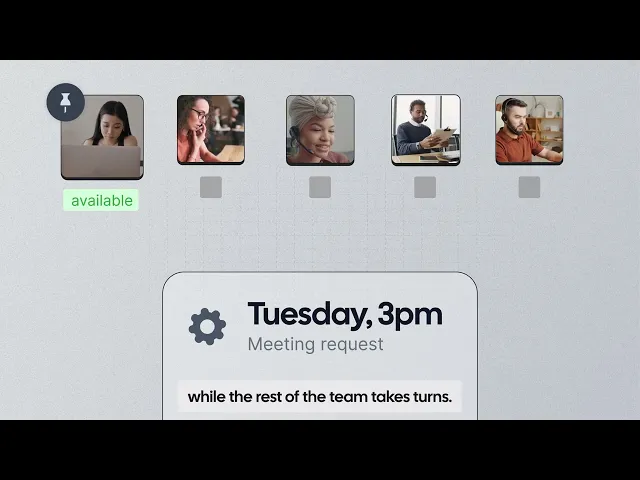
On round robin events, each host's own buffers affect when they can be assigned. A team member with generous padding will be offered fewer slots than one with none, so bookings drift toward whoever protects their calendar least, and nothing in the interface tells you it's happening. Keep buffers consistent across the rotation, or accept an uneven split
On collective events, where everyone must attend, the booking page shows only times that work for all hosts. One person's buffer removes that slot for the whole group. With five hosts and 15 minutes each side, a shared calendar can look considerably emptier than anyone expects.
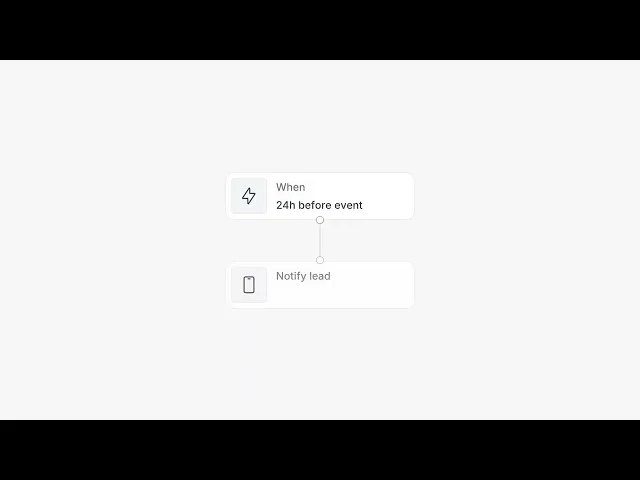
Which raises an uncomfortable question: is that already happening on your team? Cal.com's Insights dashboard shows booking distribution per member, so you can see the skew instead of suspecting it.

It runs on Teams and Organizations, not the free plan. Ask for a walkthrough against your own routing and you'll know inside half an hour.
Which scheduling tools let you set buffer time
Most scheduling tools offer some form of buffer. The question is what you get with it, how granular the setting gets, and what you can do with it before you pay.
Tool | Before and after | Where you set it | On a free plan |
|---|---|---|---|
Cal.com | Yes | Per booking link | Yes, unlimited booking links |
Calendly | Yes | Per event type | Yes |
Acuity Scheduling | Yes, called padding | Per appointment type | No, trial only |
Google Calendar appointment schedules | Time between appointments | Per appointment schedule | Yes |
Microsoft Bookings | Yes | Per service | No, needs a paid licence |
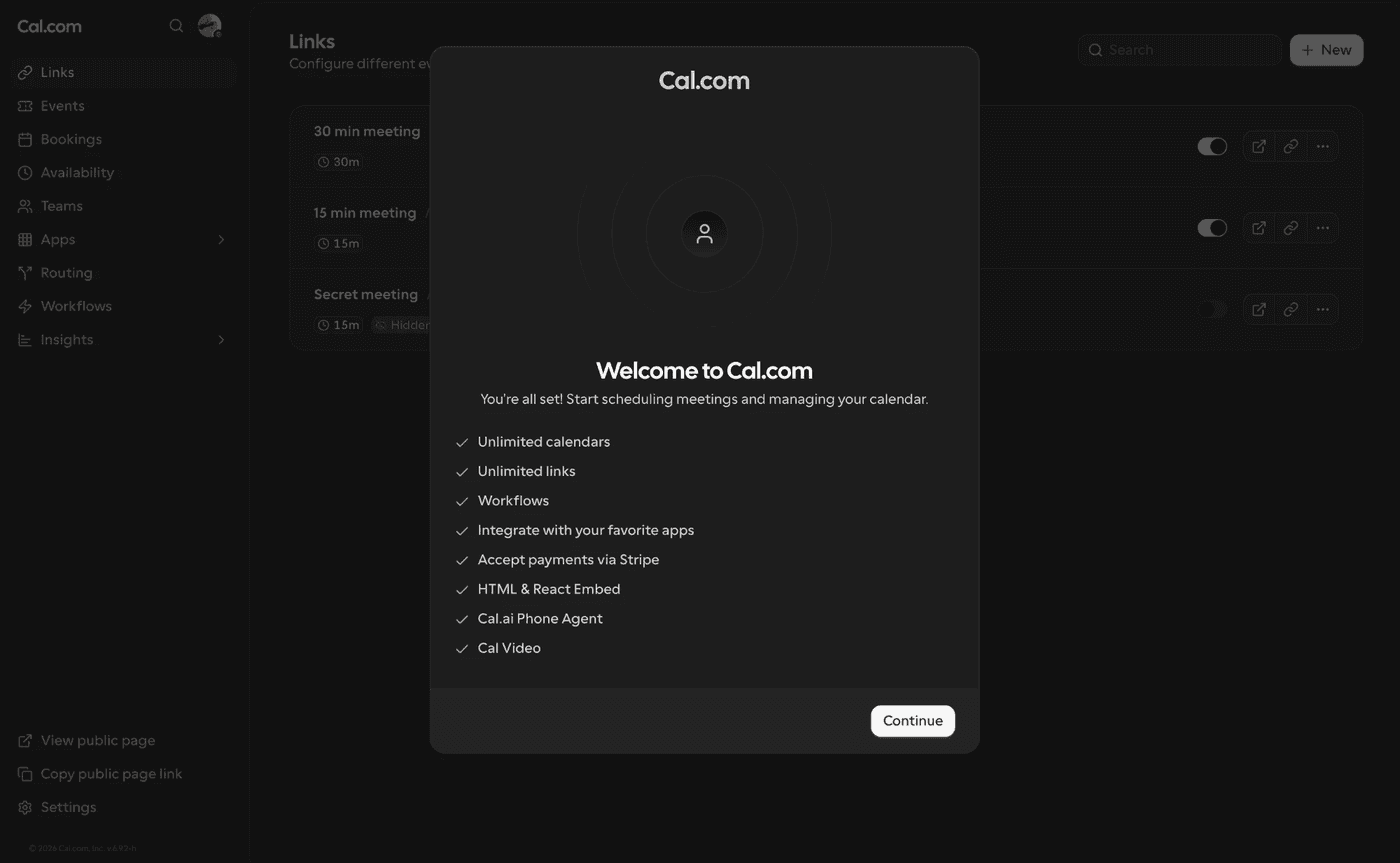
Cal.com puts the setting on the booking link itself. The free plan does not cap how many links you create. So a sales call, an interview and a support session can each carry their own padding, without upgrading.
That matters more than it sounds. Pad a 15-minute intro like a 90-minute workshop and the numbers stop making sense. It is the usual reason people give up on buffers.

Teams already in Google Workspace or Microsoft 365 do not have to move the calendar to change the scheduler. Cal.com reads and writes to all of these. The calendar stays where it is.
Moving off a tool you already configured? Cal.com imports Calendly event types in one click, buffers included, so you can run both on the same meetings for a week and let the calendar settle the argument.
For a team purchase, with routing and a seat count attached, bring your requirements to a walkthrough. It is quicker than working it out from pricing pages.
Buffer time vs booking limits
Buffers protect the gaps between meetings. They do nothing about the total. Six back-to-back-with-padding calls is still six calls, and a calendar that is 90% booked with tidy gaps is still a calendar nobody can think in.
Booking limits are the other half, and Cal.com has four:
Booking frequency limits cap how often one event type can be booked.
User-level booking limits apply a per-day, per-week, per-month, or per-year cap across every event type you host, personal and team. They live in Settings, General, one level up from any individual event type, and they're available to members of a Cal.com organization.
Limit future bookings stops people booking further ahead than you want, in calendar or business days.
Booker active booking limits cap how many upcoming bookings one person can hold on a link, and can offer them a reschedule instead of a refusal.
Use buffers for the shape of the day and limits for its volume. If you keep inflating buffers to claw back focus time, you want a limit.
Of those four, user-level limits are the one most people want and the one most people cannot switch on: they need a Cal.com organization. If a single cap across every event type you host is what brought you here, that is a conversation rather than a setting.
When a buffer is the wrong feature
Buffers protect the edges of a meeting. They cannot block time where nothing is booked. If you need to leave for two hours on Thursday, a buffer does nothing, because there is no booking for it to attach to.
Use a date override instead. It blocks specific hours on a single day without touching your regular schedule, which is what you want for an appointment, a school run or a trip to the bank. For a longer absence, out of office does the same across days and can redirect bookings to a teammate while you are away. Holidays blocks your country's public holidays automatically. And where your week genuinely varies, multiple schedules lets different booking links run on different hours.
The workaround people reach for is a fake meeting in their own calendar. That works, and it is a sign they have not found date overrides yet.

The holiday list goes down to regional days, so Repentance Day in Saxony and Reformation Day each get their own toggle on Cal.com.
Why your buffer isn't blocking time
Start with the troubleshooter. Cal.com rebuilt it in v6.9 around one question: why can't this slot be booked? It names the reason instead of leaving you to guess, and a buffer on a neighbouring booking is one of the answers it gives.
If you would rather reason it out, three causes account for nearly all of it.
The buffer is on a different booking link
Buffers are set per booking link in Cal.com, per event type in Calendly, and per appointment type in Acuity. Setting one on your 30-minute call does nothing for your 15-minute call, and that's the trap. This must be repeated for every link you want protected.
Something outside the scheduling tool booked the slot
Buffers block your booking page. They don't stop a colleague dropping an invite straight onto your calendar. That is double booking rather than a buffer failure, and it has its own set of fixes. Which calendars get checked for conflicts is itself configurable, per booking link, in Cal.com's conflict checking settings.

A calendar that isn't connected can't create a conflict. If bookings keep landing on top of real commitments, start here.
The time slot was never long enough
If the meeting plus both buffers does not fit the gap, the slot is not offered at all. It reads as "my availability disappeared" when the real cause is padding, and it's the most common version of the problem.
Conclusion: Time to optimize your schedule with buffer time!
Buffer time is a small setting with a large effect on how a week feels. Set it per booking link, remember it stacks, and check your own booking page afterwards to see what your invitees will actually be offered.
The fastest way to understand it is to run a week on it. Create a free account, give your three most common meetings their own padding, and look at your booking page on the busiest day you have. Unlimited event types on the free plan means every meeting can carry what it needs, and nothing stops you turning it all off on Friday if you hate it.
If this is a team problem and not a calendar problem, with routing, distribution and a seat count attached, start with a walkthrough.
Frequently asked questions about buffer time
1. What is a good amount of buffer time between meetings?
A common starting point is 5–15 minutes between shorter meetings and 15–30 minutes around longer or more demanding appointments. The right amount depends on what happens between events, such as preparation, travel, documentation, or recovery time.
2. Can buffer time be added before and after a meeting?
Yes. You can add buffer time before an event, after it, or both. A pre-meeting buffer can provide time for preparation, while a post-meeting buffer can accommodate notes, follow-ups, travel, or unexpected overruns.
3. Does buffer time prevent someone from booking another meeting?
Yes. When buffer time is configured as part of an event's scheduling availability, the buffered period is taken into account when determining whether another booking can fit. This helps prevent appointments from being scheduled too close together.
4. Is buffer time useful for remote meetings?
Yes. Buffer time can be particularly useful when several virtual meetings are scheduled consecutively. A short gap can provide time to finish notes, step away from the screen, prepare for the next conversation, or mentally reset before another meeting.
5. Should buffer time be the same for every type of appointment?
Not necessarily. Different appointments may require different amounts of transition time. A short internal meeting might need only a few minutes, while a consultation involving preparation, documentation, travel, or follow-up may require a longer buffer.
6. Can buffer time be used for work instead of taking a break?
Yes. Buffer time does not have to be unused or “free” time. Depending on the event, it can be used for tasks such as updating a CRM, reviewing notes, preparing documents, recording follow-up actions, or completing administrative work before the next appointment.
What does buffer mean in work? In a work context, a buffer is protected time around a commitment. On a calendar that means the minutes before or after a meeting that nobody can book. In project planning the same word covers slack built into a deadline.
What is buffer time in office? The same as buffer time anywhere else, with one difference that matters in person. An office buffer usually has to cover movement between rooms or buildings, so it tends to run longer than a buffer between video calls. Measure the walk before you pick the number.
What is another term for buffer time? Padding is the most common alternative. You will also see transition time, turnaround time, changeover, and slack, which is the project-management term for the same idea.
What is the 40/20/40 rule for meetings? It splits the effort around a meeting into three parts: 40% preparing, 20% in the room, 40% following up. The point is that most of the work sits outside the meeting itself. A before-buffer covers the first 40, an after-buffer covers the last.

Get started with Cal.com for free today!
Experience seamless scheduling and productivity with no hidden fees. Sign up in seconds and start simplifying your scheduling today, no credit card required!