" height="18.016311920580208px" id="GKXyVanMq" stroke-dasharray="0" stroke-linecap="butt" stroke-linejoin="miter" stroke-miterlimit="10" stroke-width="0.5" stroke="rgb(0, 0, 0)" transform="translate(3 3)" width="18px"/></svg>)
"/><stop offset="1" stop-color="rgb(227, 224, 244)"/></linearGradient><linearGradient id="CBS1bzkxF-2031533640-linear-gradient" x1="0.49751243781094523" x2="0.5024875621890548" y1="0" y2="1"><stop offset="0" stop-color="rgb(255, 255, 255)"/><stop offset="1" stop-color="rgb(227, 224, 244)"/></linearGradient><linearGradient id="Jd7AK81w9-2031533640-linear-gradient" x1="0.49751243781094523" x2="0.5024875621890548" y1="0" y2="1"><stop offset="0" stop-color="rgb(255, 255, 255)"/><stop offset="1" stop-color="rgb(227, 224, 244)"/></linearGradient></defs><g d="M 0 16 L 0 0 L 16 0 L 16 16 Z M 9.167 5.167 C 9.167 4.891 8.943 4.667 8.667 4.667 C 8.391 4.667 8.167 4.891 8.167 5.167 C 8.167 6.784 7.809 7.834 7.155 8.488 C 6.501 9.143 5.451 9.5 3.833 9.5 C 3.557 9.5 3.333 9.724 3.333 10 C 3.333 10.276 3.557 10.5 3.833 10.5 C 5.451 10.5 6.501 10.857 7.155 11.512 C 7.809 12.166 8.167 13.216 8.167 14.833 C 8.167 15.109 8.391 15.333 8.667 15.333 C 8.943 15.333 9.167 15.109 9.167 14.833 C 9.167 13.216 9.524 12.166 10.178 11.512 C 10.832 10.857 11.883 10.5 13.5 10.5 C 13.776 10.5 14 10.276 14 10 C 14 9.724 13.776 9.5 13.5 9.5 C 11.883 9.5 10.832 9.143 10.178 8.488 C 9.524 7.834 9.167 6.784 9.167 5.167 Z M 4 3.667 C 4 3.483 3.851 3.333 3.667 3.333 C 3.483 3.333 3.333 3.483 3.333 3.667 C 3.333 4.32 3.189 4.715 2.952 4.952 C 2.715 5.189 2.32 5.333 1.667 5.333 C 1.483 5.333 1.333 5.483 1.333 5.667 C 1.333 5.851 1.483 6 1.667 6 C 2.32 6 2.715 6.145 2.952 6.382 C 3.189 6.618 3.333 7.013 3.333 7.667 C 3.333 7.851 3.483 8 3.667 8 C 3.851 8 4 7.851 4 7.667 C 4 7.013 4.145 6.618 4.382 6.382 C 4.618 6.145 5.013 6 5.667 6 C 5.851 6 6 5.851 6 5.667 C 6 5.483 5.851 5.333 5.667 5.333 C 5.013 5.333 4.618 5.189 4.382 4.952 C 4.145 4.715 4 4.32 4 3.667 Z M 7.333 1 C 7.333 0.816 7.184 0.667 7 0.667 C 6.816 0.667 6.667 0.816 6.667 1 C 6.667 1.422 6.573 1.65 6.445 1.778 C 6.317 1.906 6.089 2 5.667 2 C 5.483 2 5.333 2.149 5.333 2.333 C 5.333 2.517 5.483 2.667 5.667 2.667 C 6.089 2.667 6.317 2.761 6.445 2.889 C 6.573 3.016 6.667 3.244 6.667 3.667 C 6.667 3.851 6.816 4 7 4 C 7.184 4 7.333 3.851 7.333 3.667 C 7.333 3.244 7.427 3.016 7.555 2.889 C 7.683 2.761 7.911 2.667 8.333 2.667 C 8.517 2.667 8.667 2.517 8.667 2.333 C 8.667 2.149 8.517 2 8.333 2 C 7.911 2 7.683 1.906 7.555 1.778 C 7.427 1.65 7.333 1.422 7.333 1 Z" fill="transparent" height="16px" id="aoZYv33vR" width="16px"><path d="M 0 16 L 0 0 L 16 0 L 16 16 Z" fill="transparent" height="16px" id="Z2uGmhW9f" width="16px"/><g d="M 7.833 4.5 C 7.833 4.224 7.609 4 7.333 4 C 7.057 4 6.833 4.224 6.833 4.5 C 6.833 6.117 6.476 7.168 5.822 7.822 C 5.168 8.476 4.117 8.833 2.5 8.833 C 2.224 8.833 2 9.057 2 9.333 C 2 9.61 2.224 9.833 2.5 9.833 C 4.117 9.833 5.168 10.191 5.822 10.845 C 6.476 11.499 6.833 12.549 6.833 14.167 C 6.833 14.443 7.057 14.667 7.333 14.667 C 7.609 14.667 7.833 14.443 7.833 14.167 C 7.833 12.549 8.191 11.499 8.845 10.845 C 9.499 10.191 10.549 9.833 12.167 9.833 C 12.443 9.833 12.667 9.61 12.667 9.333 C 12.667 9.057 12.443 8.833 12.167 8.833 C 10.549 8.833 9.499 8.476 8.845 7.822 C 8.191 7.168 7.833 6.117 7.833 4.5 Z M 2.667 3 C 2.667 2.816 2.517 2.667 2.333 2.667 C 2.149 2.667 2 2.816 2 3 C 2 3.654 1.855 4.048 1.618 4.285 C 1.382 4.522 0.987 4.667 0.333 4.667 C 0.149 4.667 0 4.816 0 5 C 0 5.184 0.149 5.333 0.333 5.333 C 0.987 5.333 1.382 5.478 1.618 5.715 C 1.855 5.952 2 6.346 2 7 C 2 7.184 2.149 7.333 2.333 7.333 C 2.517 7.333 2.667 7.184 2.667 7 C 2.667 6.346 2.811 5.952 3.048 5.715 C 3.285 5.478 3.68 5.333 4.333 5.333 C 4.517 5.333 4.667 5.184 4.667 5 C 4.667 4.816 4.517 4.667 4.333 4.667 C 3.68 4.667 3.285 4.522 3.048 4.285 C 2.811 4.048 2.667 3.654 2.667 3 Z M 6 0.333 C 6 0.149 5.851 0 5.667 0 C 5.483 0 5.333 0.149 5.333 0.333 C 5.333 0.756 5.239 0.984 5.112 1.112 C 4.984 1.239 4.756 1.333 4.333 1.333 C 4.149 1.333 4 1.483 4 1.667 C 4 1.851 4.149 2 4.333 2 C 4.756 2 4.984 2.094 5.112 2.222 C 5.239 2.35 5.333 2.578 5.333 3 C 5.333 3.184 5.483 3.333 5.667 3.333 C 5.851 3.333 6 3.184 6 3 C 6 2.578 6.094 2.35 6.222 2.222 C 6.35 2.094 6.578 2 7 2 C 7.184 2 7.333 1.851 7.333 1.667 C 7.333 1.483 7.184 1.333 7 1.333 C 6.578 1.333 6.35 1.239 6.222 1.112 C 6.094 0.984 6 0.756 6 0.333 Z" fill="transparent" height="14.66671286102295px" id="ae6ccdFme" transform="translate(1.333 0.667)" width="12.66663px"><path d="M 5.833 0.5 C 5.833 0.224 5.609 0 5.333 0 C 5.057 0 4.833 0.224 4.833 0.5 C 4.833 2.117 4.476 3.168 3.822 3.822 C 3.168 4.476 2.117 4.833 0.5 4.833 C 0.224 4.833 0 5.057 0 5.333 C 0 5.61 0.224 5.833 0.5 5.833 C 2.117 5.833 3.168 6.191 3.822 6.845 C 4.476 7.499 4.833 8.549 4.833 10.167 C 4.833 10.443 5.057 10.667 5.333 10.667 C 5.609 10.667 5.833 10.443 5.833 10.167 C 5.833 8.549 6.191 7.499 6.845 6.845 C 7.499 6.191 8.549 5.833 10.167 5.833 C 10.443 5.833 10.667 5.61 10.667 5.333 C 10.667 5.057 10.443 4.833 10.167 4.833 C 8.549 4.833 7.499 4.476 6.845 3.822 C 6.191 3.168 5.833 2.117 5.833 0.5 Z" fill="url(%23t2lXByE48-2031533640-linear-gradient)" height="10.66671px" id="t2lXByE48" transform="translate(2 4)" width="10.66663px"/><path d="M 2.667 0.333 C 2.667 0.149 2.517 0 2.333 0 C 2.149 0 2 0.149 2 0.333 C 2 0.987 1.855 1.382 1.618 1.618 C 1.382 1.855 0.987 2 0.333 2 C 0.149 2 0 2.149 0 2.333 C 0 2.517 0.149 2.667 0.333 2.667 C 0.987 2.667 1.382 2.811 1.618 3.048 C 1.855 3.285 2 3.68 2 4.333 C 2 4.517 2.149 4.667 2.333 4.667 C 2.517 4.667 2.667 4.517 2.667 4.333 C 2.667 3.68 2.811 3.285 3.048 3.048 C 3.285 2.811 3.68 2.667 4.333 2.667 C 4.517 2.667 4.667 2.517 4.667 2.333 C 4.667 2.149 4.517 2 4.333 2 C 3.68 2 3.285 1.855 3.048 1.618 C 2.811 1.382 2.667 0.987 2.667 0.333 Z" fill="url(%23CBS1bzkxF-2031533640-linear-gradient)" height="4.66667px" id="CBS1bzkxF" transform="translate(0 2.667)" width="4.66667px"/><path d="M 2 0.333 C 2 0.149 1.851 0 1.667 0 C 1.483 0 1.333 0.149 1.333 0.333 C 1.333 0.756 1.239 0.984 1.112 1.112 C 0.984 1.239 0.756 1.333 0.333 1.333 C 0.149 1.333 0 1.483 0 1.667 C 0 1.851 0.149 2 0.333 2 C 0.756 2 0.984 2.094 1.112 2.222 C 1.239 2.35 1.333 2.578 1.333 3 C 1.333 3.184 1.483 3.333 1.667 3.333 C 1.851 3.333 2 3.184 2 3 C 2 2.578 2.094 2.35 2.222 2.222 C 2.35 2.094 2.578 2 3 2 C 3.184 2 3.333 1.851 3.333 1.667 C 3.333 1.483 3.184 1.333 3 1.333 C 2.578 1.333 2.35 1.239 2.222 1.112 C 2.094 0.984 2 0.756 2 0.333 Z" fill="url(%23Jd7AK81w9-2031533640-linear-gradient)" height="3.333333px" id="Jd7AK81w9" transform="translate(4 0)" width="3.3333399999999997px"/></g></g></svg>)
" height="24px" id="WCm44spAV" width="24px"/><path d="M 3.892 7.742 C 1.674 7.742 0 6.014 0 3.882 C 0 1.738 1.589 0 3.892 0 C 5.107 0 5.951 0.374 6.623 1.173 L 5.566 2.09 C 5.118 1.621 4.564 1.386 3.892 1.386 C 2.452 1.386 1.547 2.517 1.547 3.882 C 1.547 5.246 2.452 6.356 3.924 6.356 C 4.649 6.356 5.193 6.111 5.63 5.63 L 6.718 6.558 C 6.153 7.24 5.193 7.742 3.892 7.742 Z" fill="rgb(255, 255, 255)" height="7.741500000000002px" id="XEPpGD7l5" transform="translate(4 8.25)" width="6.717999999999989px"/><path d="M 2.74 7.922 C 1.215 7.922 0 6.632 0 5.032 C 0 3.433 1.215 2.122 2.74 2.122 C 3.7 2.122 4.201 2.516 4.5 3.113 L 4.5 2.239 L 5.928 2.239 L 5.928 7.784 L 4.531 7.784 L 4.531 6.877 C 4.233 7.507 3.731 7.922 2.74 7.922 Z M 1.439 5.023 C 1.439 5.865 2.057 6.622 2.975 6.622 C 3.924 6.622 4.531 5.897 4.531 5.033 C 4.531 4.169 3.924 3.423 2.975 3.423 C 2.057 3.423 1.439 4.159 1.439 5.022 Z M 6.784 7.784 L 6.784 0 L 8.224 0 L 8.224 7.784 L 6.784 7.784 Z" fill="rgb(255, 255, 255)" height="7.9224997406005855px" id="lGDJupIUR" transform="translate(10.5 8)" width="8.223500194549558px"/></g></svg>)
" width="18px"><path d="M 2 8 C 0.895 8 0 7.105 0 6 L 0 2 C 0 0.895 0.895 0 2 0 L 6 0 C 7.105 0 8 0.895 8 2 L 8 6 C 8 7.105 7.105 8 6 8 Z" fill="transparent" height="8px" id="ZrCrI93dV" stroke-dasharray="" stroke-linecap="round" stroke-linejoin="round" stroke-width="2" stroke="rgb(0, 0, 0)" width="8px"/><path d="M 0 0 L 0 4 C 0 5.105 0.895 6 2 6 L 6 6" fill="transparent" height="6px" id="emltWYAiE" stroke-dasharray="" stroke-linecap="round" stroke-linejoin="round" stroke-width="2" stroke="rgb(0, 0, 0)" transform="translate(4 8)" width="6px"/><path d="M 2 8 C 0.895 8 0 7.105 0 6 L 0 2 C 0 0.895 0.895 0 2 0 L 6 0 C 7.105 0 8 0.895 8 2 L 8 6 C 8 7.105 7.105 8 6 8 Z" fill="transparent" height="8px" id="WpBecYDfi" stroke-dasharray="" stroke-linecap="round" stroke-linejoin="round" stroke-width="2" stroke="rgb(0, 0, 0)" transform="translate(10 10)" width="8px"/></g></svg>)

Automated Lead Distribution: Everything You Need to Know (2026)
Manual lead distribution is a silent killer for growth. If your leads are sitting in limbo while you manually assign them, you're losing deals to faster competitors. Learn how to automate your entire lead distribution process in 2026, eliminate bottlenecks, and turn inbound inquiries into booked meetings instantly.
Here’s a fact: Every minute a lead sits unassigned is a minute your competitor is talking to them.
It’s a harsh reality. You spend your budget and energy bringing people to your site, only to let them hang in limbo while a spreadsheet gets updated or a manager finishes their coffee.
That’s why it’s no exaggeration when we say that manual lead distribution is a silent killer for growth. It’s one of the most expensive inefficiencies in modern sales, yet most teams ignore the true cost until their conversion rates tank.
You need to move fast.
In 2026, the gap between a click and a conversation needs to be measured in seconds, not hours. This is where automated lead distribution comes into play. By using technology to handle the heavy lifting, you replace guesswork and human bottlenecks with instant, logic-driven assignments.
Well, this guide walks you through exactly what lead distribution is and why it serves as the backbone of a high-performing sales operation. We’ll look at how an effective lead distribution system works, break down the different strategies for routing your prospects, and share best practices to keep your pipeline moving.
You’ll also see how Cal.com fits into the mix, acting as the critical routing and scheduling layer that turns an assigned lead into a booked meeting.
So if you’re tired of losing deals to administrative friction, you’re in the right place.
Alright, let's get your inbound pipeline moving faster.
What is Lead Distribution?

At its simplest, lead distribution is the practice of sending incoming sales inquiries to the right person on your team. It relies on a set of predetermined rules to decide which sales rep handles which prospect. So instead of letting inquiries pile up in a generic inbox, this process creates a clear path for every new contact.
Many people confuse this with lead generation, but they’re entirely different functions.
Lead generation is the front-end work of attracting people and capturing their interest through marketing or outreach. Whereas lead distribution acts as the hand-off. Once a person expresses interest, distribution ensures they end up with the specific rep who can best help them.
Speed-to-contact is the primary reason this matters. Sales data consistently shows that reaching out to a prospect within the first five minutes of their inquiry spikes your conversion potential. And if you wait even an hour, that lead starts to go cold.
But when your team has a system for managing leads, you catch prospects while they’re still thinking about your product.
Therefore, scaling without a system creates a massive headache.
Relying on manual work means someone has to constantly monitor a dashboard, evaluate each inquiry, and tap a rep on the shoulder. It goes without saying that this costs your business valuable time and introduces human error. Also, it creates a bottleneck where your top performers might get buried in work while others have empty calendars.
So how do you fix these uneven workloads and ensure every opportunity receives a fair shot at conversion? You have to move away from manual methods to a reliable lead distribution system.
What is Automated Lead Distribution?
Automated lead distribution takes the manual labor out of the sales hand-off. Software does the heavy lifting instead of a manager sitting in front of a spreadsheet to decide who gets which lead.
The system uses pre-defined rules, routing logic, and data points to instantly assign incoming prospects to the right team member or individual rep. It handles the entire task without needing any manual intervention.
Here’s how the sequence typically goes: A lead enters the funnel through a form, a booking, or a campaign. The software then immediately analyzes that lead against your routing rules. Once the system identifies the best match, it assigns the lead to the correct person and sends a notification, usually via Slack, email, or your CRM.
Ideally, the process concludes with a meeting already on the books.
Speed, consistency, and scalability stand out as the biggest advantages over manual methods. When you rely on humans to handle every assignment, the process varies based on who’s available or how busy they are. Meanwhile, automation applies your rules the exact same way for the first lead of the day and the thousandth.
Another thing to keep in mind is that once your company hits a certain volume, manual distribution falls apart fast. After all, you can’t expect a person to keep up with hundreds of inquiries around the clock without dropping balls or missing follow-ups.
That’s why a solid automated lead distribution system is non-negotiable for growing teams. It turns your lead distribution process into a reliable engine that runs in the background, keeping your pipeline moving even when your sales team is offline.
The Lead Distribution Process - Step by Step
Next, let’s break down exactly what happens when a prospect raises their hand.
A solid lead distribution process moves incredibly fast, but there are several distinct actions happening behind the scenes to make that seamless handoff possible.
Step 1 - Lead Capture:
First up, a potential buyer submits a form on your site, interacts with a marketing campaign, or requests a demo. This is the initial trigger.
Step 2 - Lead Qualification:
Next, the routing logic steps in to evaluate the prospect. It looks at the provided data, things like company size, industry, location, or specific product interest, and compares it against your predetermined criteria.
Step 3 - Lead Assignment:
Based on those qualification rules, the lead distribution system automatically routes the prospect to the correct person or team. Nobody has to manually intervene and make a decision.
Step 4 - Rep Notification:
The moment the assignment happens, the chosen sales rep gets pinged. This usually happens instantly via a Slack alert, an email notification, or a direct update inside their CRM.
Step 5 - Meeting Booking:
Here, the prospect is directed to the specific booking page of the assigned rep so they can lock in a time to talk.
Step 6 - CRM Logging:
Every detail of the assignment and the newly booked meeting automatically syncs to the correct CRM record. This keeps your data clean and eliminates manual data entry for the sales team.
Step 7 - Follow-up Automation:
Finally, the software triggers any necessary sequences. This includes automated meeting reminders for the prospect or follow-up tasks for the rep based on the buyer's behavior.
Now, take a close look at Step 5. This exact moment is where most automated lead distribution workflows fall apart.
That’s because a lot of platforms do a great job of assigning the prospect to a rep, but then they stop. They leave the actual meeting booking up to manual email follow-ups. If you assign a lead but don't secure a time on the calendar, the prospect might easily lose interest or talk to someone else.
Cal.com bridges that specific gap by connecting the assignment directly to a confirmed meeting. Then the prospect answers your qualifying questions and instantly lands on the right rep's calendar to book a time, all in one continuous motion.
Lead Distribution Methods - Which is Right for Your Team?

One thing that makes a huge difference in how your pipeline flows is picking the right method for your sales team. While there’s no universal fix, you do need to align your routing with your team's size, skill set, and goals.
In this section, we’re breaking down the standard approaches to help you figure out what makes the most sense for your pipeline.
Here are the five most common ways to manage your incoming traffic.
Round-Robin Lead Distribution
Best For: Teams with similar rep capacity and skill sets where equal distribution is the priority
First off is the Round-Robin Lead Distribution. This is the classic approach for teams where everyone is at a similar skill level and holds the same capacity. The system takes leads and hands them out in a rotating sequence: rep 1, rep 2, rep 3, and then back to the start.
It’s popular because it stays fair and keeps things simple.
Your managers won't need to spend time picking winners for each lead. However, the main downside to this round robin strategy is that it ignores reality. It doesn't check if a rep is currently slammed with work, away from their desk, or actually the best person to handle a specific lead.
Territory-Based Lead Distribution
Best For: Teams with defined sales territories or vertical specialization
Next up, we have geographical or vertical routing. Here, you route prospects based on specific boundaries like time zones, states, or distinct industry sectors.
Sales floors with highly defined regions or market specializations rely on this method. For example, sending a healthcare prospect directly to the rep who knows healthcare compliance inside and out boosts your chances of a successful conversation. You get instant expertise matching.
This setup creates a dedicated specialist for every region. Your reps become experts in their specific territories and build deeper relationships over time.
Things can get tricky when volume spikes unevenly, though. Because if one territory suddenly goes quiet while another explodes, your reps might end up with wildly different workloads.
Skills-Based Lead Distribution
Best For: Teams with specialized reps handling different products, segments, or deal types
Sometimes, you need to match the complexity of the deal to the exact right person.
If your products or services vary, you need a different touch. This method routes leads based on specific needs, such as the company size, the prospect's product interest, or how complex the deal looks.
The way it works is that you assign prospects based on specific rep capabilities, meaning a massive enterprise deal goes to your senior account executive, while a smaller startup inquiry goes to a junior team member.
Organizations handling wildly different products or customer sizes benefit heavily from this setup. Think about it; routing to the most qualified individual naturally lifts conversion rates because the buyer gets exactly the help they need.
Getting this right takes work, though. You need incredibly accurate tags on your reps and a sophisticated lead distribution strategy to make the logic actually function behind the scenes.
Account-Based Lead Distribution
Best For: ABM-focused teams where account ownership and relationship continuity matter
Another highly targeted method focuses entirely on existing relationships. When an inbound lead pops up from a target account, the system automatically checks who already owns that account and sends the lead straight to them.
Teams running account-based marketing motions need this to survive.
Keeping the conversation with the exact same rep builds trust and protects the customer experience from feeling disjointed.
Now, the major hurdle here is data hygiene. Your leads distribution system will completely misfire and route people to the wrong place (which defeats the purpose) if your CRM records are outdated or filled with duplicates.
Availability-Based Lead Distribution
Best For: High-volume inbound teams where speed-to-contact is the primary metric
Finally, we have routing based purely on who’s actually online and ready to talk. The logic checks active status, working hours, and calendar openings before handing off the prospect.
High-volume teams often prioritize this method because pure speed is the most important for them above everything else
The good thing about this method is that it creates the fastest response possible for the prospect, making it a powerful lead distribution strategy for busy teams. You avoid the embarrassment of routing a lead to someone who’s out on vacation, for example.
To pull this off, you absolutely need real-time data and a tight calendar integration to make it work. If you have that, you can build a highly effective leads distribution system that never leaves a prospect waiting.
While these five methods cover the standard approach to routing, every team has unique requirements. If you’re currently evaluating your options and are curious about how we stack up against dedicated routing tools, check out our comparison of LeadAngel vs Cal.com to see which approach best fits your sales workflow.
Manual vs Automated Lead Distribution - A Direct Comparison
Choosing how to handle incoming traffic shapes your entire sales cycle. A manual approach often leaves teams struggling to keep up, while an effective lead distribution system transforms your results.
To see how these two methods stack up, let's look at the differences in speed, reliability, and effort.
The comparison below highlights why shifting to an automated lead distribution process is often the smartest move for a growing team:
Manual Distribution | Automated Distribution | |
Speed | Hours or days | Seconds |
Consistency | Varies by manager | 100% rule-based |
Scalability | Breaks at volume | Scales infinitely |
CRM Logging | Manual, often missed | Automatic |
Meeting Booking | Manual follow-up | Instant via routing forms |
Rep Fairness | Subjective | Objective (round-robin) |
Error Rate | High | Near zero |
Cost | High (manager time) | Low (software) |
Where Cal.com Fits in Automated Lead Distribution
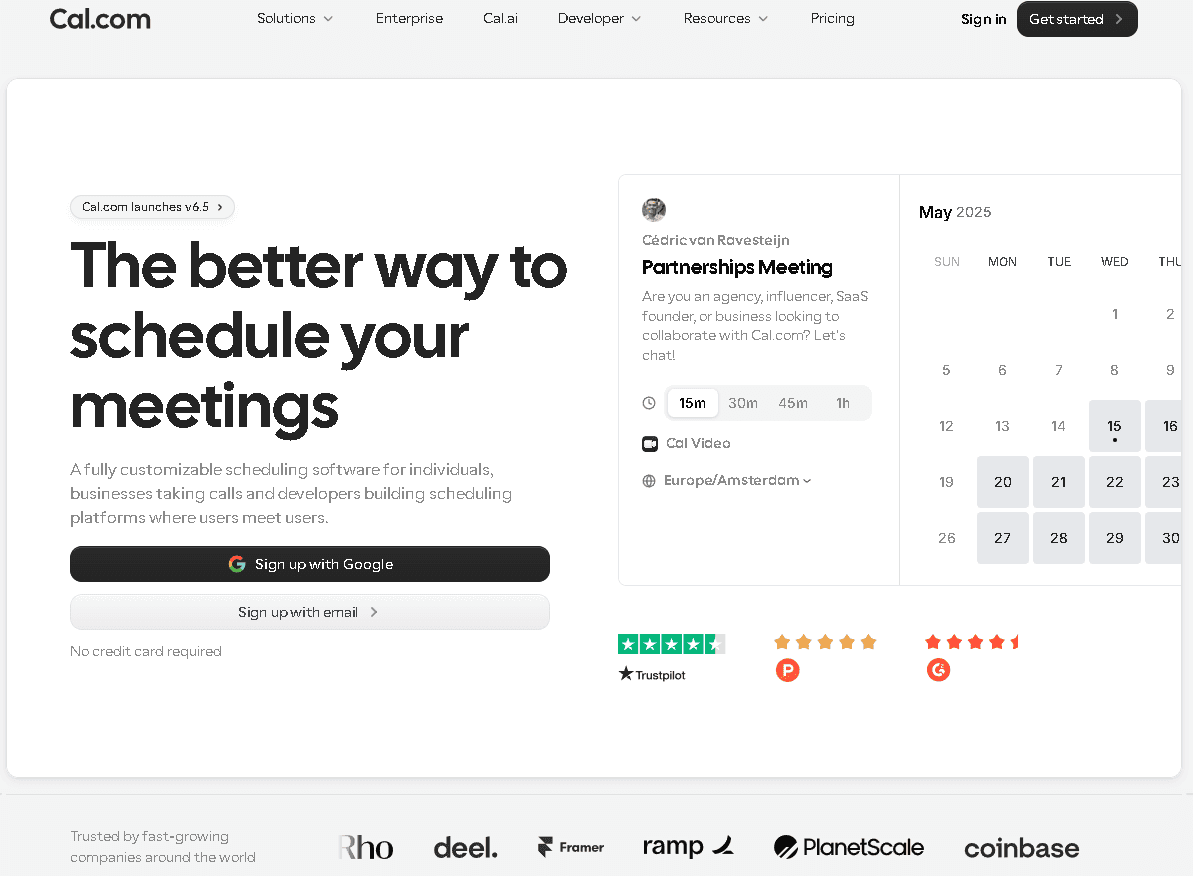
Most tools on the market are great at assigning leads to the right person. They take the information and drop it into a rep’s queue, which is a helpful start. However, they stop there.
That leaves a critical gap in your workflow: the time between being assigned a lead and actually getting a meeting on the books.
Cal.com solves that problem by linking the assignment step directly to a confirmed calendar event. We create one continuous flow that moves from a new prospect to a booked meeting without any manual work.
Here’s how the platform powers the entire experience.
Routing Forms
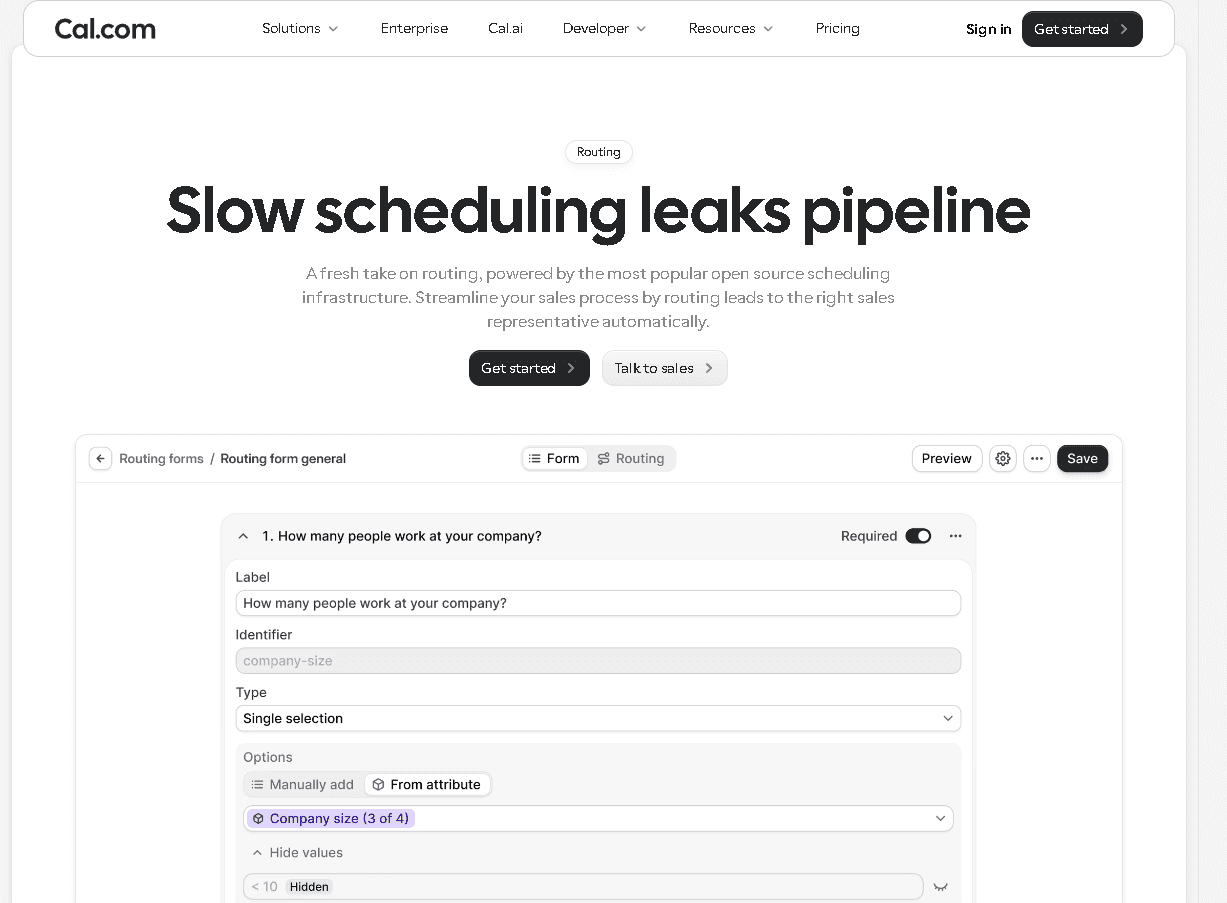
The routing forms act as the intake engine for your pipeline. Prospects answer custom questions when they submit a form, and the system uses that data to determine their path instantly.
You can also set up conditional logic to route based on company size, industry, or specific product interests. This means the lead finds the right booking page immediately, turning form submission into a booked meeting in mere seconds.
Round-Robin Scheduling
The platform handles the heavy lifting of distributing inbound meeting requests across your sales team automatically. You set the rules once, and it keeps the workload balanced. It’s a set-it-and-forget-it approach to round robin lead assignment, basically.
Because the platform factors in real-time availability, your prospects never see a slot for a rep who’s busy or off the clock, which is great.
CRM Integration
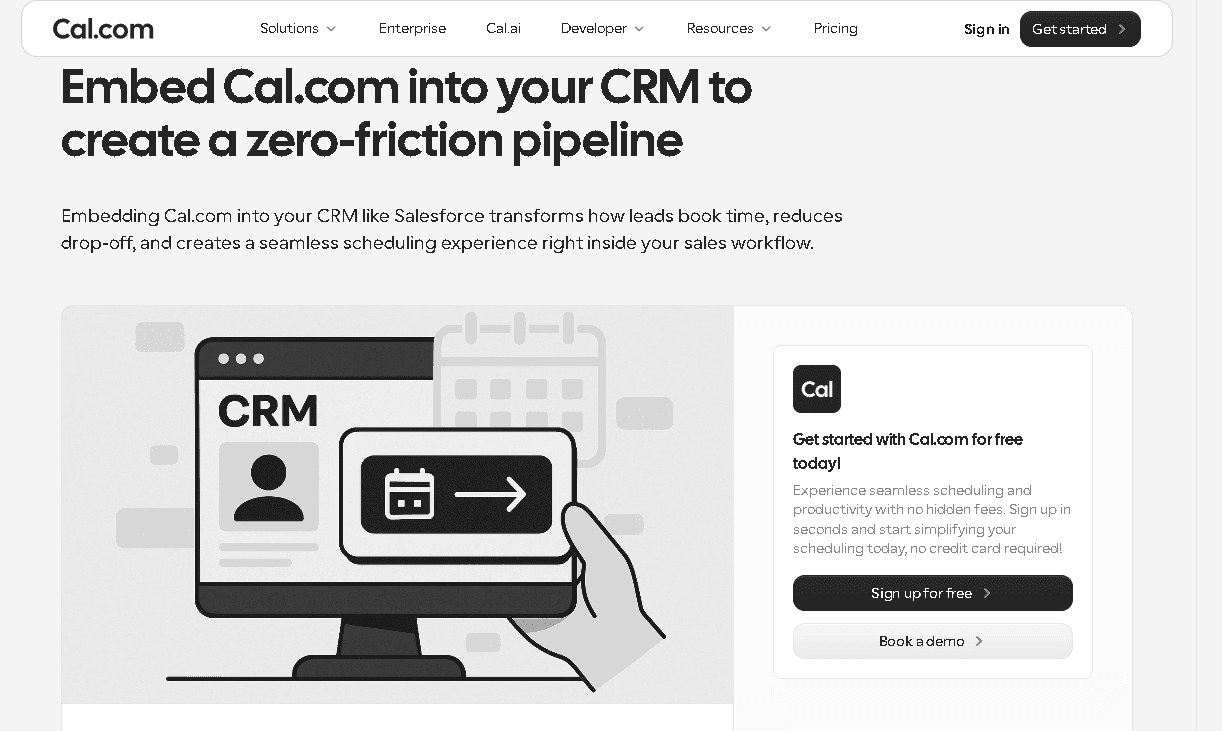
Cal.com keeps your data clean by automatically syncing every detail to your CRM. Salesforce or HubSpot records update as soon as a meeting is booked, so your reps never have to manually log a thing.
You can even use existing CRM data to fuel your routing decisions, pulling in account ownership or territory details to make sure the right person always gets the lead.
Managed Events
Total chaos happens when every individual rep controls their own meeting parameters. Your RevOps team needs guardrails to keep everything running smoothly across the whole organization.
With managed events, you can set standard rules and booking settings that every rep follows. This creates a consistent standard for your lead distribution process, making it easy to scale your team without losing control over how your leads are handled.
Lead Distribution Best Practices for 2026
Putting technology in place is only half the battle. If your underlying strategy is messy, you’re simply automating a bad process and moving faster toward the wrong outcomes.
Before you start, take the time to map out your routing rules clearly. If you're looking to align your entire sales infrastructure, explore our guide on selecting the right revenue operations (RevOps) software to keep your pipeline efficient.
Be sure to map out your routing rules clearly before you flip the switch.
Use these tactics to tighten up your operations and keep your sales team focused on closing rather than administrative busywork:
Define your logic early.
Sit down and draft exactly how leads should move through your company before turning on any automated lead distribution tools. Poorly thought-out rules create chaos, so gain consensus on your criteria first.
Prioritize the meeting, not just the hand-off.
Getting a name into a rep's queue in seconds is useless if they wait days to follow up. Your lead distribution strategy should trigger an automatic meeting booking so that the conversation starts immediately.
Pick the right method for your structure.
Use a round robin lead assignment if your team has similar capacity and needs volume handled fairly. And if you have specialists, stick with territory or skills-based routing to ensure the best rep handles the right deal.
Keep your data pristine.
Your routing software relies on the information sitting in your database. Account-based and territory-based methods fail immediately if your CRM data is outdated or incomplete.
Lean on availability.
High-volume teams should always use logic that checks for rep availability. Routing a prospect to a salesperson who’s out of the office wastes everyone's time and kills your conversion window.
Run regular audits.
Check in on your routing settings every few weeks. Verify that leads are going to the correct people and monitor the workload to spot any reps who are consistently over- or under-assigned.
Close the loop to the calendar.
The most effective lead distribution system is the one that successfully ends with a confirmed meeting. So if you’re not connecting your assignment process directly to a scheduling calendar, you’re leaving conversion opportunities on the table.
Common Lead Distribution Mistakes - and How to Avoid Them
Mistake | Impact | Solution |
Routing to unavailable reps | Lead goes cold | Use availability-based or round-robin routing |
No meeting booking automation | High drop-off after assignment | Cal.com routing forms book the meeting instantly |
Dirty CRM data | Wrong rep assignment | Regular CRM data hygiene audits |
Equal routing regardless of capacity | Overloaded reps, poor follow-up | Cap-based round-robin distribution |
No follow-up automation | Leads go cold after assignment | Trigger follow-up sequences on assignment |
Manual CRM logging | Missing data, poor visibility | Automate CRM sync on every assignment |
Automated Lead Distribution vs Lead Routing - What's the Difference?

People often swap the terms lead routing and lead distribution, as if they mean the exact same thing. While they live in the same house, they handle different jobs.
And understanding the nuance helps you better design your sales engine.
First, you can think of lead routing as the brain of your operation. It’s the logic and the set of rules that analyze a prospect to determine the best destination. To put it simply, it asks questions like, “Which territory does this company fall into?” or “Does this lead match our ideal customer profile?”
It’s pure strategy.
Lead distribution, on the other hand, acts as the hands-on execution. It’s the process of physically moving the lead from point A to point B and ensuring the right sales representative gets the notification.
If routing is the strategy, distribution is the action.
In practice, a top-tier lead distribution system needs to do both seamlessly. Cal.com manages this entire motion seamlessly. The routing forms act as the strategic layer by applying your qualification rules, while the booking pages handle the execution layer by instantly assigning the lead and securing a meeting time.
Combine these, and you turn a complex workflow into one smooth motion.
Frequently Asked Questions (FAQ)
Q1: What is automated lead distribution?
Automated lead distribution uses software to assign inbound leads to the right sales rep or team instantly, based on predefined rules like territory, round-robin rotation, skills, or CRM data, without any manual intervention from a sales manager.
Q2: What is the best automated lead distribution method?
The best method depends on your team structure. Round-robin works best for teams with similar rep capacity. Territory-based works best for specialized or regional teams. And skills-based works best for teams handling multiple products or segments. Most high-performing teams combine methods, using round-robin within territories, for example.
Q3: How does Cal.com automate lead distribution?
Cal.com's Routing Forms qualify inbound leads using custom questions and automatically route them to the right rep's booking page based on conditional logic. The lead goes from form submission to a booked meeting in seconds, with the assignment and meeting logged automatically to the CRM.
Q4: What is round-robin lead assignment?
Round-robin lead assignment distributes inbound leads to sales reps in a rotating sequence: rep 1, rep 2, rep 3, and so on. This ensures equal distribution of lead volume across the team without manual manager intervention.
Q5: What is a lead distribution system?
A lead distribution system is software that automates the assignment of inbound leads to the right sales rep or team. The best systems combine routing logic with meeting booking automation, ensuring leads don't just get assigned, but get a meeting booked before they go cold.
Q6: How does CRM integration improve lead distribution?
CRM integration allows lead distribution software to use existing account ownership, territory assignment, and rep data to inform routing decisions automatically. It also ensures every lead assignment and booked meeting is logged to the right CRM record without manual data entry.
Q7: What is the difference between lead distribution and lead generation?
Lead generation is the process of attracting and capturing potential customers. Conversely, lead distribution is what happens next: assigning those captured leads to the right sales rep or team as quickly and accurately as possible. Generation fills the funnel; distribution determines whether those leads convert.
Final Verdict - Building Your Automated Lead Distribution Stack in 2026

Setting up an effective automated lead distribution stack in 2026 requires two things working together: intelligent routing logic and automated meeting booking.
Most lead distribution tools only solve the first half of the process.
They assign the lead to a rep, then leave follow-up and scheduling to manual outreach. That delay is often where high-intent buyers lose momentum and move on.
Cal.com removes that bottleneck by connecting your qualification logic directly to a confirmed calendar event. Leads get routed to the right person and booked into a meeting immediately, instead of bouncing between systems or waiting on email replies.
The result is a faster, smoother handoff from inbound inquiry to actual sales conversation.
Start free with Cal.com today and add routing forms plus automated scheduling directly into your lead distribution workflow, no sales call required.

Get started with Cal.com for free today!
Experience seamless scheduling and productivity with no hidden fees. Sign up in seconds and start simplifying your scheduling today, no credit card required!