" height="18.016311920580208px" id="GKXyVanMq" stroke-dasharray="0" stroke-linecap="butt" stroke-linejoin="miter" stroke-miterlimit="10" stroke-width="0.5" stroke="rgb(0, 0, 0)" transform="translate(3 3)" width="18px"/></svg>)
"/><stop offset="1" stop-color="rgb(227, 224, 244)"/></linearGradient><linearGradient id="CBS1bzkxF-2031533640-linear-gradient" x1="0.49751243781094523" x2="0.5024875621890548" y1="0" y2="1"><stop offset="0" stop-color="rgb(255, 255, 255)"/><stop offset="1" stop-color="rgb(227, 224, 244)"/></linearGradient><linearGradient id="Jd7AK81w9-2031533640-linear-gradient" x1="0.49751243781094523" x2="0.5024875621890548" y1="0" y2="1"><stop offset="0" stop-color="rgb(255, 255, 255)"/><stop offset="1" stop-color="rgb(227, 224, 244)"/></linearGradient></defs><g d="M 0 16 L 0 0 L 16 0 L 16 16 Z M 9.167 5.167 C 9.167 4.891 8.943 4.667 8.667 4.667 C 8.391 4.667 8.167 4.891 8.167 5.167 C 8.167 6.784 7.809 7.834 7.155 8.488 C 6.501 9.143 5.451 9.5 3.833 9.5 C 3.557 9.5 3.333 9.724 3.333 10 C 3.333 10.276 3.557 10.5 3.833 10.5 C 5.451 10.5 6.501 10.857 7.155 11.512 C 7.809 12.166 8.167 13.216 8.167 14.833 C 8.167 15.109 8.391 15.333 8.667 15.333 C 8.943 15.333 9.167 15.109 9.167 14.833 C 9.167 13.216 9.524 12.166 10.178 11.512 C 10.832 10.857 11.883 10.5 13.5 10.5 C 13.776 10.5 14 10.276 14 10 C 14 9.724 13.776 9.5 13.5 9.5 C 11.883 9.5 10.832 9.143 10.178 8.488 C 9.524 7.834 9.167 6.784 9.167 5.167 Z M 4 3.667 C 4 3.483 3.851 3.333 3.667 3.333 C 3.483 3.333 3.333 3.483 3.333 3.667 C 3.333 4.32 3.189 4.715 2.952 4.952 C 2.715 5.189 2.32 5.333 1.667 5.333 C 1.483 5.333 1.333 5.483 1.333 5.667 C 1.333 5.851 1.483 6 1.667 6 C 2.32 6 2.715 6.145 2.952 6.382 C 3.189 6.618 3.333 7.013 3.333 7.667 C 3.333 7.851 3.483 8 3.667 8 C 3.851 8 4 7.851 4 7.667 C 4 7.013 4.145 6.618 4.382 6.382 C 4.618 6.145 5.013 6 5.667 6 C 5.851 6 6 5.851 6 5.667 C 6 5.483 5.851 5.333 5.667 5.333 C 5.013 5.333 4.618 5.189 4.382 4.952 C 4.145 4.715 4 4.32 4 3.667 Z M 7.333 1 C 7.333 0.816 7.184 0.667 7 0.667 C 6.816 0.667 6.667 0.816 6.667 1 C 6.667 1.422 6.573 1.65 6.445 1.778 C 6.317 1.906 6.089 2 5.667 2 C 5.483 2 5.333 2.149 5.333 2.333 C 5.333 2.517 5.483 2.667 5.667 2.667 C 6.089 2.667 6.317 2.761 6.445 2.889 C 6.573 3.016 6.667 3.244 6.667 3.667 C 6.667 3.851 6.816 4 7 4 C 7.184 4 7.333 3.851 7.333 3.667 C 7.333 3.244 7.427 3.016 7.555 2.889 C 7.683 2.761 7.911 2.667 8.333 2.667 C 8.517 2.667 8.667 2.517 8.667 2.333 C 8.667 2.149 8.517 2 8.333 2 C 7.911 2 7.683 1.906 7.555 1.778 C 7.427 1.65 7.333 1.422 7.333 1 Z" fill="transparent" height="16px" id="aoZYv33vR" width="16px"><path d="M 0 16 L 0 0 L 16 0 L 16 16 Z" fill="transparent" height="16px" id="Z2uGmhW9f" width="16px"/><g d="M 7.833 4.5 C 7.833 4.224 7.609 4 7.333 4 C 7.057 4 6.833 4.224 6.833 4.5 C 6.833 6.117 6.476 7.168 5.822 7.822 C 5.168 8.476 4.117 8.833 2.5 8.833 C 2.224 8.833 2 9.057 2 9.333 C 2 9.61 2.224 9.833 2.5 9.833 C 4.117 9.833 5.168 10.191 5.822 10.845 C 6.476 11.499 6.833 12.549 6.833 14.167 C 6.833 14.443 7.057 14.667 7.333 14.667 C 7.609 14.667 7.833 14.443 7.833 14.167 C 7.833 12.549 8.191 11.499 8.845 10.845 C 9.499 10.191 10.549 9.833 12.167 9.833 C 12.443 9.833 12.667 9.61 12.667 9.333 C 12.667 9.057 12.443 8.833 12.167 8.833 C 10.549 8.833 9.499 8.476 8.845 7.822 C 8.191 7.168 7.833 6.117 7.833 4.5 Z M 2.667 3 C 2.667 2.816 2.517 2.667 2.333 2.667 C 2.149 2.667 2 2.816 2 3 C 2 3.654 1.855 4.048 1.618 4.285 C 1.382 4.522 0.987 4.667 0.333 4.667 C 0.149 4.667 0 4.816 0 5 C 0 5.184 0.149 5.333 0.333 5.333 C 0.987 5.333 1.382 5.478 1.618 5.715 C 1.855 5.952 2 6.346 2 7 C 2 7.184 2.149 7.333 2.333 7.333 C 2.517 7.333 2.667 7.184 2.667 7 C 2.667 6.346 2.811 5.952 3.048 5.715 C 3.285 5.478 3.68 5.333 4.333 5.333 C 4.517 5.333 4.667 5.184 4.667 5 C 4.667 4.816 4.517 4.667 4.333 4.667 C 3.68 4.667 3.285 4.522 3.048 4.285 C 2.811 4.048 2.667 3.654 2.667 3 Z M 6 0.333 C 6 0.149 5.851 0 5.667 0 C 5.483 0 5.333 0.149 5.333 0.333 C 5.333 0.756 5.239 0.984 5.112 1.112 C 4.984 1.239 4.756 1.333 4.333 1.333 C 4.149 1.333 4 1.483 4 1.667 C 4 1.851 4.149 2 4.333 2 C 4.756 2 4.984 2.094 5.112 2.222 C 5.239 2.35 5.333 2.578 5.333 3 C 5.333 3.184 5.483 3.333 5.667 3.333 C 5.851 3.333 6 3.184 6 3 C 6 2.578 6.094 2.35 6.222 2.222 C 6.35 2.094 6.578 2 7 2 C 7.184 2 7.333 1.851 7.333 1.667 C 7.333 1.483 7.184 1.333 7 1.333 C 6.578 1.333 6.35 1.239 6.222 1.112 C 6.094 0.984 6 0.756 6 0.333 Z" fill="transparent" height="14.66671286102295px" id="ae6ccdFme" transform="translate(1.333 0.667)" width="12.66663px"><path d="M 5.833 0.5 C 5.833 0.224 5.609 0 5.333 0 C 5.057 0 4.833 0.224 4.833 0.5 C 4.833 2.117 4.476 3.168 3.822 3.822 C 3.168 4.476 2.117 4.833 0.5 4.833 C 0.224 4.833 0 5.057 0 5.333 C 0 5.61 0.224 5.833 0.5 5.833 C 2.117 5.833 3.168 6.191 3.822 6.845 C 4.476 7.499 4.833 8.549 4.833 10.167 C 4.833 10.443 5.057 10.667 5.333 10.667 C 5.609 10.667 5.833 10.443 5.833 10.167 C 5.833 8.549 6.191 7.499 6.845 6.845 C 7.499 6.191 8.549 5.833 10.167 5.833 C 10.443 5.833 10.667 5.61 10.667 5.333 C 10.667 5.057 10.443 4.833 10.167 4.833 C 8.549 4.833 7.499 4.476 6.845 3.822 C 6.191 3.168 5.833 2.117 5.833 0.5 Z" fill="url(%23t2lXByE48-2031533640-linear-gradient)" height="10.66671px" id="t2lXByE48" transform="translate(2 4)" width="10.66663px"/><path d="M 2.667 0.333 C 2.667 0.149 2.517 0 2.333 0 C 2.149 0 2 0.149 2 0.333 C 2 0.987 1.855 1.382 1.618 1.618 C 1.382 1.855 0.987 2 0.333 2 C 0.149 2 0 2.149 0 2.333 C 0 2.517 0.149 2.667 0.333 2.667 C 0.987 2.667 1.382 2.811 1.618 3.048 C 1.855 3.285 2 3.68 2 4.333 C 2 4.517 2.149 4.667 2.333 4.667 C 2.517 4.667 2.667 4.517 2.667 4.333 C 2.667 3.68 2.811 3.285 3.048 3.048 C 3.285 2.811 3.68 2.667 4.333 2.667 C 4.517 2.667 4.667 2.517 4.667 2.333 C 4.667 2.149 4.517 2 4.333 2 C 3.68 2 3.285 1.855 3.048 1.618 C 2.811 1.382 2.667 0.987 2.667 0.333 Z" fill="url(%23CBS1bzkxF-2031533640-linear-gradient)" height="4.66667px" id="CBS1bzkxF" transform="translate(0 2.667)" width="4.66667px"/><path d="M 2 0.333 C 2 0.149 1.851 0 1.667 0 C 1.483 0 1.333 0.149 1.333 0.333 C 1.333 0.756 1.239 0.984 1.112 1.112 C 0.984 1.239 0.756 1.333 0.333 1.333 C 0.149 1.333 0 1.483 0 1.667 C 0 1.851 0.149 2 0.333 2 C 0.756 2 0.984 2.094 1.112 2.222 C 1.239 2.35 1.333 2.578 1.333 3 C 1.333 3.184 1.483 3.333 1.667 3.333 C 1.851 3.333 2 3.184 2 3 C 2 2.578 2.094 2.35 2.222 2.222 C 2.35 2.094 2.578 2 3 2 C 3.184 2 3.333 1.851 3.333 1.667 C 3.333 1.483 3.184 1.333 3 1.333 C 2.578 1.333 2.35 1.239 2.222 1.112 C 2.094 0.984 2 0.756 2 0.333 Z" fill="url(%23Jd7AK81w9-2031533640-linear-gradient)" height="3.333333px" id="Jd7AK81w9" transform="translate(4 0)" width="3.3333399999999997px"/></g></g></svg>)
" height="24px" id="WCm44spAV" width="24px"/><path d="M 3.892 7.742 C 1.674 7.742 0 6.014 0 3.882 C 0 1.738 1.589 0 3.892 0 C 5.107 0 5.951 0.374 6.623 1.173 L 5.566 2.09 C 5.118 1.621 4.564 1.386 3.892 1.386 C 2.452 1.386 1.547 2.517 1.547 3.882 C 1.547 5.246 2.452 6.356 3.924 6.356 C 4.649 6.356 5.193 6.111 5.63 5.63 L 6.718 6.558 C 6.153 7.24 5.193 7.742 3.892 7.742 Z" fill="rgb(255, 255, 255)" height="7.741500000000002px" id="XEPpGD7l5" transform="translate(4 8.25)" width="6.717999999999989px"/><path d="M 2.74 7.922 C 1.215 7.922 0 6.632 0 5.032 C 0 3.433 1.215 2.122 2.74 2.122 C 3.7 2.122 4.201 2.516 4.5 3.113 L 4.5 2.239 L 5.928 2.239 L 5.928 7.784 L 4.531 7.784 L 4.531 6.877 C 4.233 7.507 3.731 7.922 2.74 7.922 Z M 1.439 5.023 C 1.439 5.865 2.057 6.622 2.975 6.622 C 3.924 6.622 4.531 5.897 4.531 5.033 C 4.531 4.169 3.924 3.423 2.975 3.423 C 2.057 3.423 1.439 4.159 1.439 5.022 Z M 6.784 7.784 L 6.784 0 L 8.224 0 L 8.224 7.784 L 6.784 7.784 Z" fill="rgb(255, 255, 255)" height="7.9224997406005855px" id="lGDJupIUR" transform="translate(10.5 8)" width="8.223500194549558px"/></g></svg>)
" width="18px"><path d="M 2 8 C 0.895 8 0 7.105 0 6 L 0 2 C 0 0.895 0.895 0 2 0 L 6 0 C 7.105 0 8 0.895 8 2 L 8 6 C 8 7.105 7.105 8 6 8 Z" fill="transparent" height="8px" id="ZrCrI93dV" stroke-dasharray="" stroke-linecap="round" stroke-linejoin="round" stroke-width="2" stroke="rgb(0, 0, 0)" width="8px"/><path d="M 0 0 L 0 4 C 0 5.105 0.895 6 2 6 L 6 6" fill="transparent" height="6px" id="emltWYAiE" stroke-dasharray="" stroke-linecap="round" stroke-linejoin="round" stroke-width="2" stroke="rgb(0, 0, 0)" transform="translate(4 8)" width="6px"/><path d="M 2 8 C 0.895 8 0 7.105 0 6 L 0 2 C 0 0.895 0.895 0 2 0 L 6 0 C 7.105 0 8 0.895 8 2 L 8 6 C 8 7.105 7.105 8 6 8 Z" fill="transparent" height="8px" id="WpBecYDfi" stroke-dasharray="" stroke-linecap="round" stroke-linejoin="round" stroke-width="2" stroke="rgb(0, 0, 0)" transform="translate(10 10)" width="8px"/></g></svg>)


7 Best Revenue Operations Software (2026)
Revenue teams struggle every day with a disconnected stack. This leads to friction in the sales pipeline that impacts conversion in the end. Most disconnected and messy RevOps stacks struggle to juggle between the CRM, forecasting, and scheduling.
All these software don’t always connect and play well with each other, and everything causes a barely functioning system with leads and data leaking between every handoff. Revenue operations software was supposed to be the solution that solves it all.
It was supposed to improve handoffs and prevent data from leaking inside the pipeline. However, not having the right revenue operations software meant this problem persisted. In 2026, data gaps and handoff problems mean more lost revenue than ever before.
This is because now buying journeys are faster and pipelines are noisier. A strong RevOps software is a necessity now, and it isn’t just about visibility anymore. So, to help businesses turn demand into actual conversions with minimal friction, we’ve tested the 7 leading revenue intelligence platforms in the market today.
We’ve tested each platform for RevOps functionality, integration depth, pricing transparency, and day-to-day operational efficiency. Each tool tested has its own special focus features that make it stand out. So, feel free to choose any of them based on your requirements.
What is revenue operations software?
Revenue operations (RevOps) is where sales, marketing, and customer success teams meet. It is the single umbrella that all these departments fall under. It practically becomes an overarching operational framework that’s designed to drive predictable and efficient growth. The revenue operations software is one system where data, processes, and goals are shared.
As you can imagine, RevOps software is basically just a centralized software for customer and pipeline data. It can automate workflows across teams and improve forecasting accuracy. But that’s not all. Most importantly, the RevOps platforms reduce revenue leakage from the sales pipelines. It optimizes missed handoffs and delays in the system. This is made possible by following the customer’s journey from first touch to conversion and ensuring every step is adequately connected and measurable.
What’s mentioned above is how the core revenue operations software works. However, with modern times came modern RevOps platforms that improved further on their features and capabilities. Today, there are revenue intelligence platforms and revenue lifecycle management systems. Both of these tools help businesses successfully convert existing leads and expand revenue across entire lead lifecycles.
What to look for in a RevOps platform
Finding the right RevOps platform for your business means understanding your requirements well. Here are the features and facilities you must have in your revenue operations software for optimal performance.
CRM integration: Your RevOps platform should integrate seamlessly with your CRM software. It should have a two-way sync that transports data in real-time. The reason you need this is so that you create a strong, connected system rather than adding another disconnected layer to your stack.
Scheduling and routing capabilities: When you choose strong sales operations tools, they go beyond just tracking pipelines. They will help you convert leads actively. So, your chosen platform should intelligently route leads to the right reps to improve conversion chances.
Forecasting and revenue intelligence: Features like identifying revenue trends, deal risks, and continuous monitoring of pipeline health are crucial for any reliable revenue management platform in 2026. This type of clear data helps you generate actionable insights.
Pricing transparency: When you have revenue operation software with hidden fees and complex quote-based pricing, it can hamper your scale with unexpected costs. That’s why you should always opt for Revenue Ops with transparent pricing with clear details of all fees and charges.
Ease of adoption: When you’re adding a new layer to your existing stack, it should not make the stack more complicated. Complex software requires longer training and prevents your team from optimizing their workflows completely. This is why your revenue forecasting software should be intuitive for sales, marketing, and customer success teams.
Scalability: Teams grow, and your RevOps software should be able to scale with it. So, make sure you choose a system that can evolve with your business requirements as pipeline volume and teams expand.
Revenue operations software: quick comparison table
Tool | Best for | Free plan | Transparent pricing | Scheduling built-in |
Cal.com | Scheduling and converting leads in the pipeline | Yes | Yes | Yes |
HubSpot Revenue Hub | All-in-one RevOps suite | Yes | Yes | No |
Salesforce Revenue Cloud | Enterprise revenue lifecycle | No | Yes | No |
Clari | Revenue forecasting and intelligence | No | No | No |
Gong | Conversation intelligence | No | No | No |
Forecastio | Lightweight HubSpot forecasting | No | Yes | No |
Microsoft Dynamics 365 Sales | Microsoft ecosystem RevOps | No | Yes | No |
The 7 best revenue operations software platforms (2026)
1. Cal.com: best RevOps tool for scheduling and pipeline conversion
What it is: Cal.com is a modern and powerful scheduling platform that specializes in helping revenue teams. It allows teams to optimize speed-to-meeting and set up booked meetings with leads when their intent is the highest. It is currently the most underrated revenue operations software in 2026.
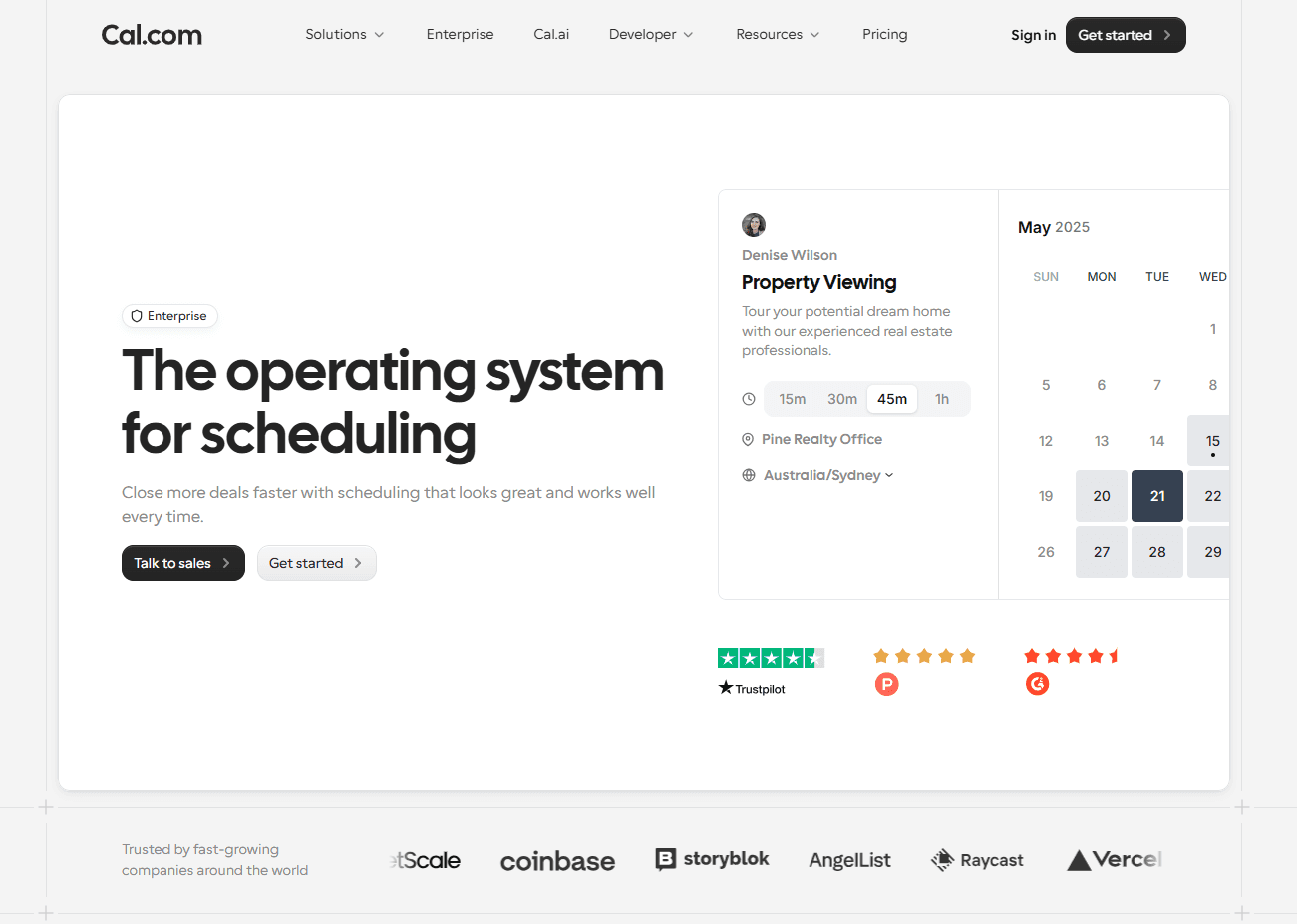
Why it’s #1: Revenue teams do not struggle with lead generation. They struggle, however, with converting leads. There are gaps in most sales pipelines between a qualified lead and booking a meeting with them. Cal.com addresses this gap specifically with an automated solution that’s hard to beat.
Cal.com captures lead data from the source directly (forms), and it routes the leads to the right representatives automatically based on predefined rules. Then it shows available meeting times for a demo or a discussion with the representative to the lead, and just like that, automatically, you have a booked meeting with a high-intent client.
Cal.com does this better than any other RevOps platform on this list. It converts intent into action instantly, all the while enriching lead information, as you can set up forms after the booking to prevent any idle time in your pipeline.
Core RevOps features
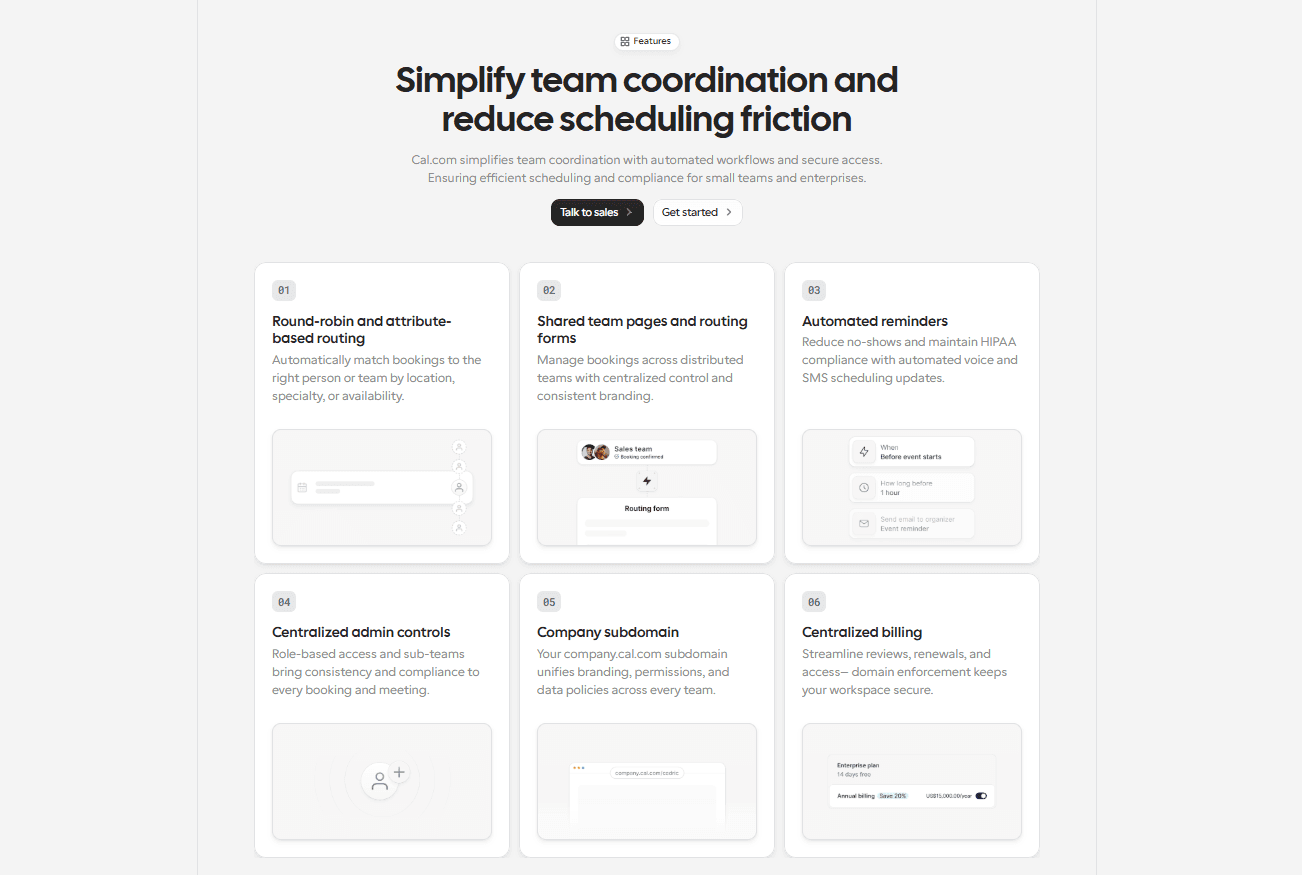
Routing forms with custom logic support and conditional logic.
Ability to qualify inbound leads and automatically assign them to the right representative
Support for all types of round-robin scheduling, including weighted, availability-based, and strict round robin
Supports collective scheduling features for full team coverage
Native-level integration with popular platforms like Salesforce and HubSpot.
Automated two-way sync with CRM, where every meeting is updated under the right contact inside the CRM dashboard
Fully customizable and brandable booking pages for teams, individuals, and organizations
Supports managed events to standardize scheduling across revenue teams
What makes it stand out
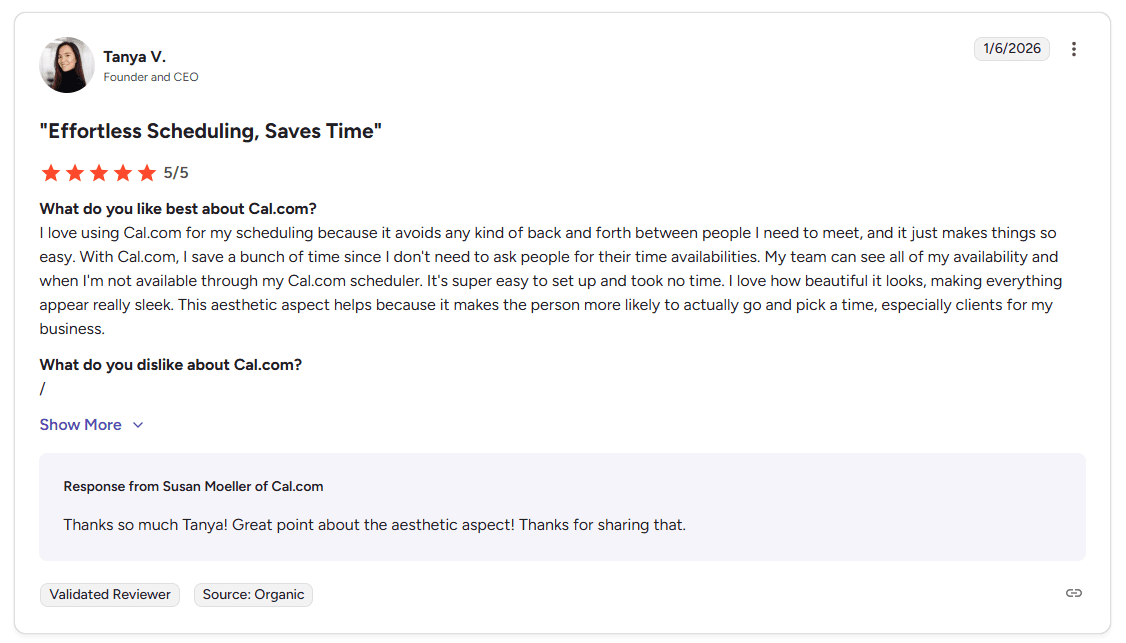
Cal.com offers the best free forever plan for individuals. Requires no sales call to set up
Transparent pricing that’s publicly listed and doesn’t have any hidden charges
Flexible platform that supports work across sales, marketing, and customer success teams
Automates handoffs between lead routing and meeting bookings
Pricing: A free forever plan exists for individuals. Paid plans start at $12/user per month.
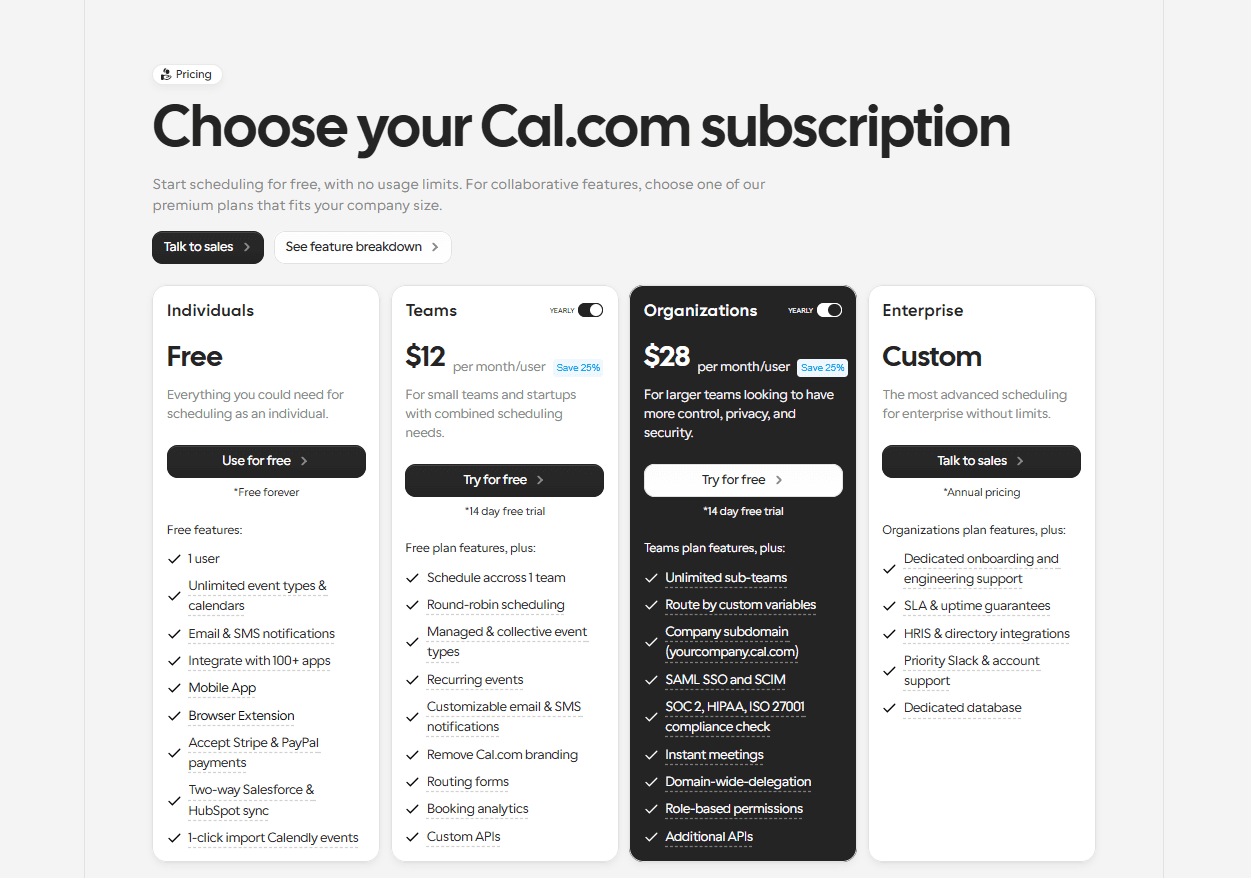
Best for: Cal.com is best for revenue teams that want to eliminate drop-offs between lead qualification and booked pipeline.
Verdict: Cal.com acts as a centralized hub in a modern RevOps stack. It is not a heavy software that requires significant RevOps infrastructure. It can handle scalability and flexibly manage across sales, marketing, and customer success teams. Lastly, while most sales operations tools focus on tracking or reporting, Cal.com works on conversion. These conversions translate to revenue, and that’s why Cal.com ranks as the best revenue operations software in 2026, in our opinion.
2. HubSpot Revenue Hub: best all-in-one RevOps suite
What it is: HubSpot Revenue Hub is a powerful end-to-end revenue management platform. It brings marketing, sales, and customer success into a single unified system inside its own CRM. HubSpot is also one of the most popular software suites, so it excels in integrations.
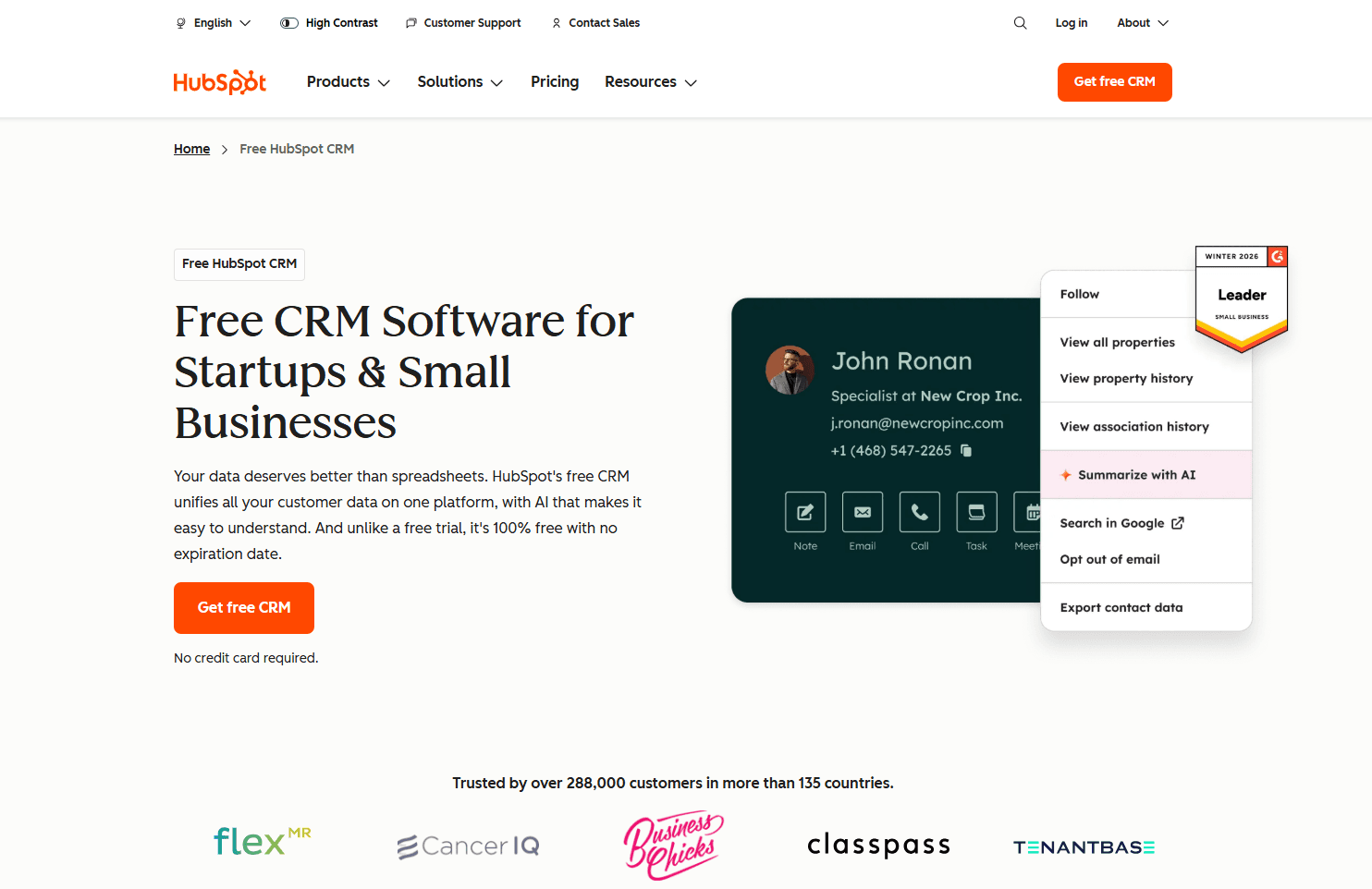
Why it ranks #2: The HubSpot Revenue Hub ranks second in our rankings because of its massive scale and precise functionality. Sure, it is not the most suited for a small team, but for enterprise businesses, HubSpot nails the features and centralized view.
Additionally, as mentioned before, HubSpot is great with integrations, so it plays well with other tools without any hassle. However, one small downside is that, since HubSpot is so robust with its suite, you must already be using the HubSpot ecosystem to get the most benefit from this system.
Core RevOps features
Unified CRM across all revenue functions
Built-in forecasting with deal pipeline management features
Marketing automation and lead scoring features
Revenue reporting facilities with attribution tracking
Native integration with the HubSpot ecosystem
What makes it stand out
All-in-one system for contacts, deals, emails, and revenue data
Free tier to help teams get started
An extensive ecosystem of native and third-party integrations
Pricing: Free plan available. Paid plans start at $9/user per month, but it is just the starter plan.
Best for: If you want a single sales execution platform, HubSpot Revenue Hub works best.
Verdict: HubSpot is a safe, all-in-one RevOps platform that can be useful for teams already using the HubSpot ecosystem. It offers features in every category, and even though there’s limited feature depth, the consolidation makes it worth it for some teams.
3. Salesforce Revenue Cloud: best for enterprise revenue lifecycle management
What it is: Salesforce Revenue Cloud, which is now Agentforce Revenue Management, is an enterprise-grade RevOps platform. It manages the full revenue lifecycle for enterprise businesses. It covers everything from pricing and quoting to billing and revenue recognition. This is one of the most robust tools in our rankings.
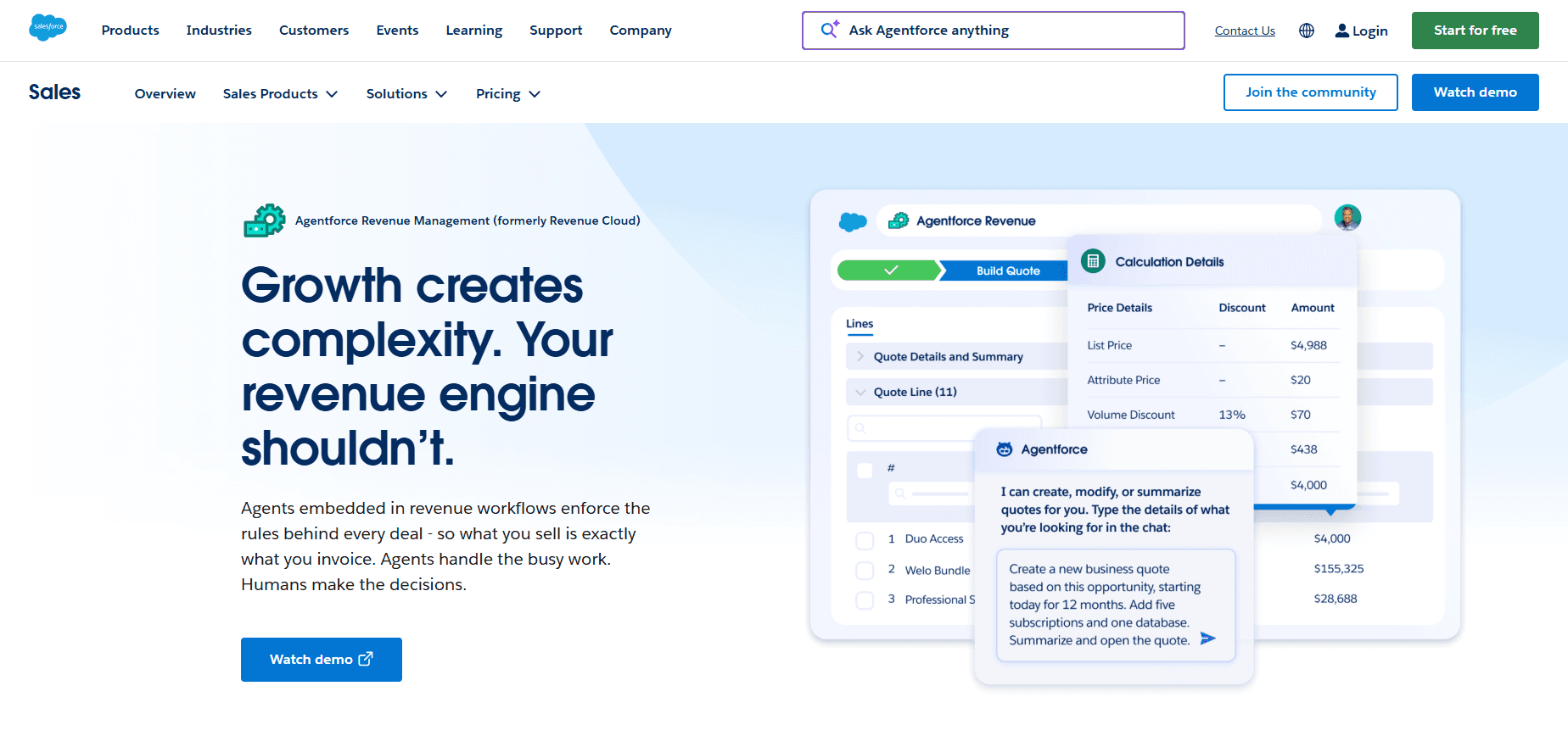
Why it ranks #3: Salesforce is a force to be reckoned with. It is a very powerful software for sales teams, and the Revenue Cloud is no different. It works extremely well for enterprise-grade teams with features and controls that are just not available with every other tool. However, it ranks third because it can’t scale down really well. Salesforce Revenue Cloud is not really useful for smaller teams; it is both an overkill and too expensive for them to consider.
Core RevOps features
Configure, pricing, and quoting (CPQ) functionality for complex deals
End-to-end revenue lifecycle management
Advanced forecasting features with pipeline analytics
Deep CRM integration inside the Salesforce ecosystem
AI-powered revenue forecasting software via Einstein
What makes it stand out
More comprehensive revenue lifecycle coverage than any revenue management platform
Built for enterprise-grade complex pricing, subscriptions, and enterprise contracts
Industry-leading integration ecosystem with unmatched customization
Pricing: No free tier, paid plans start at $150/user per month.
Best for: Enterprise-level revenue teams that are managing complex deal structures, multi-product pricing, and strict revenue recognition requirements.
Verdict: Salesforce Revenue Cloud is undoubtedly a powerful revenue operations software. It is built for complexity. However, it is only suited to the needs of enterprise-scale operations and can’t really scale down for smaller teams looking for a simpler sales execution platform.
4. Clari: best for revenue intelligence and forecasting
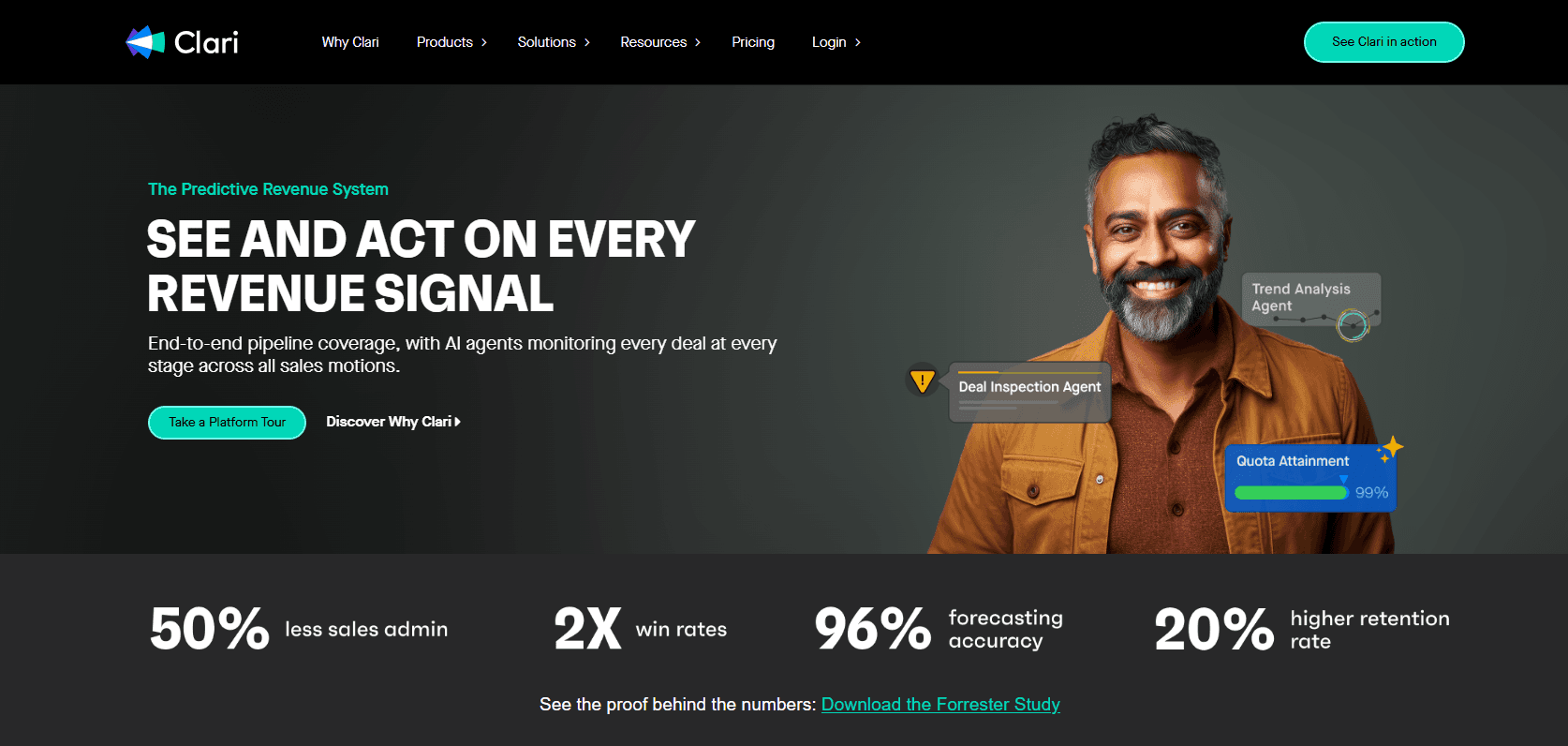
What it is: Clari is a leading revenue intelligence platform. It uses AI to improve forecasting accuracy. Clari is generally used to get visibility into pipeline health by revenue teams.
Core RevOps features
AI-powered revenue forecasting software features
Pipeline inspection capability with risk scoring
CRM data capture and enrichment
Rep activity tracking and engagement analytics
Revenue cadence management
What makes it stand out
Best-in-class revenue forecasting accuracy
Helps identify pipeline risks before deals slip
Built specifically for revenue leaders and CROs
Pricing: Quote-based pricing for enterprise-level teams only.
Best for: Clari is best for revenue leaders and sales ops teams that need precise forecasting and deep pipeline visibility.
Verdict: If you need high-quality revenue forecasting features, Claridoes the job well. However, if your revenue ops requirements are for smaller teams, Clari doesn’t scale down. And since it is not an end-to-end system, it can get really expensive to have this and other tools separately on your stack.
5. Gong: best for revenue intelligence from conversation data
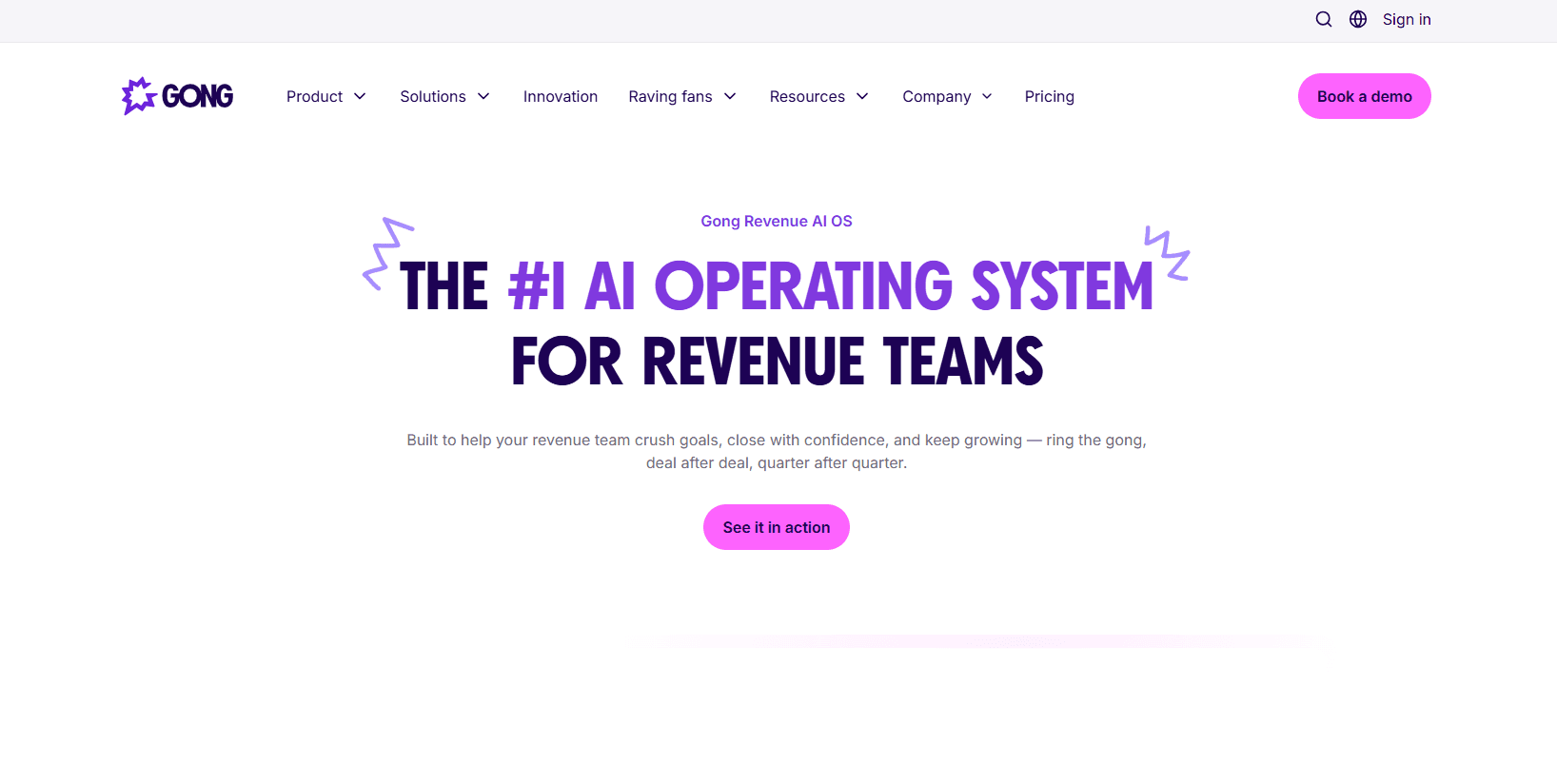
What it is: Gong is a revenue intelligence platform. It analyzes sales calls, emails, and meetings and turns them into actionable pipeline insights. Think of it as an assistant for your sales reps that will update the meeting results of your reps on their CRM and other connected systems. This helps managers and other team members stay in the know regarding lead positions in the pipeline.
Core RevOps features
Call and meeting recording feature
AI-driven data analysis capabilities
Coaching insights and rep performance tracking
CRM integration and automatic data sync
Pipeline analytics are directly tied to conversation data
What makes it stand out
Transforms every sales interaction into structured data
Enables coaching for reps with data-backed insights
Adds a strong forecasting layer on real buyer engagement
Pricing: Quote-based pricing that’s available on request.
Best for: Gong is best suited for RevOps teams that want to use conversation data to improve pipeline accuracy. It can also help improve rep performance.
Verdict: Gong works as a powerful sales execution platform; however, the quote-based pricing, platform fees, and other friction factors make it kind of a bummer. It may add value to your team, but there’s no way to find out whether you want to use it or not without some form of commitment to the company.
6. Forecastio: best lightweight RevOps tool for sales forecasting
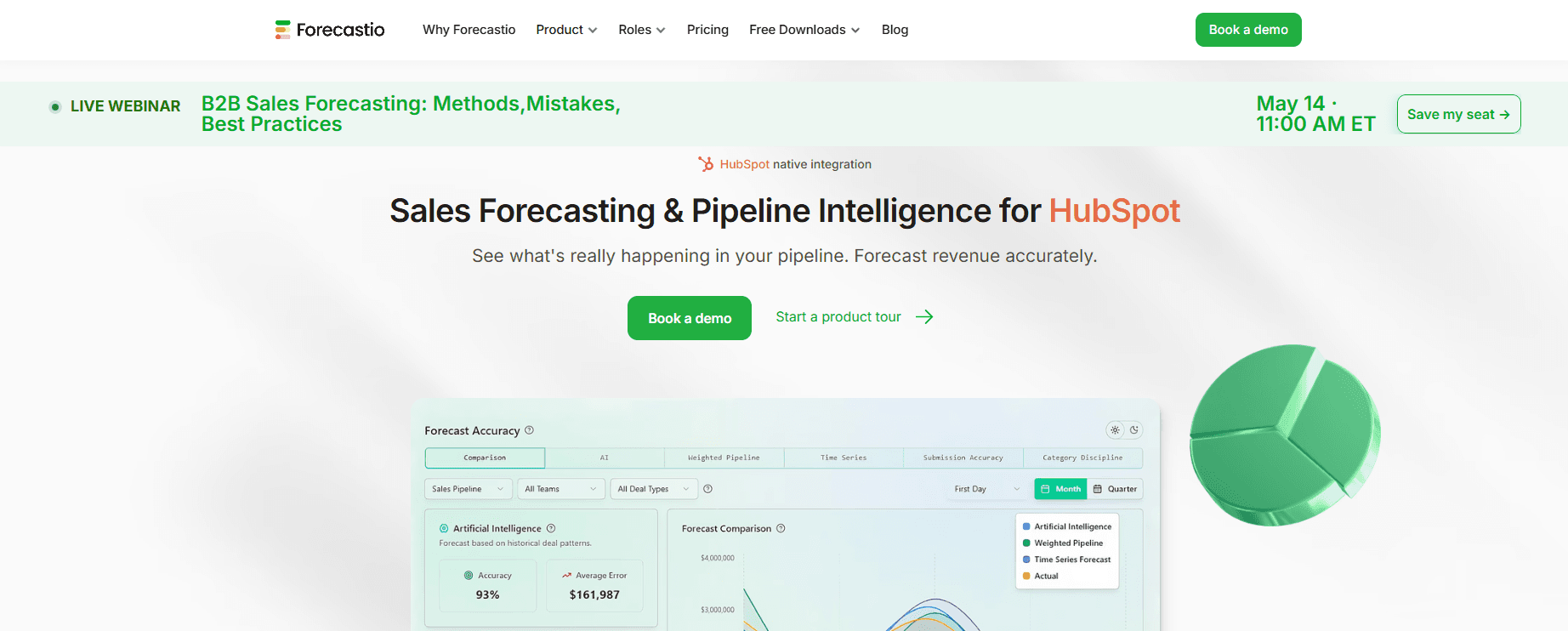
What it is: Forecastio is known for being lightweight. It is a RevOps platform that focuses on forecasting revenue and pipeline management. The speciality of Forecastio is that it is built specifically for HubSpot users. This is both the pro and the con of Forecastio.
Core RevOps features
Sales forecasting directly on top of HubSpot data
Pipeline health tracking with a scoring feature
Representative performance analytics
Goal tracking and achievement reporting
What makes it stand out
Specifically built for HubSpot teams
Doesn’t require or depend on heavy setup or complex integrations
More affordable than some enterprise-grade revenue forecasting software
Pricing: No free plans, paid plans start at $249 per month for two users.
Best for: HubSpot-native RevOps teams that want strong revenue forecasting without the enterprise pricetag of some tools.
Verdict: Forecastio is a lightweight and effective tool. It punches above its weight in terms of efficiency and performance. However, it is suited only to HubSpot teams. This makes it not useful for people on other platforms without migration.
7. Microsoft Dynamics 365 Sales: best for Microsoft ecosystem revenue teams
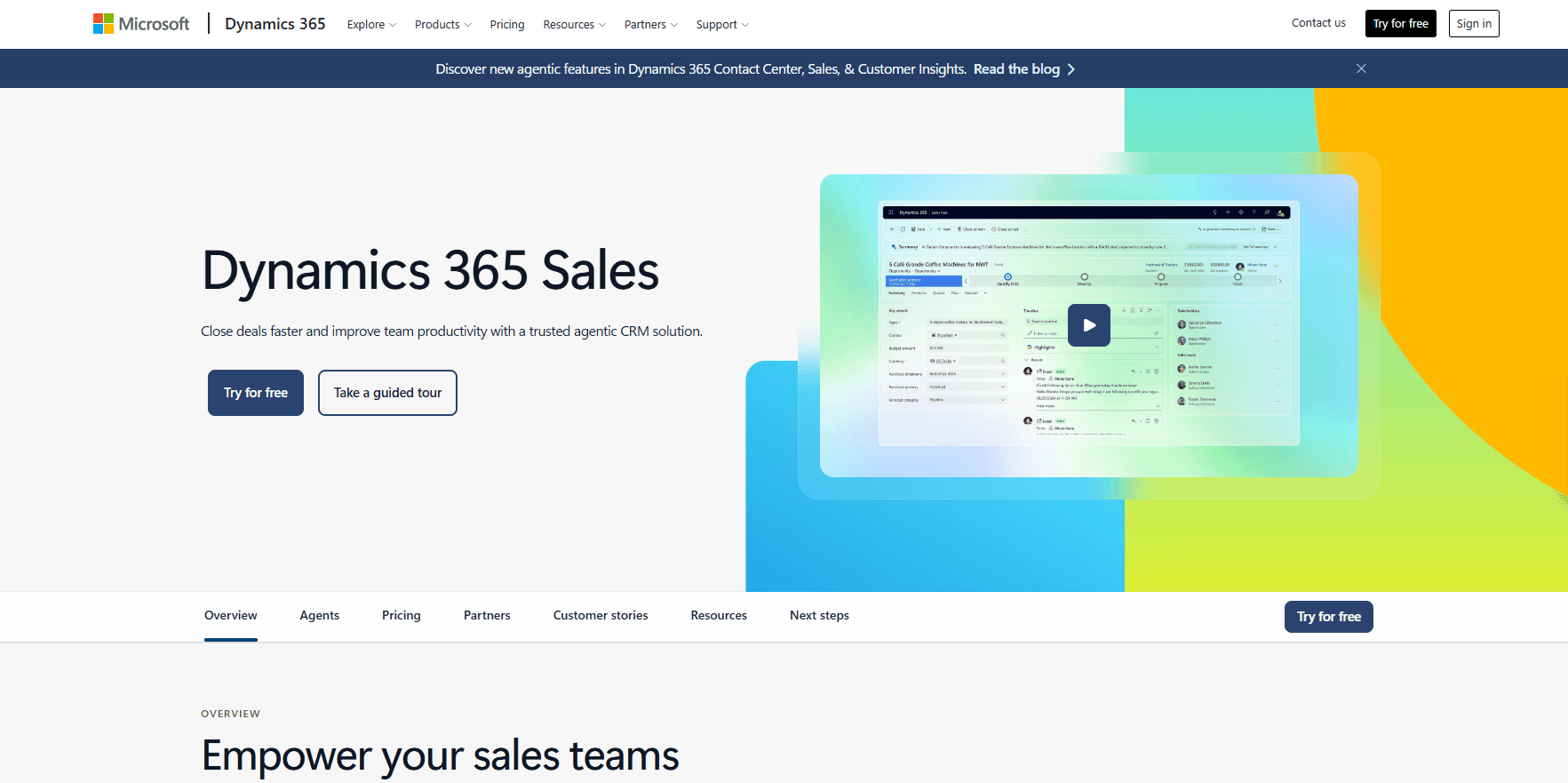
What it is: If you’re on the Microsoft ecosystem (Outlook, Teams, Copilot), this is your native revenue management platform. It is an enterprise-grade software that tightly integrates with the Microsoft 365 ecosystem.
Core RevOps features
CRM management with pipeline visibility
Deep integration with Teams, Outlook, and Excel
Revenue forecasting and analytics
AI-powered insights with Copilot
CPQ capabilities are often compared with Dynamics CPQ
What makes it stand out
Unmatched integration with the Microsoft 365 ecosystem
Strong native CPQ functionality
Built-in AI assistant embedded directly into the sales execution platform
Pricing: Has a free trial plan. Paid plans start at $65/user per month. Copilot credits need to be purchased separately.
Best for: RevOps teams that are using the Microsoft ecosystem.
Verdict: Dynamics 365 Sales is the standout choice for teams already using the Microsoft ecosystem. The native integration it offers with other Microsoft apps is phenomenal. It is also a powerful software with standout features. However, it is only valuable to people using the Microsoft ecosystem.
How to choose the right RevOps platform for your team
Start with your biggest revenue leak: It is very easy to start looking at the fancy features and the bells and whistles promised by a new software. However, to get the right RevOps platform for your team, you must identify your bottleneck first. And then you have to see whether the tool you’re choosing can help you clear that bottleneck or not. This will define in the end whether you’re choosing the right revenue operations software or not.
Map your existing stack: A complex stack is great for showing off to your tech bros, but it is a nightmare to manage. The more handoffs there are in the data you’re gathering, the more chances there are for data to be lost or misplaced. So, make sure you map out your existing stack very well before going for the new shiny software. You must ensure the new software you’re adding to your stack adds enough value that the complexity it may add to your stack is worth it.
Prioritize transparent pricing: Many sales operations tools rely on opaque pricing, but there’s a thing. The company’s sales team is trying to sell to you, another sales team. You know the ins and outs as much as they do. And this just leads to an incredibly frustrating time-wasting experience. This is why it is important that you just cut the middleman and have transparent pricing so that you can merrily go about your day.
Think about adoption and not just capability: A revenue operations software needs to be used by three departments, marketing, sales, and customer success. So, if your teams are not using the shiny new software, it's useless. That’s why choose a software that’s actually useful and easy to use. That way, you can ensure your team adapts to the new workflow.
Don’t overlook scheduling: Pipeline management and revenue forecasting are important. However, converting the forecasts and managing the pipeline is far more important than seeing numbers on the screen. The best revenue operations software helps you close deals and fill the gap between having qualified leads and then dropping them off in the pipeline. Conversion matters, so don’t overlook scheduling.
Final verdict
The best RevOps stack in 2026 should not be focused on how expensive and complex it is. It should be focused on simplicity and fewer data handoffs. This is done to reduce friction and bottlenecks from the pipeline and actually encourages higher conversion rates and revenue.
Investing in tracking and reporting is fine, but you should focus more on creating a pipeline where qualified leads turn into booked meetings with the right representative. This change can help you improve conversion rates and impact revenue. Cal.com is inarguably the best in this regard as it is a foundational layer of modern revenue operations software stacks.
So, with Cal.com, an ideal RevOps stack in 2026 can look like:
Use Cal.com for scheduling, routing, and conversion
Pair it with the HubSpot CRM for pipeline management
And lastly, add in Clari or Forecastio for forecasting and visibility
This combination works wonders and is lean. However, it is still powerful and capable of handling the requirements of both enterprise-level organizations and smaller sales teams. It reduces unnecessary complexity and gives you a RevOps platform that actually drives outcomes.
So, start free with Cal.com today and take charge of your revenue operations.
Frequently asked questions (FAQs)
1. What is revenue operations software?
Revenue operations software is a tool that helps sales, marketing, and customer success teams come under the same operational framework. It centralizes data, automates workflows, and improves revenue forecasting and reporting. It also helps eliminate gaps in the pipeline where revenue is lost and teams between teams and tools.
2. What is the best revenue operations software in 2026?
Cal.com leads our rankings as the best revenue operations software in 2026. This is despite Cal.com not being a dedicated revenue operations software. The ranking is achieved because Cal.com helps solve a very specific problem for teams. It helps them convert high-intent leads with a simple strategy. Booking a meeting with inbound leads through automated lead routing improves the chances of conversion. This simple but ingenious strategy helps Cal.com drive results and gain the #1 spot in our rankings.
3. What is the difference between RevOps and sales ops?
To put it simply, Sales Ops is a part of RevOps. However, RevOps is not just sales operations; it also includes marketing and customer success under the same common operational framework. RevOps supports shared data, processes, and goals to optimize the entire revenue lifecycle.
4. What does a RevOps platform do?
A RevOps platform’s job is to centralize revenue data and make it accessible to marketing, sales, and customer success teams. Since all these three teams can influence revenue, the software brings in all the data and showcases the company’s full and final revenue outputs and forecasts. It also automates data handoffs between different elements of your RevOps pipeline, and it ensures leads are routed and converted efficiently.
5. What is revenue lifecycle management?
Revenue lifecycle management is a process that covers the end-to-end management of revenue. From when the initial lead comes into the pipeline (first touch) to renewal. This process includes functions like quoting, contracting, billing, and recognition.
6. Do I need a dedicated RevOps tool, or will HubSpot do?
If you have a small team, you can use HubSpot CRM and add in Cal.com for scheduling, routing, and lead conversions to manage your core RevOps use cases. In fact, this is more than a useful stack for smaller sales teams and startups. As your business grows, you can invest in tools like Clari or Gong when revenue forecasting and accuracy become more important to you.
7. What is the most affordable RevOps software?
Cal.com is the most affordable and transparent RevOps software. It has a free forever plan that is free for individuals. The paid plans are also highly affordable and start at just $12/user per month. Cal.com is powerful and scalable, and can help enterprise-grade teams with sales requirements, so you don’t have to worry about scaling when you choose Cal.com.

Get started with Cal.com for free today!
Experience seamless scheduling and productivity with no hidden fees. Sign up in seconds and start simplifying your scheduling today, no credit card required!